

Hardwood flooring is a top choice for Atlanta’s commercial spaces, offering durability, a polished look, and long-term cost efficiency. Here’s what you need to know:
- Durability: Hardwood species like White Oak, Hickory, and Maple handle heavy foot traffic and can last decades with proper care. Engineered hardwood is ideal for Atlanta’s humid climate and modern concrete slab foundations.
- Cost: Installation costs range from $10–$16 per square foot, with refinishing options available for $3–$5 per square foot, making it a smart investment over time.
- Climate Considerations: Atlanta’s humidity (68% average) and red clay soil require moisture control, vapor barriers, and skilled installation to prevent issues like cupping or buckling.
- Installation Options: Prefinished hardwood minimizes downtime, while site-finished floors allow for custom stains. Both options can be tailored to business needs.
- Maintenance: Regular cleaning, moisture management, and timely repairs ensure longevity. Professional services like refinishing or board replacement can address wear and damage.
Partnering with NWFA-certified professionals ensures quality installation and maintenance, helping your business make a lasting impression while withstanding Atlanta’s unique challenges.
Red Oak 2 1/4" Installation, Sand & Finish: A Natural Accent Hardwood Floors Remodel
sbb-itb-9f8f869
Choosing the Right Hardwood Materials for Commercial Use
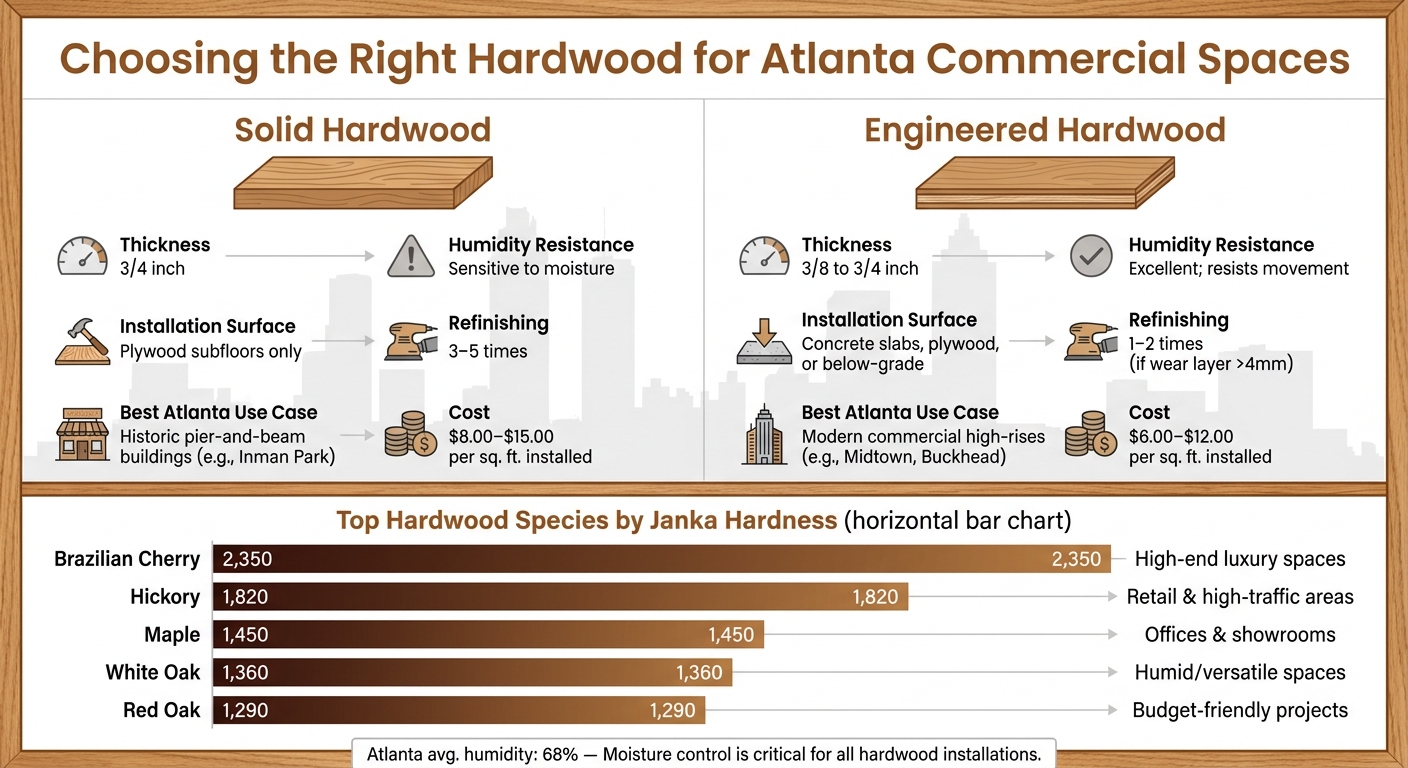
Solid vs. Engineered Hardwood for Atlanta Commercial Spaces
Picking the right hardwood for commercial spaces in Atlanta is all about finding the sweet spot between durability, aesthetics, and ease of upkeep. Atlanta’s unique climate, building styles, and varying levels of foot traffic make this decision even more important.
Solid vs. Engineered Hardwood for Atlanta’s Climate
Solid hardwood, made from a single piece of wood, is a classic option but comes with its challenges in Atlanta’s humid climate. It’s prone to issues like cupping, gapping, or buckling if moisture isn’t managed properly. On the other hand, engineered hardwood – crafted with a real wood veneer over cross-layered plywood or HDF – handles humidity much better. It’s especially suited for concrete slab foundations, which are common in areas like Midtown and Buckhead.
| Feature | Solid Hardwood | Engineered Hardwood |
|---|---|---|
| Thickness | 3/4-inch | 3/8 to 3/4-inch |
| Humidity Resistance | Sensitive to moisture | Excellent; resists movement |
| Installation Surface | Plywood subfloors only | Concrete slabs, plywood, or below-grade |
| Refinishing | 3–5 times | 1–2 times (if wear layer >4mm) |
| Best Atlanta Use Case | Historic pier-and-beam buildings | Modern commercial high-rises |
For most modern commercial spaces in Atlanta, engineered hardwood is the go-to choice. Its stability makes it ideal for concrete slab installations, whereas solid hardwood works better in older, pier-and-beam buildings like those in Inman Park. Once you’ve picked the type, it’s time to consider the hardwood species that can handle heavy foot traffic.
Best Hardwood Species for High-Traffic Commercial Spaces
In commercial settings, durability is king. The Janka hardness scale helps measure a wood’s ability to resist dents, making it a key factor in choosing the right species.
| Species | Janka Hardness | Best Commercial Use | Aesthetic Profile |
|---|---|---|---|
| Brazilian Cherry | 2,350 | High-end spaces needing durability | Deep reddish tones that mature over time |
| Hickory | 1,820 | Retail and high-traffic areas | Striking, bold grain patterns |
| Maple | 1,450 | Offices and showrooms | Light, clean tones |
| White Oak | 1,360 | Humid spaces, versatile use | Timeless look with even stain uptake |
| Red Oak | 1,290 | Budget-friendly projects | Classic and widely available |
White Oak is a standout for Atlanta, thanks to its closed-grain structure that resists moisture better than Red Oak. For spaces with heavy traffic, Hickory’s toughness makes it a strong contender. Meanwhile, Maple’s light color is practical for hiding the red clay dust often brought in from outside.
For luxury projects, Brazilian Cherry offers unmatched durability, but it requires a 10-day acclimation period to adjust to Atlanta’s humidity. Costs for hardwood installation vary: Hickory and Select White Oak typically range from $12–$15 per square foot, while exotic options like Brazilian Cherry can go upwards of $14–$16+ per square foot. Once you’ve chosen your material, the next step is deciding on the finishing method.
Prefinished vs. Site-Finished Hardwood: What to Know
For businesses with steady customer traffic, the choice between prefinished and site-finished hardwood often depends on how much downtime you can handle. Prefinished hardwood comes ready to install, with sanding, staining, and coating already completed. This means you can use your floors immediately after installation.
Site-finished hardwood, also known as "Sand & Finish", is completed on-site, giving you full control over the stain color and ensuring a seamless look. While this method takes longer, it allows for a custom finish. Water-based polyurethane is a smart choice for commercial spaces – it cures quickly (light traffic is possible in 24–48 hours) and produces fewer VOCs compared to oil-based finishes .
"Unlike most flooring, wood floors can be refinished, and the stain color can be changed to give them an updated look, providing you decades of value." – Mr. Hardwood
If dust is a concern – especially in environments like medical offices or restaurants – ask about dustless refinishing systems. These systems reduce airborne particles, making the process cleaner and more suitable for sensitive spaces.
Planning and Preparing for Hardwood Installation
Once you’ve chosen your materials, the next step is getting your space ready for the installation. Skipping this step is a common mistake in commercial flooring projects and can lead to costly complications.
Site Assessments and Subfloor Preparation
Preparing your site starts with more than a quick glance – it requires a detailed evaluation. A skilled contractor will check the subfloor’s condition, measure moisture levels, and identify any necessary repairs before starting. In Atlanta, where humidity can be high, managing moisture is critical. Excess moisture in the subfloor can result in issues like cupping or buckling, so addressing this upfront is key to ensuring the hardwood’s durability.
You’ll also need to confirm that your plans align with building-specific ACC (Architectural Control Committee) rules. Overlooking these can lead to delays or unexpected expenses. Many reputable contractors in Atlanta offer free on-site consultations, often bringing material samples to help you match the hardwood to your existing décor and lighting. Use this consultation to clarify details like subfloor leveling or removing old flooring – tasks like tile or carpet demolition can sometimes come with hidden costs.
Budgeting for a Commercial Hardwood Project
Once your site is ready, it’s time to focus on the budget. Costs for commercial hardwood projects in Atlanta can vary based on factors like the type of hardwood, the condition of the subfloor, and the total area to be covered. Here’s a breakdown of current market costs:
| Service | Estimated Cost |
|---|---|
| Engineered Hardwood (Installed) | $6.00 – $12.00 per sq. ft. |
| Solid Hardwood (Installed) | $8.00 – $15.00 per sq. ft. |
| Labor Only (Installation) | $4.14 – $5.41 per sq. ft. |
| Refinishing (Labor & Materials) | $3.00 – $5.04 per sq. ft. |
| Hardwood Repair (Per Project) | $411 – $541 avg. per project |
When reviewing quotes, ask for a breakdown of material and labor costs. Installation, sanding, and finishing should each be listed separately to give you a clear picture of where your money is going. It’s also wise to set aside some contingency funds for surprises like subfloor leveling or installing moisture barriers, particularly in older buildings where subfloor conditions can be unpredictable. If replacing the hardwood isn’t feasible, refinishing is a cost-effective alternative at $3.00–$5.04 per square foot.
Scheduling Installation Around Business Operations
After budgeting, the next step is to plan the installation around your business operations. In Atlanta, where businesses often face tight schedules and unpredictable weather, careful coordination is essential. Ideally, subfloor repairs and moisture mitigation should be completed before the hardwood is delivered to the site.
For businesses that can’t afford to close during installation, phased installation can minimize disruptions. This method involves working on one section at a time while the rest of the space remains operational. If your building is managed, confirm work hours with management early on – some properties in Atlanta restrict contractor access to specific times or require advance notice for using freight elevators.
To speed up reopening, consider using prefinished materials or dustless refinishing systems. These options significantly cut down on post-installation cleanup, helping you get back to business faster with minimal downtime.
Proper preparation not only keeps the project on track but also ensures a smoother, faster installation process.
The Commercial Hardwood Installation Process, Step by Step
Once you’ve laid the groundwork with careful planning and preparation, the hardwood installation process follows a series of well-defined steps. Skipping any part of this process can lead to costly and unattractive results, so attention to detail is key.
Acclimation and Layout Planning
Before installation, hardwood needs time to adjust to the environment – typically a few days on-site. This step helps prevent gaps or warping, especially with Atlanta’s unpredictable climate. When planning the layout, align planks parallel to the longest wall or perpendicular to the floor joists for added stability. To achieve a natural look, mix boards from different cartons to balance color and grain variations. Make sure all painting and drywall work is completed beforehand, and adjust door clearances if necessary to accommodate the new flooring.
Subfloor Preparation and Moisture Control
The foundation of a successful hardwood floor is a smooth, level subfloor. Start by removing any old flooring or confirming compatibility with the existing surface. Repair, level, and clean the subfloor thoroughly – this process can take several days if significant repairs are needed. Professional installers will test for moisture to avoid long-term issues, especially given Atlanta’s humid summers. If moisture levels are high, a moisture barrier is typically installed to protect the hardwood. Once the subfloor is prepped and moisture-controlled, the installation can proceed with confidence.
Installation Methods and Finishing Options
The installation method depends on the subfloor type. For wood subfloors, a nail-down approach is common, while concrete subfloors often require a glue-down method – frequently encountered in Atlanta’s commercial spaces. Site-finished hardwood offers the flexibility to customize stains and protective coatings, ensuring the final look matches your vision. For businesses that need to stay operational during installation, dustless refinishing systems are a practical choice, reducing airborne particles and simplifying cleanup. High-traffic areas may also benefit from periodic re-coating to maintain surface protection and extend the floor’s lifespan between major refinishing projects.
Flexibility is essential during installation, especially in Atlanta’s commercial market, where building codes and structural conditions can vary widely.
Long-Term Care and Maintenance for Commercial Hardwood Floors
Hardwood floors require consistent attention to keep their charm and durability intact. While a proper installation sets the stage, it’s the ongoing care that ensures these floors stay in top condition. In Atlanta’s bustling commercial spaces, maintaining hardwood floors is key to preserving both their aesthetic and functional appeal.
Daily and Weekly Cleaning and Care Tips
To keep your hardwood floors looking their best, start with simple daily habits. Use a dust mop or vacuum (on a bare floor setting) to remove grit and dirt. Clean up spills immediately with a damp cloth, but avoid using excess water, as it can damage the floor’s finish. Choose cleaning products specifically designed for hardwood floors – when in doubt, consult a flooring expert for recommendations.
"Proper maintenance is essential to keep wood floors looking beautiful and performing well for the lifetime of the floor. It will enhance the performance of the floor, will prolong the lifetime of the floor, will promote long-term sustainability of raw materials, and ultimately, will protect your investment." – National Wood Flooring Association
Another smart move? Place high-quality walk-off mats at all entrances. These mats trap dirt and moisture before they can cause scratches or other damage to the floor.
By sticking to these cleaning routines, you’ll not only maintain the floor’s appearance but also catch minor issues before they escalate.
Fixing Common Commercial Hardwood Floor Problems
In Atlanta’s humid climate, hardwood floors are prone to challenges like cupping, warping, or gapping, especially if moisture control wasn’t properly managed during installation. High foot traffic and furniture movement can also lead to surface scratches or dents. Addressing these problems promptly is critical to preventing more extensive damage.
| Service Type | Estimated Cost (Atlanta Area) | Primary Issue Addressed |
|---|---|---|
| Spot Repair | $100 – $400 | Minor scratches, small dents |
| General Repair | $300 – $1,200 | Gouges, cracks, loose boards |
| Refinishing | $3 – $8 per sq. ft. | Surface wear, dullness, light scratches |
| Patching/Board Replacement | $200 – $600 | Water damage, warped planks |
For small scratches or dents, spot repairs typically range from $100 to $400. Deeper issues like loose boards or water stains may require general repairs, which can cost $300 to $1,200. If a plank is warped or severely damaged, patching or board replacement runs between $200 and $600. A full refinishing, ideal for worn or dull floors, costs $3 to $8 per square foot.
To minimize damage, consider adding furniture pads under chairs and equipment. This small step can help prevent scratches that might lead to expensive repairs down the line.
When these fixes aren’t enough, professional services are essential to keep your floors in excellent condition.
Professional Services and Long-Term Maintenance Planning
If your floors start to look dull, a screen and recoat can restore their finish without the need for full sanding. This preventive approach is more affordable than a complete refinishing and helps extend the life of your floors.
TriArt Hardwoods specializes in services tailored to Atlanta’s commercial needs, offering refinishing, deep cleaning, and repairs – even for water-damaged floors. When hiring contractors, prioritize those with National Wood Flooring Association (NWFA) certification to ensure they follow industry standards.
"By addressing damage early, property owners can extend the lifespan of their hardwood floors while maintaining a professional and inviting environment for employees, clients, or visitors." – floorrefinishingpros.com
Planning for maintenance in your long-term budget can save money over time. Regular screenings, professional cleaning, and timely repairs are much more cost-effective than replacing or fully refinishing a floor. Plus, keeping your floors in great shape helps maintain a welcoming atmosphere for both clients and employees.
Conclusion
Once you’ve planned, installed, and maintained your hardwood floors, the final steps truly seal the value of your investment. Hardwood flooring is a durable asset, but in Atlanta – where humidity and heavy foot traffic test every flooring option – proper installation and upkeep are essential to ensure they stand the test of time.
The lifespan of your floors hinges on skilled installation and regular care. By partnering with an NWFA-certified professional like TriArt Hardwoods, a trusted name in Atlanta, you can be confident your project aligns with industry standards from the very beginning. Choosing an NWFA-certified contractor means a smoother process and long-term protection for your flooring investment.
Reach out today to schedule a discovery call and get a clear, realistic cost estimate. This comprehensive approach guarantees your floors not only look stunning but also perform dependably in Atlanta’s challenging commercial spaces.
FAQs
How long will my business need to close during installation?
The time it takes to complete hardwood flooring installation in Atlanta varies based on factors such as the size of the area, the amount of preparation needed, and the drying times for finishes. Typically, most installations are completed within a few days to about a week. To get a precise timeline that fits your specific project, it’s best to discuss the details directly with your contractor. The complexity and scope of the work will play a big role in determining the schedule.
Do I need a moisture barrier on a concrete slab in Atlanta?
Yes, placing a moisture barrier over concrete slabs in Atlanta is strongly advised. This layer prevents moisture from seeping through the concrete, which could harm hardwood flooring and reduce its durability. Given Atlanta’s humid climate, this extra step is crucial for maintaining the longevity and quality of your flooring.
What finish holds up best in high-traffic commercial areas?
A polyurethane finish, or a comparable durable sealant, works well for high-traffic commercial spaces. These finishes offer excellent protection against daily wear, helping to extend the floor’s lifespan while preserving its look over time.


