

Choosing the right wood floor color is essential for creating a lasting design foundation in your home. Some shades, like natural oak, medium browns, and soft gray tones, consistently stand the test of time. These colors are neutral, versatile, and pair well with evolving interior styles. Key highlights include:
- Pale Natural Oak: Brightens spaces, hides dust, and works well in small or dimly lit rooms.
- Warm Medium Browns: Adds depth and warmth while masking wear – ideal for high-traffic areas.
- Rich Walnut: Offers a classic, darker tone that ages beautifully.
- Soft Gray and Greige: Neutral yet modern, perfect for contemporary or transitional designs.
- Blonde and Light Neutrals: Reflects light, creating airy, open spaces.
For durability and a timeless look, opt for matte or satin finishes, which minimize scratches and wear while highlighting the wood’s natural beauty. Whether you’re updating your home or planning a new space, these wood floor colors and finishes provide a stylish, long-lasting foundation.
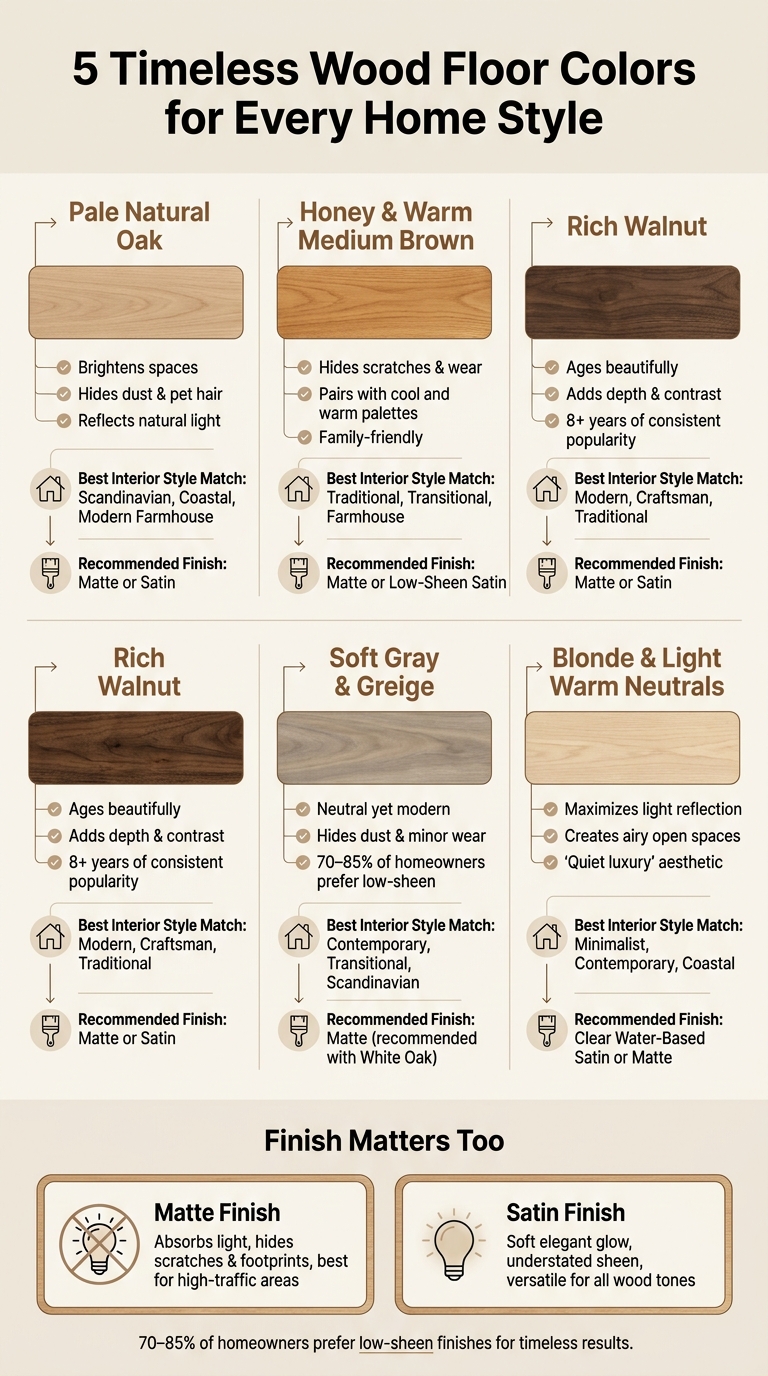
5 Timeless Wood Floor Colors: Shades, Styles & Finishes at a Glance
🎨 Hardwood Floor Color Trends 2026 | Best Modern & Timeless Wood Flooring Shades for Every
sbb-itb-9f8f869
What Makes a Wood Floor Color Timeless
Timeless wood floor colors have certain qualities that help them maintain their charm over the years.
Neutral undertones are key. Floors with overly yellow, orange, or red hues can make a space feel dated. Instead, timeless colors strike a balance – warm enough to feel welcoming but muted enough to complement a variety of décor styles as they change over time.
Versatility is another important factor. The best floor colors act as a neutral base. Mid-tone browns, for example, pair effortlessly with almost any wall color, furniture style, or design update you might introduce. This adaptability is what separates enduring styles from fleeting trends.
Lighter shades, like pale oak or ash, help smaller rooms feel more open by reflecting light, while darker tones, such as walnut, bring warmth and depth to larger spaces.
The finish also plays a big role. Matte and satin finishes age more gracefully than high-gloss ones. According to Larry Lint Flooring:
"Low-luster sheens and subtle textures help floors age gracefully, without locking them into a specific style era." – Larry Lint Flooring
While high-gloss finishes can look stunning at first, they tend to highlight every scratch, footprint, and speck of dust. Matte and satin finishes, on the other hand, offer a softer look that hides wear and complements a broader range of interior designs.
At TriArt Hardwoods, clients work closely with our team to choose the ideal stain color, finish, and sheen for their space. Whether it’s a bright, open-plan living room in Midtown or a cozy den in Buckhead, these details are tailored to ensure the floors remain stylish and timeless. These thoughtful choices create a foundation that supports any interior style as it evolves.
1. Natural Oak and Pale Wood Tones
Natural oak has long been a go-to choice in American homes. Its neutral undertones blend warm and cool shades, making it a versatile match for white, gray, and earthy palettes. But beyond its visual appeal, natural oak offers practical advantages that make it a smart choice for everyday living.
One of its standout features? Its light tone helps mask dust, pet hair, and small scratches, cutting down on the need for constant upkeep. As Easiklip explains:
"Light floors hide dust and small scratches better, perfect for busy families or high-traffic spaces."
This makes pale wood tones an ideal pick for areas like kitchens, living rooms, and hallways – spaces that see a lot of foot traffic.
Another benefit is how pale wood tones reflect natural light, creating a brighter, more open feel. This can be especially helpful in older homes where sunlight might be limited, making rooms feel larger and more inviting.
Natural oak also works effortlessly with a variety of interior styles. Whether you’re drawn to Scandinavian simplicity, modern farmhouse charm, coastal vibes, or the understated elegance of "quiet luxury", oak fits right in. Interior designer Emma Laurent captures this trend perfectly:
"We’re seeing a clear shift toward organic living spaces, places that feel grounded, tactile, and emotionally calm. Hardwood, especially responsibly sourced oak, offers that connection to nature while standing the test of time."
When choosing pale wood tones, it’s essential to view samples under both natural and artificial light. The way the color shifts throughout the day can influence how it looks in your space.
2. Honey and Warm Medium Browns
Honey and warm medium browns bring a welcoming and versatile charm to any space. Shades like butterscotch, caramel, and golden amber create a cozy atmosphere while adding depth and brightness. These tones don’t just elevate the look of a room – they also offer practical benefits for everyday living.
As Easiklip explains:
"Honey hues have become the new ‘middle ground’ for homeowners who want natural warmth that complements both cool and warm palettes."
Whether paired with crisp off-white walls, moody navy tones, or soft earthy greens, warm medium browns blend effortlessly without overpowering the design.
From a functional standpoint, these shades are ideal for busy households. California Flooring and Design highlights their practicality:
"Medium brown floors are remarkably forgiving when it comes to showing dust and scratches. This makes them ideal for high-traffic areas or homes with pets and children."
Mid-tone browns are excellent at masking everyday wear, scratches, and dust, making them a go-to choice for families. Their neutral character also ensures they remain adaptable to changing decor trends, offering a timeless foundation.
What sets these shades apart is their enduring appeal. Unlike trendier options like ultra-gray or high-gloss dark stains, warm medium browns maintain a balanced neutrality. As REimagineHome notes:
"Mid-tone woods, with neutral undertones, tend to avoid swinging too far toward yellow, red, or overly dark shades – qualities that professionals consistently recognize as enduring."
This consistency means you can refresh your walls, swap out furniture, or completely revamp your decor without worrying about mismatched floors.
Popular wood species like White Oak, Red Oak, Cherry, and Hickory are often used to achieve these tones, thanks to their durability and ability to take stains evenly. A matte or low-sheen satin finish further enhances the natural grain while keeping wear and tear less noticeable.
3. Medium Walnut and Rich Brown Floors
Medium walnut and rich brown floors hit the sweet spot between light and dark, offering a timeless look that doesn’t come with the upkeep of very dark flooring. According to California Flooring & Design:
"Walnut floors bring a dark, chocolatey hue into the mix, offering a striking contrast to lighter walls and furniture. This hardwood is prized for its strength and ability to age gracefully, developing a richer patina over time."
Unlike trendy gray or taupe stains that can feel outdated after a while, walnut and rich brown tones only get better with age, gaining more character and depth. That’s why they’ve remained a favorite among homeowners and designers for over eight years straight.
From a practical perspective, these floors are great for hiding everyday scuffs and wear, making them an excellent choice for busy households or high-traffic spaces.
Medium walnut works beautifully across a variety of design styles. Whether your home leans modern, farmhouse rustic, or traditional, these floors blend effortlessly. To make the most of their rich tones, pair them with lighter furniture or area rugs to create contrast and bring out the wood’s natural grain. Keep in mind, darker tones can absorb more light, so ensure the room has plenty of natural or artificial lighting. A matte or satin finish can further enhance durability while maintaining a polished look.
4. Soft Gray and Greige Wood Tones
Soft gray and greige wood tones have become staples in modern home design, offering a neutral yet stylish foundation that stands the test of time. Greige, a blend of gray and beige, strikes a balance between cool and warm tones, making it a versatile choice for various interiors. As Jordan Cahill of Solidshape explains:
"This gray-beige hybrid has essentially replaced pure gray as the go-to neutral for contemporary homes. It’s warmer and more inviting than stark gray, yet it keeps that modern edge homeowners want."
The difference between these tones lies in their undertones. Soft grays often lean cooler, with subtle hints of blue, green, or violet. Meanwhile, greige has warmer undertones, like almond, chocolate, or taupe, giving it a cozier and more welcoming feel.
These tones complement a wide range of styles. In modern and Scandinavian interiors, they create a clean, serene backdrop. In farmhouse or transitional spaces, greige brings a natural, grounded vibe, seamlessly connecting traditional wood furniture with modern finishes. This adaptability makes them a smart choice for homeowners looking for longevity.
On a practical level, these lighter shades are excellent at hiding dust, pet hair, and minor wear and tear. A matte or satin finish enhances this effect by minimizing the visibility of footprints and scuffs – features that have driven 70% to 85% of homeowners to favor low-sheen finishes.
If you’re considering a gray or greige stain, it’s worth noting the type of wood you use. White Oak is a better choice than Red Oak, as the latter’s pink undertones can make gray stains appear mauve or purple under certain lighting conditions. Up next, we’ll dive into blonde and light warm neutral tones for another enduring flooring option.
5. Blonde and Light Warm Neutrals
Blonde and light warm neutral floors have long been a favorite in design because they bring brightness and versatility to any space. These tones reflect natural light beautifully, creating a sense of openness and making rooms feel more welcoming and spacious.
Building on the appeal of gray tones, blonde and light warm neutrals offer a similarly timeless option. As Architectural Digest notes:
"Light hardwood tones are becoming a key element of ‘quiet luxury,’ interiors that feel relaxed, tactile, and timeless."
If you’re aiming for that natural blonde aesthetic, woods like White Oak, Maple, Ash, and Birch are excellent choices. White Oak, for instance, has an open pore structure that absorbs stains evenly, while Maple‘s smooth, creamy surface is ideal for sleek, minimalist looks.
On a practical note, light floors are great for hiding dust, pet hair, and small scratches. Opting for a matte or low-luster satin finish can also help reduce the visibility of scuffs.
One thing to keep in mind: light tones can appear different depending on the lighting in your space. Testing large samples at various times of day is essential to ensure the flooring complements your room’s lighting conditions. For example, a golden maple tone can warm up the cooler light in north-facing rooms, while a cooler neutral tone can balance the brightness of south-facing spaces.
Here’s a quick guide to popular blonde wood species and their ideal uses:
| Wood Species | Visual Characteristics | Best Interior Fit |
|---|---|---|
| White Oak | Light natural tone; subtle grain | Coastal, modern, traditional |
| Maple | Creamy, fine-grained surface | Contemporary, minimalist, high-traffic |
| Ash | Light, open quality | Modern, small spaces, airy rooms |
| Birch | Blonde edges with amber accents | Contemporary, rustic-chic, farmhouse |
Blonde and light warm neutrals bring a sense of calm and timelessness to interiors, making them a go-to choice for a variety of design styles.
Floor Finishes That Work Best With Timeless Colors
When it comes to flooring, the finish often plays a bigger role than the color itself in how your floors look and feel over time. As California Flooring & Design aptly describes it:
"The finish resembles that of fine wine, leaving a lasting impression."
This idea ties perfectly with the timeless colors we’ve explored earlier.
Matte and satin finishes are leading the way for timeless wood floors, with 70%–85% of homeowners favoring these sheens over high-gloss options. Matte finishes are particularly practical, as they absorb light, making scratches, dust, and footprints less noticeable. Satin finishes, on the other hand, provide a soft glow that feels elegant yet understated.
High-gloss finishes, while once popular, tend to emphasize imperfections, giving them a dated appearance. Larry Lint Flooring explains it well: "low-luster sheens and subtle textures help floors age gracefully, without locking them into a specific style era". This is why matte and satin finishes pair so beautifully with timeless colors like pale White Oak or deep, rich Walnut.
The choice between water-based and oil-based finishes further customizes the final look of your floors. Water-based finishes are clear and work well with lighter woods like White Oak or Maple, preserving their natural tones without introducing yellow or orange hues. Oil-based finishes, on the other hand, bring warmth and depth to medium-to-dark woods like Walnut. However, they take longer to cure and tend to emit higher VOC levels. Modern water-based finishes have improved durability and lower VOCs, making them a healthier choice for indoor spaces.
At TriArt Hardwoods, choosing the right finish is just as important as selecting the color. Their team helps clients in the Atlanta area find the perfect combination of sheen and coating to suit both the wood type and the room’s function. For darker woods, they often recommend matte finishes, along with regular sweeping and furniture pads to maintain the floor’s clean, rich look over time. For lighter woods, a clear water-based satin or matte finish is a popular choice, as it keeps the wood’s natural appearance intact without unwanted color changes. The right finish not only protects your floors but also enhances their timeless beauty.
Pairing Timeless Floor Colors With Different Interior Styles
Choosing the right floor color is about more than just aesthetics – it’s about finding a shade that works seamlessly with your home’s style, lighting, and layout.
Pale oak and light natural tones are a go-to for Scandinavian and modern interiors. Scandinavian design thrives on light wood floors, which reflect natural light and create that warm, cozy "hygge" vibe. In modern spaces, pale oak or maple acts as a neutral backdrop, allowing bold furniture and striking architectural details to shine. As interior designer Helena Branin explains:
"Choosing the right flooring color is akin to selecting the perfect frame for a painting – it enhances but never overshadows the complete picture of your home."
This adaptability makes light tones a favorite for a variety of interior styles.
Medium walnut and warm brown tones are ideal for farmhouse, Craftsman, and traditional designs. Their rich, natural grain adds depth and character, especially in open-concept spaces. In Atlanta homes with Craftsman-style details – like exposed beams and intricate millwork – medium-dark wood floors create a grounded, cohesive look that feels timeless rather than trendy. Plus, these tones are practical for busy households, camouflaging dust and minor scuffs while maintaining their classic appeal.
Soft gray and greige tones are perfect for contemporary and transitional interiors. These shades work particularly well in open-plan homes, where shifting natural light can bring out their subtle variations throughout the day.
Lighting plays a crucial role in how floor colors are perceived. For instance, a pale floor that looks bright and crisp in a south-facing room may appear dull in a north-facing one. As Maria Killam notes, pairing rich wood tones with crisp white finishes can keep the overall look balanced and timeless.
Understanding these details is why TriArt Hardwoods emphasizes in-home consultations. Their team visits Atlanta-area homes to evaluate how floor samples interact with existing cabinetry, trim, wall colors, and natural light at various times of the day. This hands-on approach ensures the flooring choice complements the space perfectly and helps avoid unexpected design missteps.
Conclusion
The five classic wood floor shades – pale natural oak, honey and warm medium browns, rich walnut, soft gray and greige, and blonde light neutrals – are versatile choices that suit any design style. They also offer a durable and stylish investment for your home.
To make the most of these colors, pair them with a matte or satin finish. These finishes highlight the wood’s natural grain while reducing the visibility of scuffs, ensuring your floors remain beautiful over time. This combination of color and finish enhances the lasting value of hardwood flooring.
"The true essence of a timeless hardwood floor color isn’t just its ability to transcend trends; it complements your life by adding comfort and warmth."
Looking to create a timeless foundation for your home? Reach out to TriArt Hardwoods for an in-home consultation, complete with samples to help you see how each color transforms under your unique lighting.
FAQs
How do I pick the best timeless floor color for my home’s lighting?
When selecting a floor color that will stand the test of time, focus on shades that adapt well to different lighting conditions and styles. Medium browns – like cherrywood, oak, and walnut – are enduring favorites that bring warmth and elegance to any room. If you’re looking to brighten up your space, light beige tones such as ash, maple, and pale oak can enhance natural light and create an airy feel.
It’s best to steer clear of overly trendy options like gray or taupe. While they might be popular now, they often lack the lasting appeal of more classic choices. Stick to timeless hues that complement your home’s lighting and overall design.
Which wood floor colors look cleanest with kids and pets?
Light or neutral wood floor colors like blondes, natural oak, or whitewashed finishes are ideal for homes with kids and pets. They do a great job of masking dust, minor scratches, and small stains, which makes them a practical and low-maintenance option for busy households.
Should I choose a water-based or oil-based finish for my floor color?
For a classic wood floor color, a water-based finish is an excellent option. It enhances the natural beauty of the wood while offering a clear and modern look. If you’re after a deeper, cozier feel, an oil-based finish might be the way to go. It brings out a richer, warmer tone, though it may darken as time passes. Think about the style you want and how much upkeep you’re willing to manage when making your choice.


