Hardwood Floor Installation in Atlanta, GA
New Hardwood Floors, From Measuring to the Final Board.
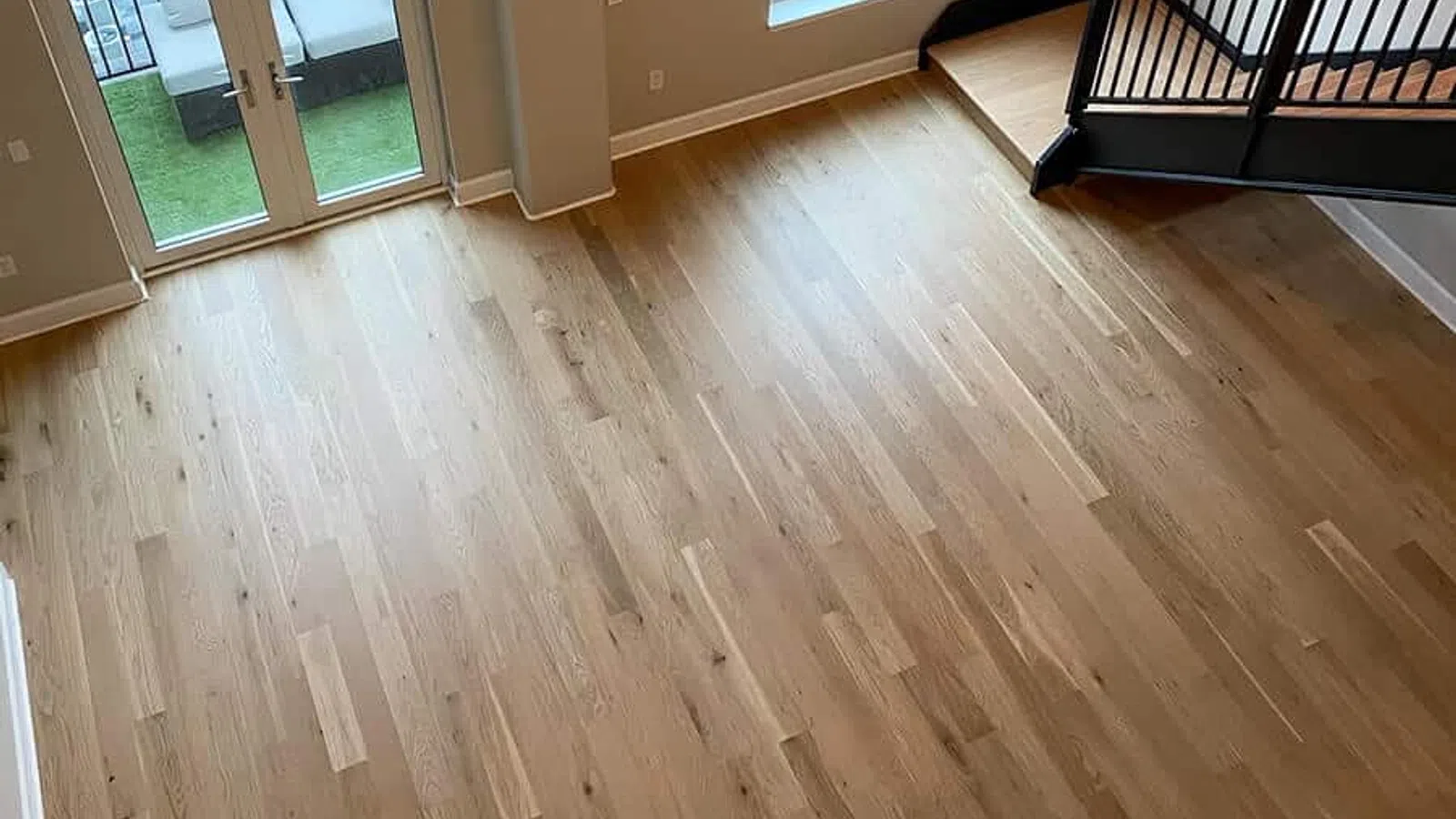
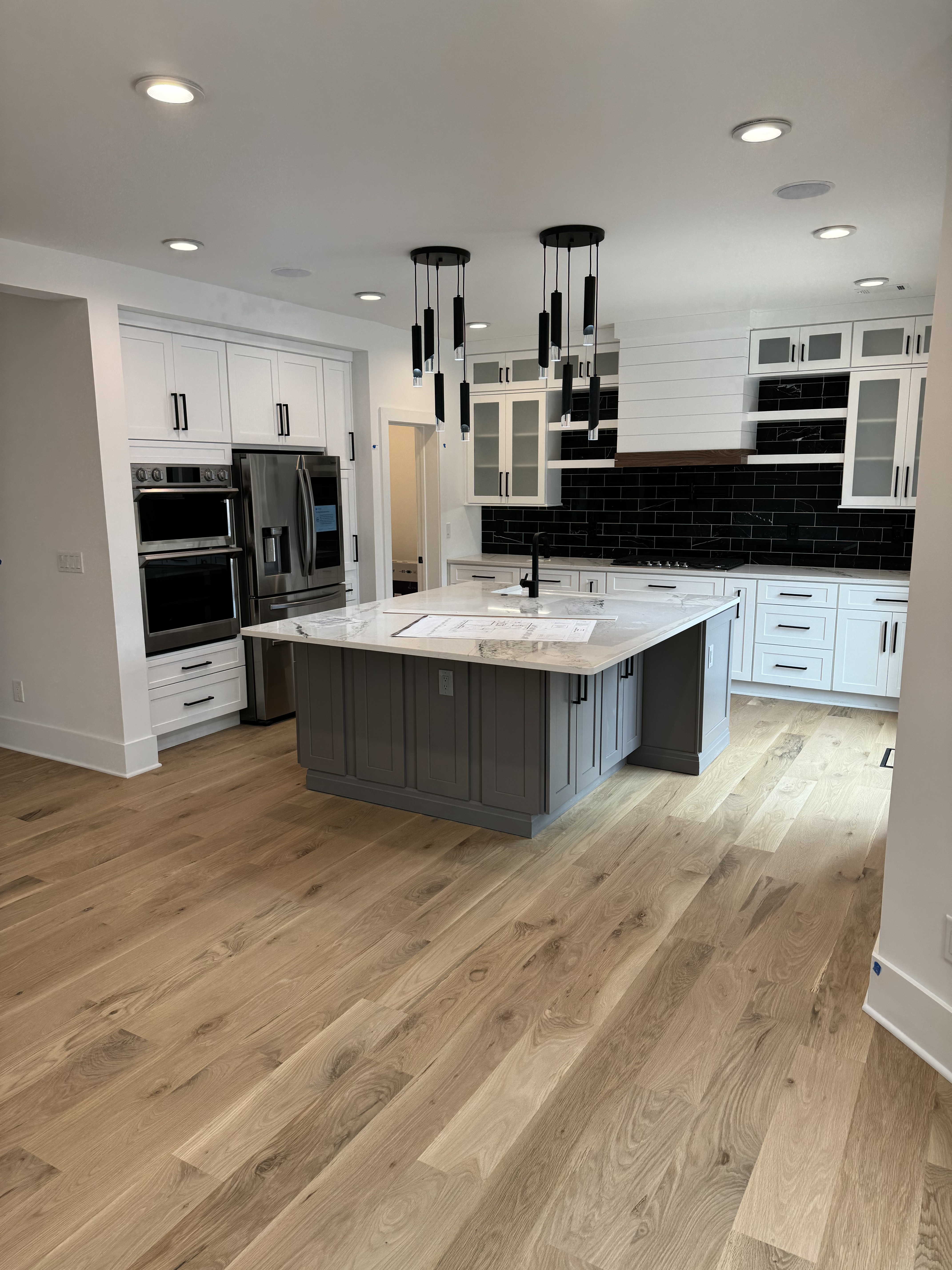
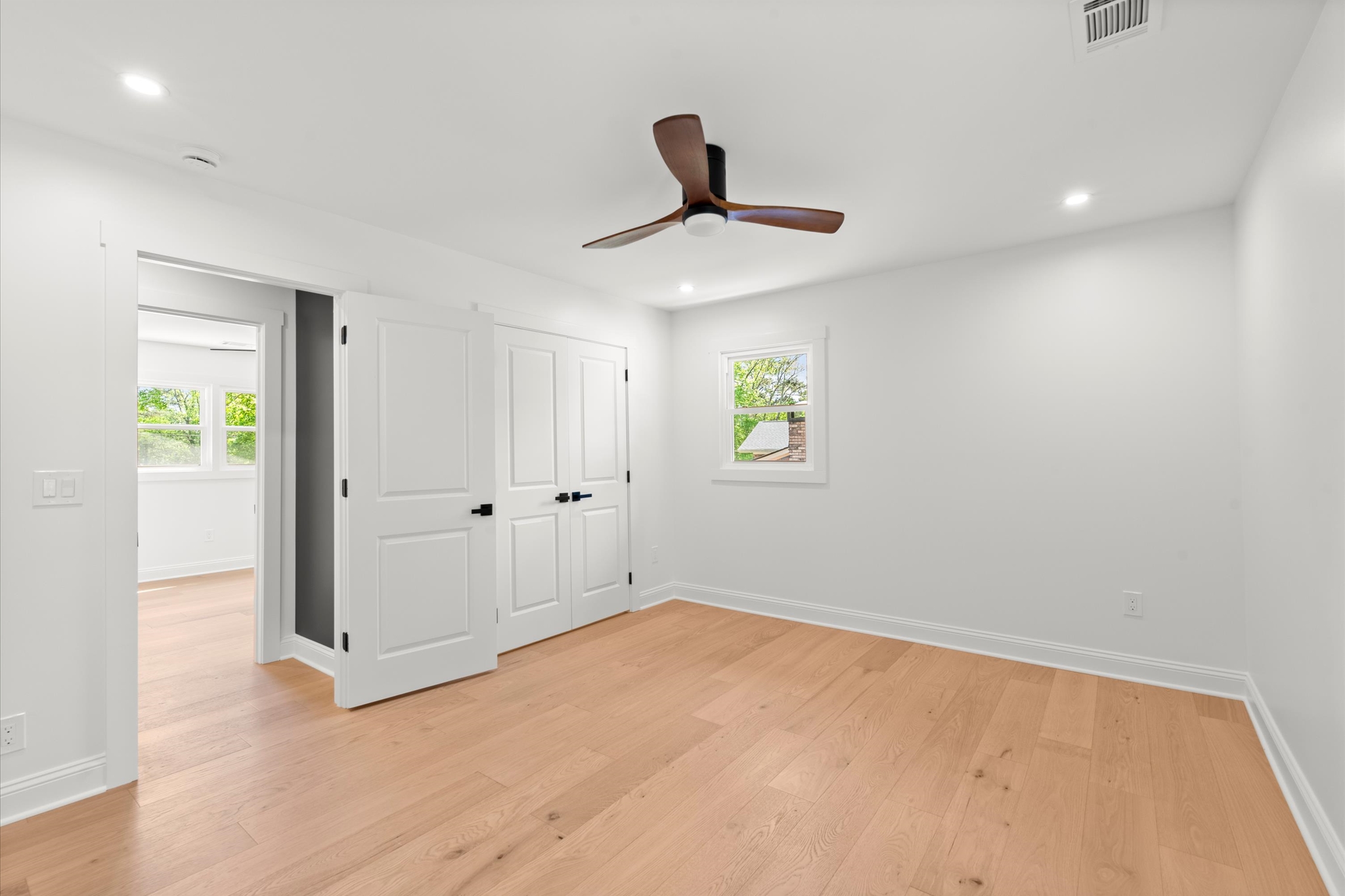
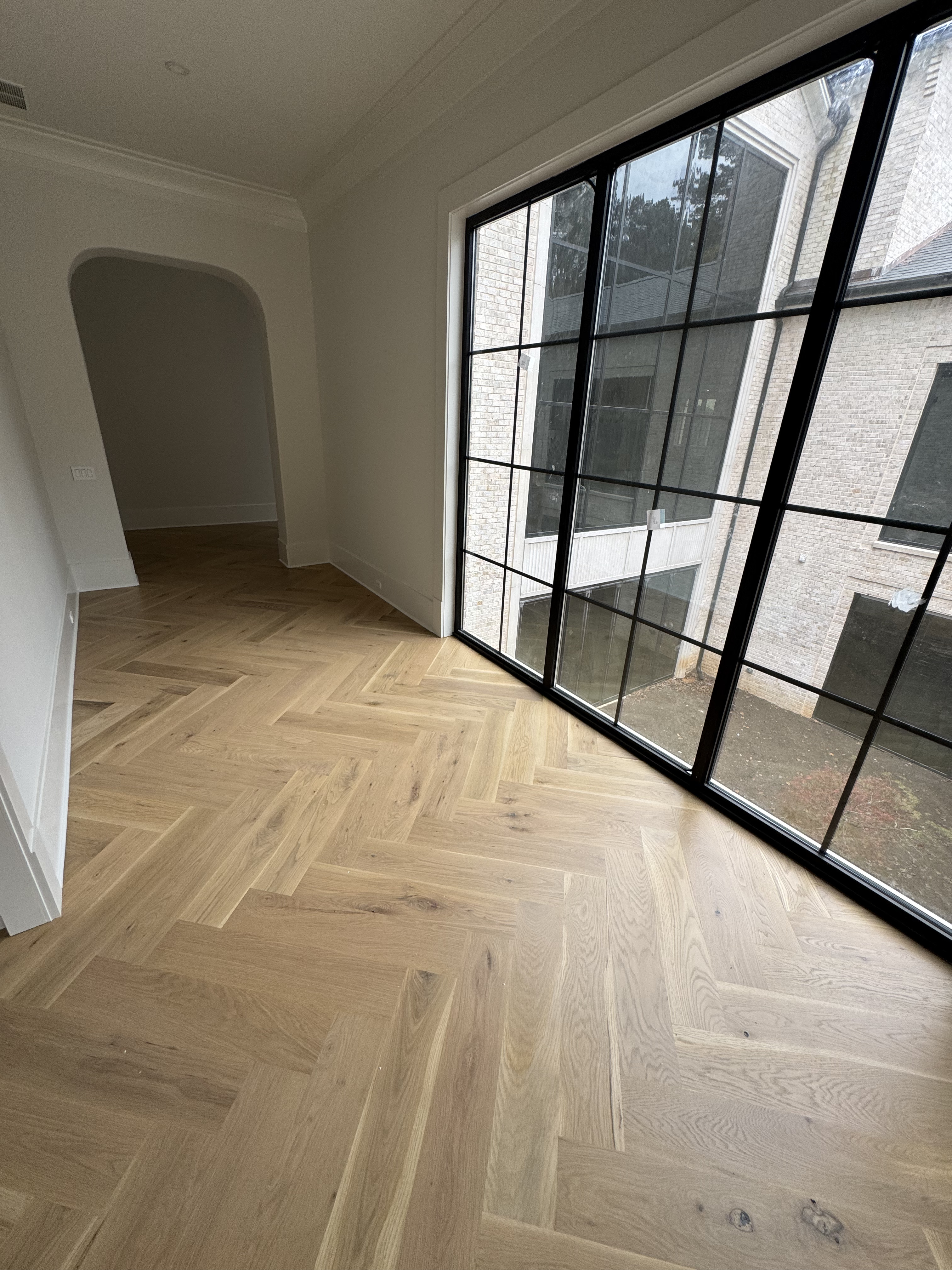
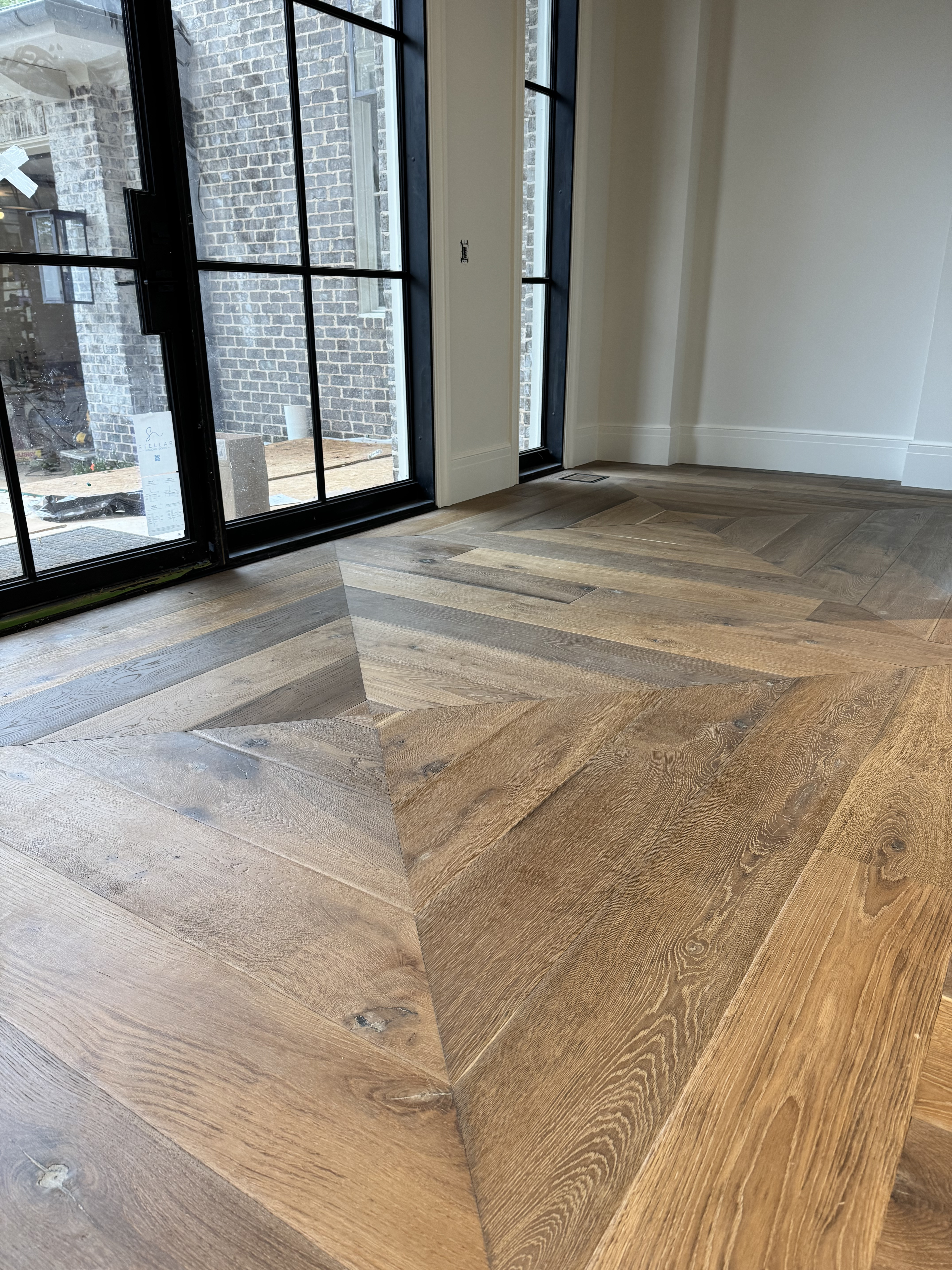
Quality hardwood floor installation starts with proper preparation and attention to detail. From removing existing carpet or tile and preparing the subfloor to ensuring smooth transitions between rooms, stairs, and other surfaces, we handle every step with care. We also offer custom stair treads and site-finished hardwood flooring to create a consistent, beautiful look throughout your home.
Planning new hardwood?
What Refinishing Actually Involves
The short answers
3-7 days
Timeline
most installs, plus acclimation
The subfloor
Solid or engineered
decides, not taste
Included
Old floor out
carpet, tack strip, vinyl and tile removed and hauled
At the visit
Written price
material and labor broken out
Cost
Installed
driven more by material choice than by labor
Solid or Engineered: Which Is Right for Your Home?
The first decision
Solid hardwood is a single piece of wood, typically 3/4" thick, that can be sanded and refinished many times over its life. Engineered hardwood is a real wood veneer over a stable plywood or composite core.
The right choice depends on the subfloor and the room. Tell us where the floor is going, and we'll recommend the best option for your home.
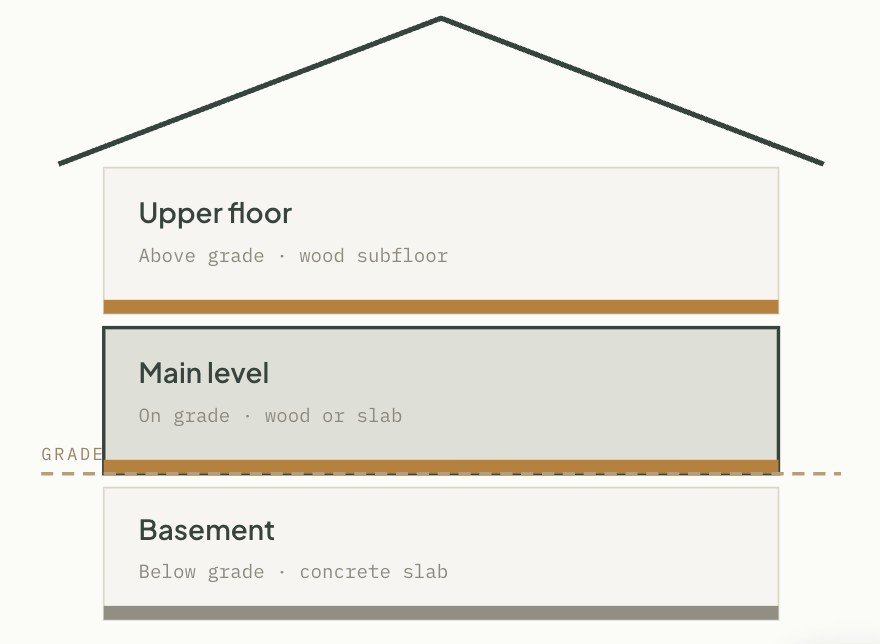
Solid hardwood, with an ear on the joists
Upstairs is almost always a wood subfloor, so solid works. The variable is sound: hardwood over bedrooms transmits footfall to the rooms below, and an underlayment decision belongs in the quote rather than as a surprise afterwards.
We would install
Solid 3/4"
Fastening
Nail or staple down
Refinishable
4–6 times
Watch for
Footfall noise below
Solid hardwood, if the subfloor is wood
This is the classic Atlanta main-floor install. Over a wood subfloor, solid 3/4" is the right choice and the only one that can be sanded repeatedly across decades. If your main level sits directly on a slab, engineered is the answer instead,and plenty of Atlanta ranches do.
We would install
Solid 3/4"
Fastening
Nail or staple down
Refinishable
4–6 times
If it is a slab
Engineered instead
Engineered or waterproof plank
Solid hardwood below grade is a mistake we would rather stop than fix later. Slab moisture moves upward year-round in Georgia. Engineered with a proper moisture barrier works; in a basement that has ever taken water, we will steer you to waterproof plank and tell you why.
We would install
Engineered, 4mm+ wear layer
Fastening
Glue down or float
Refinishable
Usually once
If it has flooded
Waterproof LVP
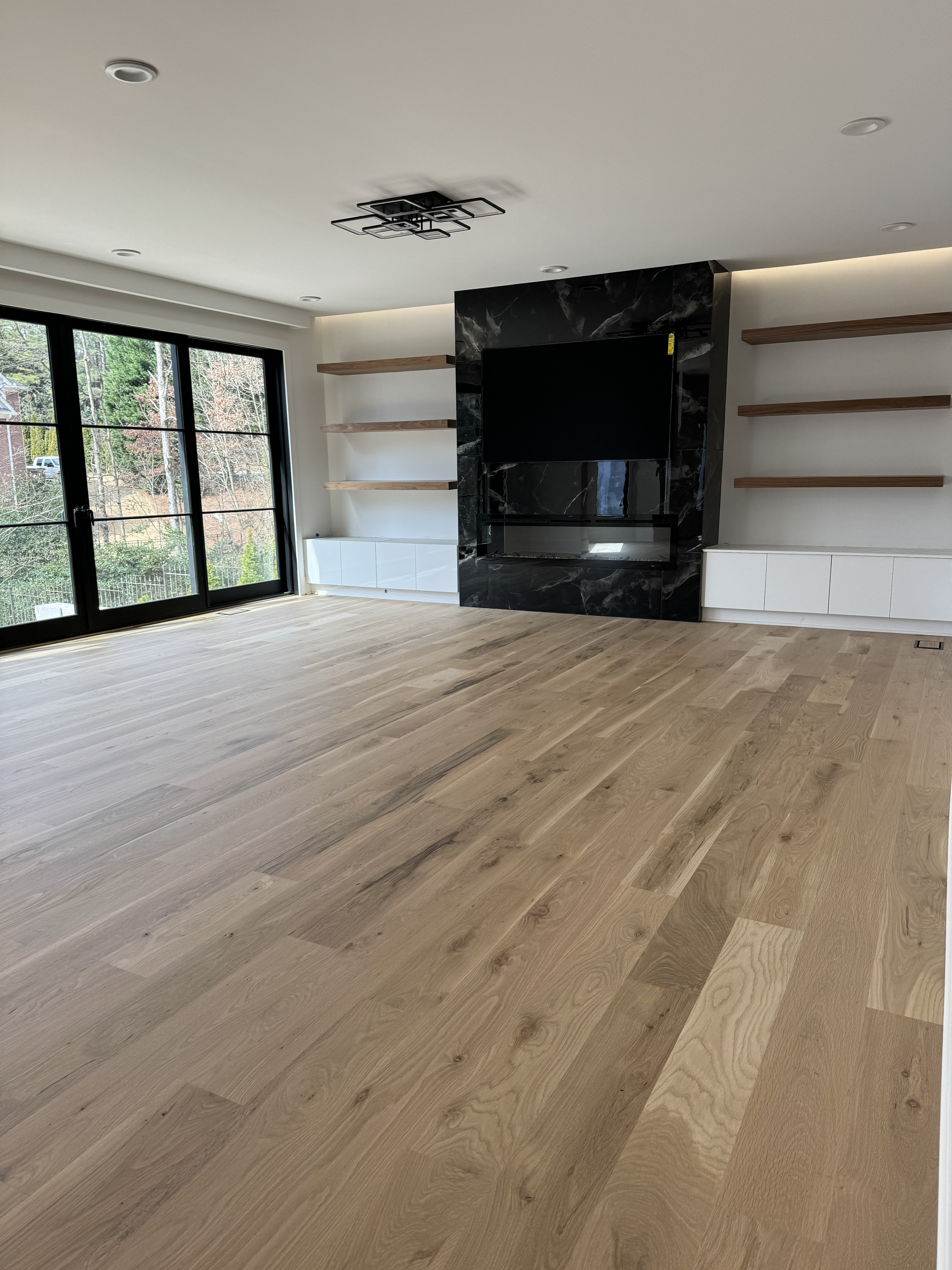
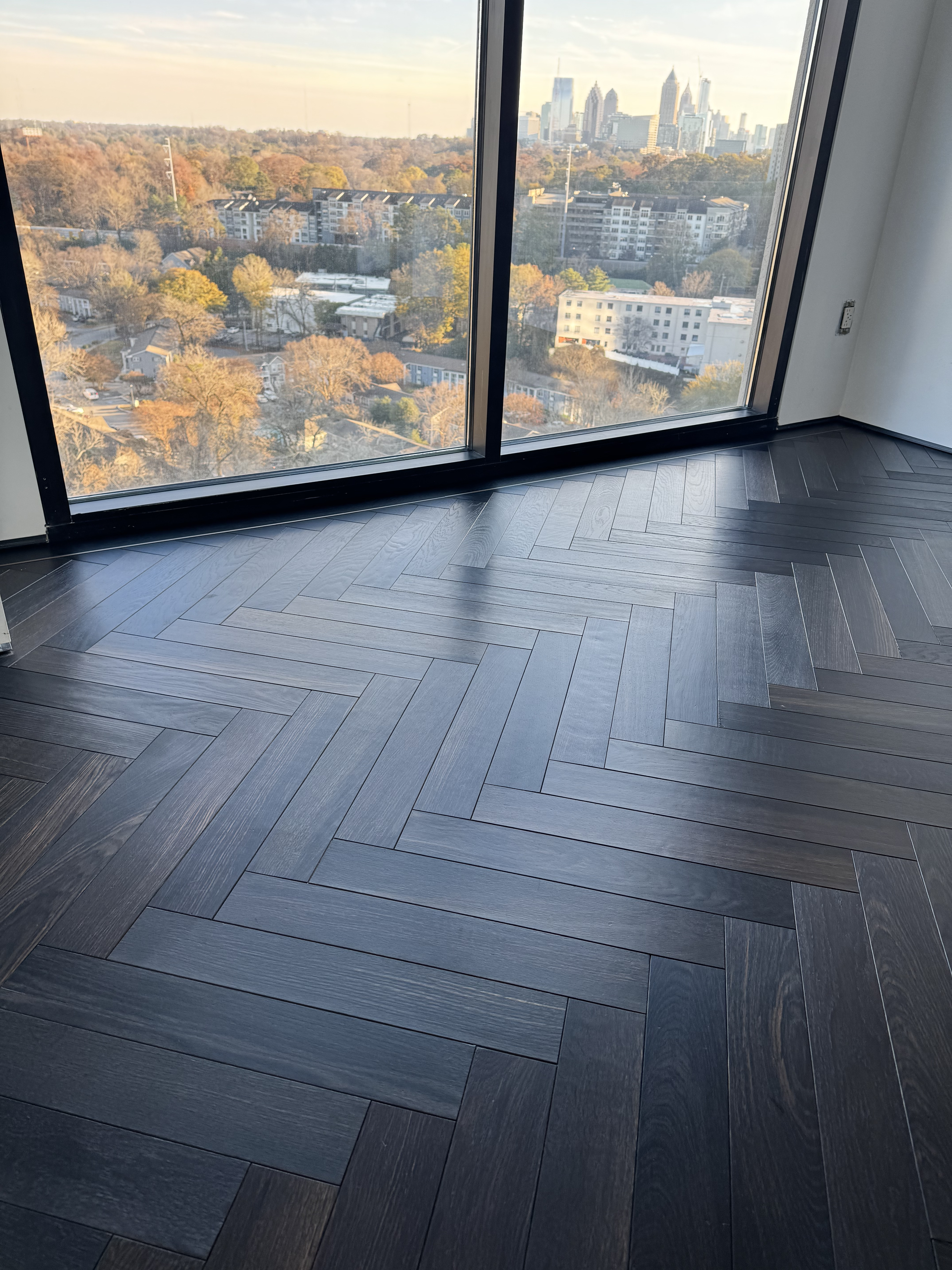
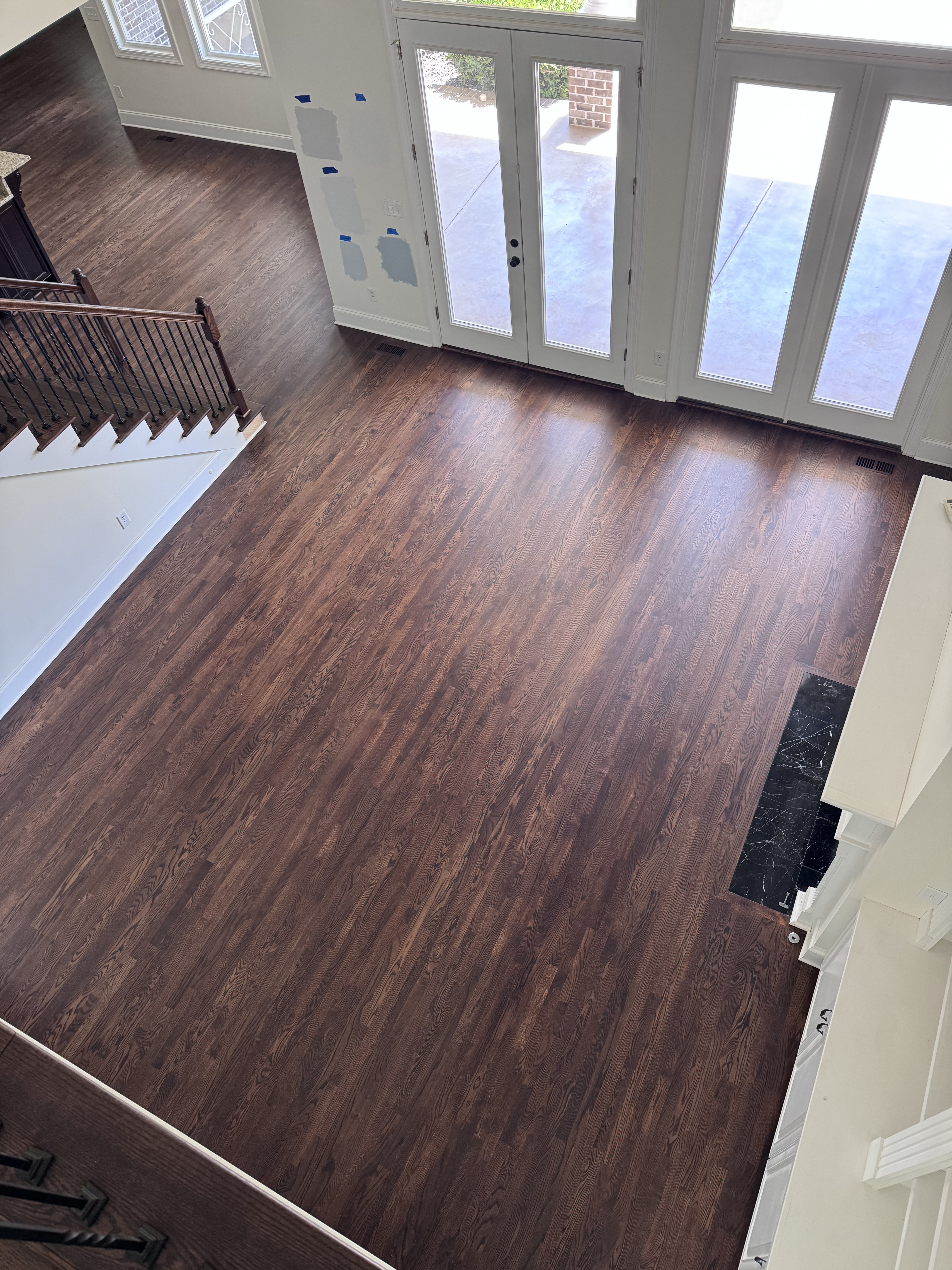
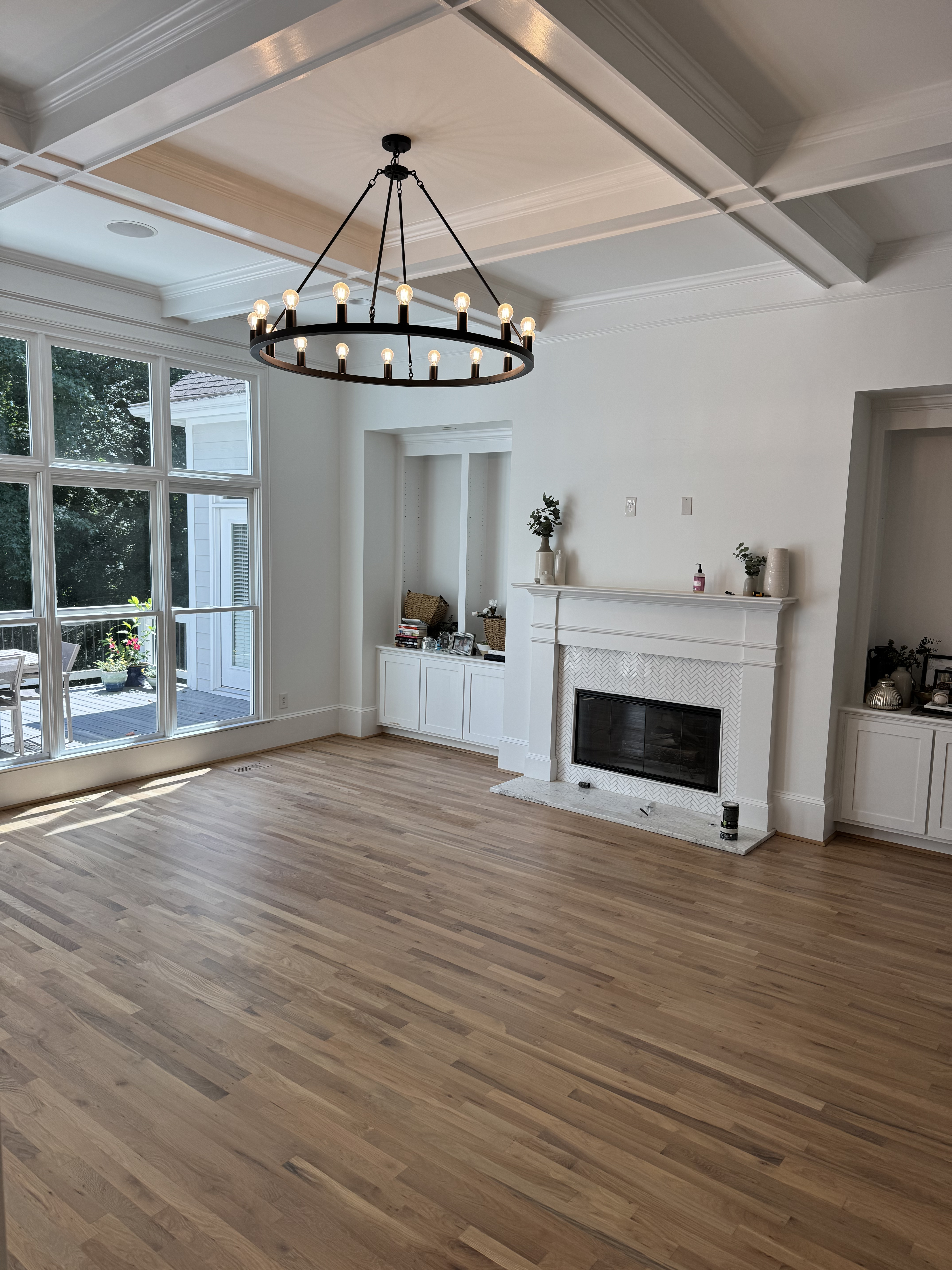
Preparing the Floor Underneath
Before any wood is laid
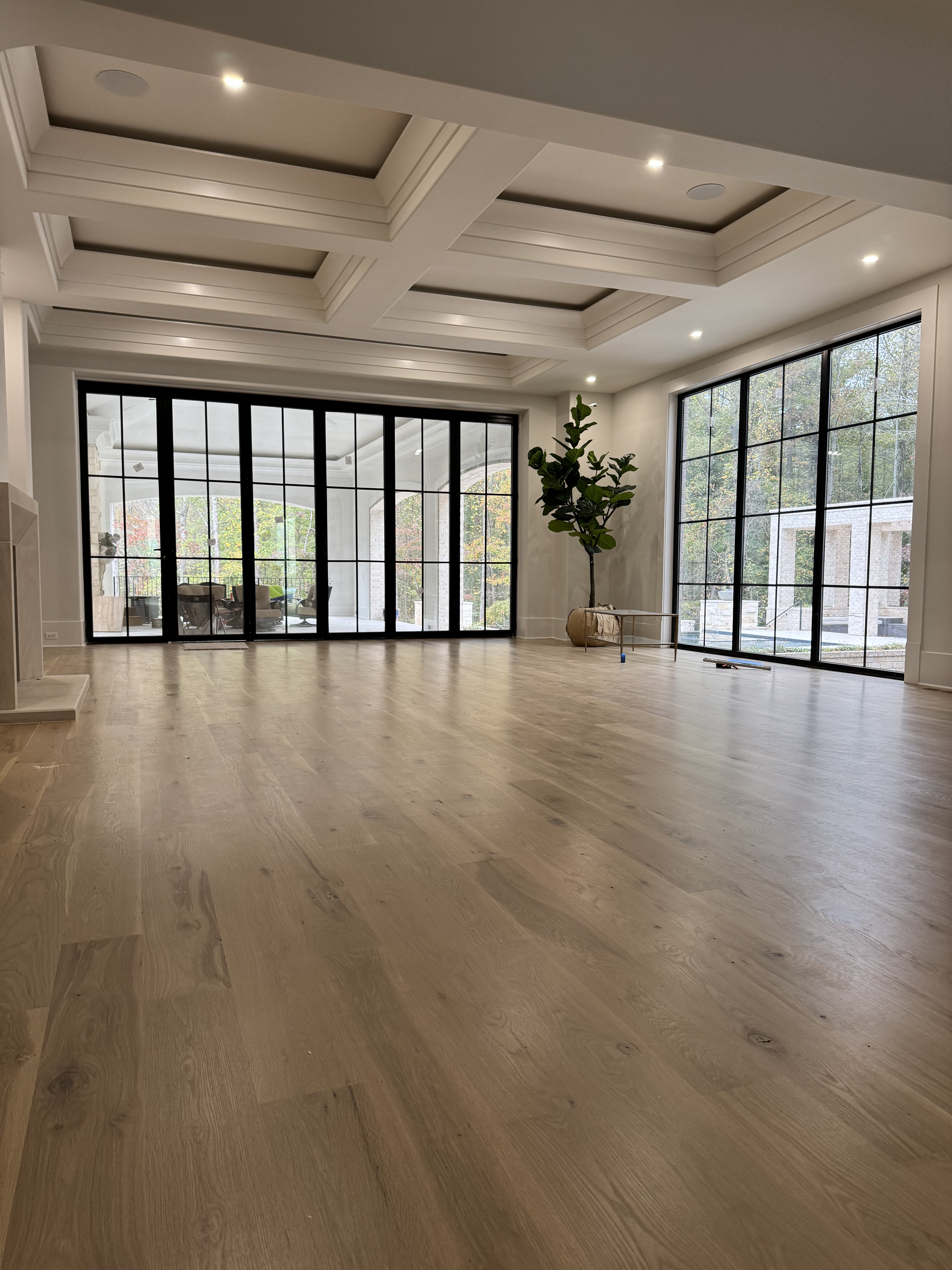
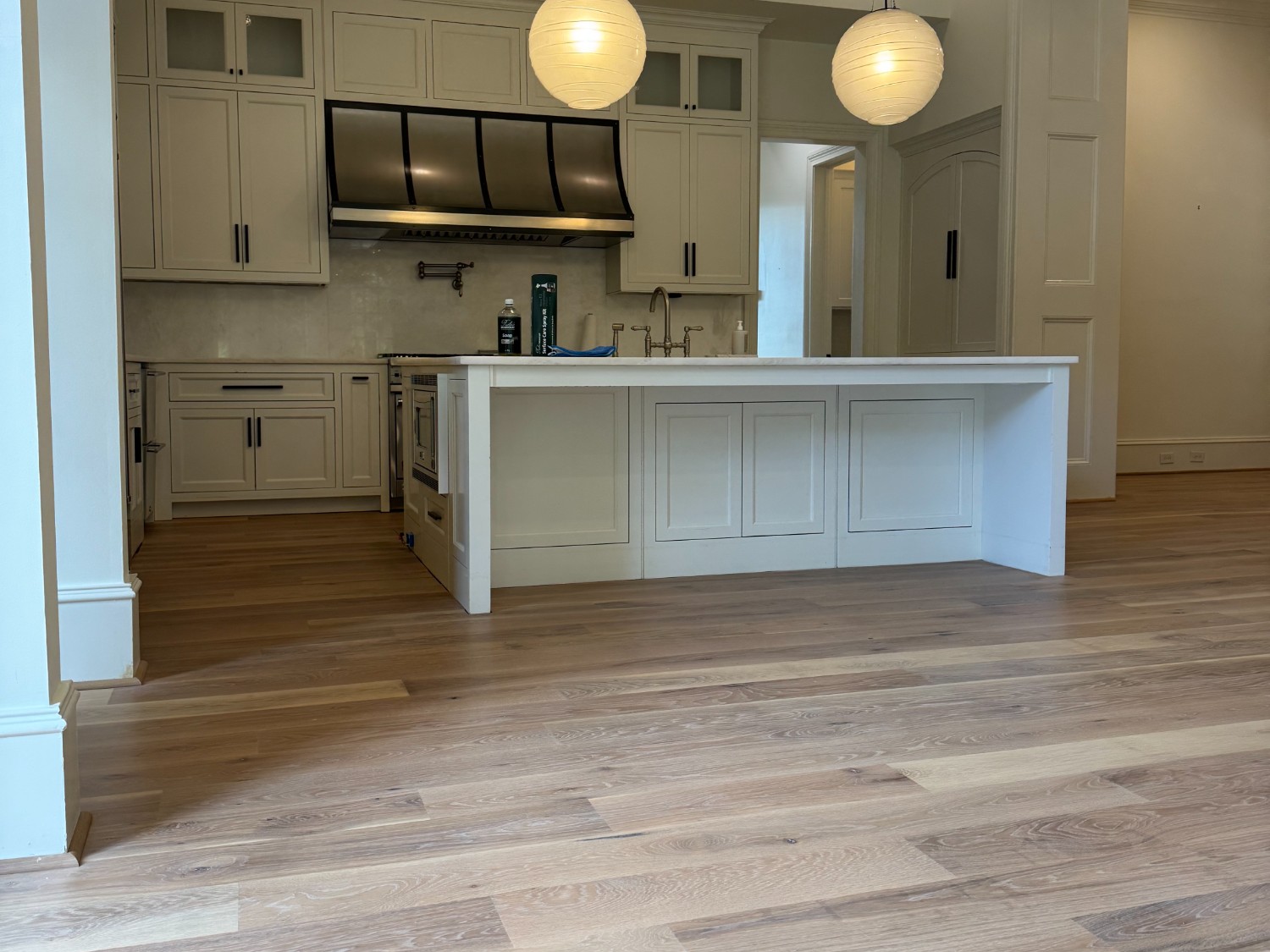
The most important part of an installation happens before the first board goes down. This is the preparation that keeps a new floor flat, quiet and beautiful for decades.
What Installation Costs
Cost
Installation cost is driven more by material choice than by labor. Material ranges widely: a standard red oak strip floor and a wide-plank white oak floor are different projects at different prices. We quote in writing after measuring, with material and labor broken out so you can see where the money is going.
Hardwood Installation Questions
Installation questions
How long does hardwood floor installation take?
Most residential installations run three to seven days, depending on square footage, whether existing flooring needs removal, and whether the floor is prefinished or finished on site. Site-finished floors add several days for staining and finish cure. Letting the wood settle happens before installation begins and adds a few days to the overall schedule.
Can hardwood be installed over concrete?
Engineered hardwood can work with proper moisture testing and the right underlayment or adhesive system. Solid hardwood generally cannot go directly over slab. This is why basements and homes on a slab usually have engineered floors.
Do I have to remove my old flooring first?
No, we handle removal and disposal: carpet, tack strip, staples, tile, or old vinyl. What is underneath is not fully knowable until it comes up, so we confirm the subfloor condition before the scope is final.
Prefinished or site-finished: which is better?
Prefinished floors arrive with the finish already applied, shortening the project and eliminating finishing odor. Site-finished floors are sanded and finished in place, allowing custom color, a smoother continuous surface without small grooves between boards, and the ability to match existing floors. Site-finished takes longer and costs more.
Can you install hardwood in a kitchen or bathroom?
Kitchens: yes, it is common and works well with prompt attention to spills. Full bathrooms are different, and we generally recommend luxury vinyl plank there instead. Standing water and hardwood are a poor combination regardless of finish quality.
Will my new floors match my stairs?
Only if they are done together, or if the stairs are matched to the new floor afterward with careful sampling. Treads are milled from different stock and take stain differently than flooring. We recommend planning stairs into the same project when both are in scope.
Does a home on a slab need engineered hardwood?
Usually, yes. Solid hardwood needs a wood subfloor to fasten into, and many homes and nearly every basement here sit on a concrete slab. Engineered is dimensionally stable enough to go over concrete with the right moisture barrier. We take a moisture or relative-humidity reading before specifying either.
What warranty comes with a new floor?
Two. The manufacturer warrants the wood itself, and our lifetime labor warranty covers the installation: boards that loosen, and gaps or squeaks caused by how the floor was put down. It is written into the quote. It does not cover water damage, humidity outside the manufacturer's range, or normal wear