

Hardwood flooring in Georgia typically costs $6 to $20 per square foot, including materials and labor. Prices vary based on material quality, labor rates, and project complexity. Here’s what you need to know:
- Material Costs: $3.23–$10.78 per sq. ft. Budget-friendly options are cheaper, while premium wood costs more.
- Labor Costs: $2.35–$7.84 per sq. ft. Atlanta-area rates are about 8% higher than the national average.
- Total Costs by Size: A 500 sq. ft. project ranges from $2,940 to $9,800.
- Additional Costs: Subfloor repairs, old flooring removal, and add-ons like stairs or moisture barriers can increase expenses.
For larger projects, costs per square foot may decrease slightly. Always get multiple quotes to avoid overpaying and ensure contractors include subfloor prep and other essentials in their estimates.
How Much Does Hardwood Flooring Cost? (Full Price Breakdown)
sbb-itb-9f8f869
Cost Breakdown: Materials, Labor, and Total Installation
Breaking down the costs for flooring installation helps clarify how your budget is distributed among materials, labor, and any additional expenses. Here’s what you need to know about pricing in Georgia.
Material Costs in Georgia
In Georgia, the price of materials varies between $3.23 and $10.78 per sq. ft., depending on the type and quality of wood. Budget-friendly or builder-grade options fall on the lower end, while high-end hardwoods with premium finishes are at the top. For a 500 sq. ft. project, you’re looking at approximately $1,617–$5,390 for materials alone. Keep in mind that Georgia applies a 4% state sales tax on flooring materials, which can add up, especially for larger projects. If you’re considering upgrading from mid-range to premium materials, expect an increase of about 25% in total project costs.
Now let’s dive into labor costs, which play a significant role in determining the total price.
Labor Costs and Regional Pricing
On average, flooring installers in Georgia charge $42 per hour, translating to about $2.35–$7.84 per sq. ft.. For a 500 sq. ft. space, labor costs typically range from $1,176 to $3,920. Where you live in Georgia also makes a difference. For instance, labor rates in the Atlanta metro area are about 8% higher than the national average, while rural areas tend to be more affordable. Other factors, like intricate patterns, subfloor repairs, accessibility, and whether trim or transitions are included, can further impact labor costs.
Total Installation Cost Estimates
When you combine material and labor costs, along with any additional fees, you get the total installation cost. Across Georgia, the total cost generally falls between $6 and $20 per sq. ft.. If you’re in Atlanta, plan for slightly higher rates, ranging from $6 to $22 per sq. ft.. Below is a breakdown of estimated costs based on project size:
| Project Size | Square Footage | Estimated Cost Range |
|---|---|---|
| Small room | 150 sq. ft. | $882 – $3,000 |
| Average room | 350 sq. ft. | $2,058 – $7,000 |
| Medium / main floor | 500 sq. ft. | $2,940 – $9,800 |
| Large project | 625 sq. ft. | $3,675 – $12,250 |
| Whole house | 1,200 sq. ft. | $7,056 – $24,000 |
Estimates are calculated using Georgia’s average range of $6–$20 per sq. ft..
Solid Hardwood vs. Engineered Hardwood Costs
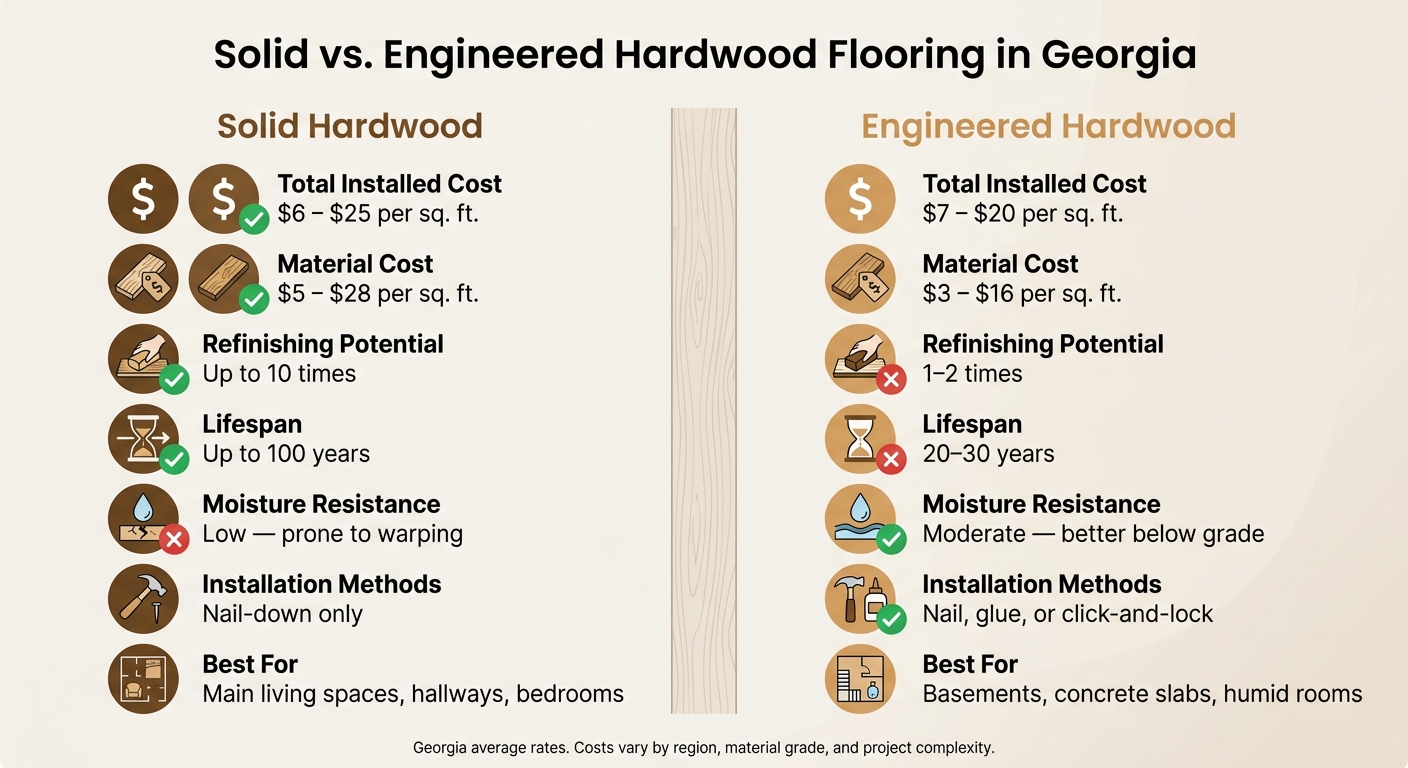
Solid vs. Engineered Hardwood Flooring Costs in Georgia
When deciding between solid and engineered hardwood, understanding how costs align with your budget and project requirements is crucial. While both options have similar installed costs in Georgia, the differences lie in material prices and other key features.
- Solid hardwood: Installed costs range from $6 to $25 per square foot, with material costs between $5 and $28 per square foot.
- Engineered hardwood: Installed costs fall between $7 and $20 per square foot, and material costs range from $3 to $16 per square foot.
Cost Comparison Table
| Feature | Solid Hardwood | Engineered Hardwood |
|---|---|---|
| Total Installed Cost | $6 – $25 per sq. ft. | $7 – $20 per sq. ft. |
| Material Cost | $5 – $28 per sq. ft. | $3 – $16 per sq. ft. |
| Refinishing Potential | Up to 10 times | 1–2 times |
| Lifespan | Up to 100 years | 20–30 years |
| Moisture Resistance | Lower; prone to warping | Moderate; better below grade |
| Installation Methods | Nail-down | Nail, glue, or click-and-lock |
These differences can help you choose the right hardwood type for specific areas of your home.
Best Uses for Each Type
Solid hardwood works best in main living spaces, hallways, and bedrooms where durability is a priority. Its ability to be sanded and refinished up to 10 times makes it a long-term investment. As Stephanie Mickelson, a contributing writer at Angi, notes:
"Solid wood costs more, but it lasts longer and can be refinished multiple times. Engineered wood costs less and can be installed below grade."
Engineered hardwood, on the other hand, is better suited for basements, rooms over concrete slabs, or spaces with fluctuating humidity – a common issue in many Georgia homes. Its layered construction resists warping and allows for flexible installation methods, including glue, nails, or click-and-lock systems. While it has a shorter lifespan of 20 to 30 years, it provides the aesthetic of real wood at a lower material cost.
Project Size and Cost Estimates
When planning for hardwood flooring in Georgia, the size of your project plays a big role in determining overall costs. Larger spaces often benefit from lower per-square-foot pricing, while smaller areas may face higher rates due to setup fees and minimum labor charges. Beyond square footage, factors like subfloor preparation, old flooring removal, and optional upgrades can also impact the final price. These estimates aim to help homeowners in Georgia plan their budgets before committing to a flooring project.
Small Projects: Under 500 sq. ft.
Smaller installations, such as a single bedroom, nursery, or home office, typically cost between $1,200 and $5,000 in Georgia. For example, a 150 sq. ft. room might range from $900 to $3,000, while a 350 sq. ft. space could average around $4,459. It’s wise to add about 10% to your square footage to account for cutting waste, especially in rooms with closets or irregular shapes.
If you’re considering a DIY approach for a 500 sq. ft. project, you could save about $2,548 in labor costs, though you’ll need to rent specialized tools like a pneumatic nailer.
Medium Projects: 500–1,000 sq. ft.
For medium-sized areas, such as a combined living and dining room or several bedrooms, costs vary depending on the exact size and complexity. A 500 sq. ft. installation typically runs between $2,940 and $9,800, while expanding to 1,000 sq. ft. could cost anywhere from $6,000 to $24,000. Most medium-sized projects fall in the range of $3,500 to $11,000.
Since contractor prices in Georgia can differ by 20–30% depending on location and workload, it’s a good idea to get at least three written quotes for projects of this size. Larger projects may reduce the cost per square foot, but additional considerations, such as subfloor repairs, can still influence your total expenses.
Large Projects: Over 1,000 sq. ft.
For whole-home or open-concept spaces exceeding 1,000 sq. ft., the price range widens significantly. A 1,200 sq. ft. project might cost between $7,200 and $31,500, while a 1,500 sq. ft. installation can range from $10,000 to $36,400. These larger projects often require additional planning for unexpected costs, such as subfloor repairs or moisture issues.
| Project Size | Estimated Cost Range (Georgia) | Typical Use Case |
|---|---|---|
| 500 sq. ft. | $2,940 – $9,800 | Main floor or multiple rooms |
| 1,000 sq. ft. | $6,000 – $24,000 | Small home or large multi-room floor |
| 1,200 sq. ft. | $7,200 – $31,500 | Whole-house installation |
| 1,500 sq. ft. | $10,000 – $36,400 | Large home or open-concept floor |
For larger installations, using prefinished planks can save time and reduce the mess of on-site sanding, allowing for quicker use of the space. It’s also smart to set aside a 10–15% contingency for potential subfloor repairs, as issues like uneven surfaces or moisture damage often become apparent only after removing the old flooring.
Additional Costs to Budget For
When planning your flooring project, it’s important to account for expenses beyond just square footage and materials. These additional costs can quickly add up, so understanding them upfront can help you stay within budget.
Subfloor Preparation and Repairs
Most contractors base their quotes on the assumption that your subfloor is clean and level. If it’s not, there will likely be extra charges. Subfloor preparation is typically billed at the contractor’s hourly rate, separate from the base installation cost. Sometimes, this cost is labeled as "to be determined", so it’s a good idea to clarify it before any demolition begins.
For example, subfloor repairs in the Marietta area often range from $1,500 to $4,000. If joist repairs are needed, the cost can be $40 to $60 per sq. ft.. Even minor issues can escalate costs quickly, so ask your contractor if subfloor prep is included in their quote, and if not, request an estimated range.
Another key cost to review is the removal of your existing flooring.
Removal of Old Flooring
Removing old flooring is rarely included for free. Labor costs for this range from $2.00 to $4.50 per sq. ft., with disposal fees adding an extra $150 to $400 per project. Carpet removal is generally the least expensive, costing $0.35 to $1.39 per sq. ft., but materials like glued-down hardwood or tile require more effort and come with higher costs.
If you’re looking to cut costs, consider moving furniture yourself, which can save you $28 to $70 per room. Additionally, confirm whether debris removal is included in the contractor’s quote, as some contractors leave materials on-site unless you pay a separate disposal fee.
"Labor typically makes up about 80% of your total refinishing investment, which means the skill and experience of your chosen professionals directly impacts both your cost and results." – David Emmerling, Owner, Buff & Coat
If your home in Georgia was built before 1980, testing old vinyl or laminate for asbestos is crucial before removal. Professional asbestos remediation costs range from $5 to $20 per sq. ft.. Skipping this step could lead to serious legal and health issues.
Add-Ons: Trim, Stairs, and Moisture Barriers
Finishing touches like underlayment, trim, and moisture barriers can also add to your expenses. These typically account for about 5% of your total project budget, which translates to roughly $147 to $490 for a 500 sq. ft. project. In Georgia’s humid climate, moisture barriers are especially useful to prevent warping and cupping after installation.
Upgrading stairs is another common add-on. If you’re replacing carpeted stairs with hardwood, expect to pay between $75 and $200 per step for installation.
Extra Expense Cost Table
Here’s a quick summary of these additional costs to help you plan:
| Expense | Estimated Cost | Notes |
|---|---|---|
| Subfloor Repair | $1,500 – $4,000 per project | Marietta, GA range; varies by condition |
| Joist Repair | $40 – $60 per sq. ft. | Billed separately from standard prep |
| Flooring Removal (General) | $2.00 – $4.50 per sq. ft. | Labor only |
| Carpet Removal | $0.35 – $1.39 per sq. ft. | Least expensive removal option |
| Debris Disposal / Haul-Away | $150 – $400 per project | Often a separate line item |
| Underlayment & Trim | ~5% of total budget | Approx. $147 – $490 for 500 sq. ft. |
| Hardwood Stair Installation | $75 – $200 per step | Replacing carpet on stairs |
| Furniture Moving | $28 – $70 per room | Can be avoided with DIY prep |
| Georgia Sales Tax (Materials) | 4.00% | Applied to all physical materials |
Planning Your Hardwood Floor Installation Budget
Key Takeaways
In Georgia, hardwood floor installation typically ranges from $6 to $20 per square foot, depending on the specifics of your project. However, regional factors, like higher costs in Atlanta, can influence your final expenses. On top of that, additional charges for things like subfloor repairs, removing old flooring, stair upgrades, or installing moisture barriers can add up quickly. Accounting for these potential costs upfront is essential to avoid unexpected financial surprises.
Budgeting Tips for Georgia Homeowners
To ensure you’re getting the best deal, aim to collect at least three written quotes from licensed contractors. Pricing for the same project can differ by as much as 20% to 30%. When reviewing these quotes, pay close attention to whether they include key items like subfloor preparation, removal of old flooring, and transitions to other rooms. These are often marked as separate costs or listed as "to be determined", which could lead to unexpected expenses once the work begins.
It’s also crucial to confirm that your contractor is licensed, bonded, and insured in Georgia. This protects you from liability if something goes wrong during the installation process.
Don’t forget about the state sales tax of 4%, which applies to all materials. Additionally, if your project involves structural changes – like reinforcing joists – check with your local building department for permit requirements. This is especially important in areas like Paulding County or the City of Atlanta, where regulations can vary.
Looking to save some money? Moving furniture yourself can help you avoid paying $60–$120 per hour for this service.
"Always get 3 quotes – prices can vary 20-30% between contractors." – costonce.com
FAQs
What’s usually included in a Georgia hardwood installation quote?
When you get a hardwood installation quote in Georgia, it usually covers a few key components:
- Materials: This includes the cost of the hardwood itself, which can vary depending on the type and quality of the wood.
- Labor: Installation work is factored in, covering everything from measuring to laying the hardwood.
- Underlayment and Trim: These essential elements for a polished finish are typically part of the quote.
Some quotes might also account for site-specific details, like preparing the subfloor or removing old flooring. Keep in mind, pricing can vary depending on regional factors and the unique needs of your project. These elements can influence how much you’ll ultimately pay.
How can I estimate my total cost before subfloor issues are found?
To get a rough idea of expenses before uncovering any subfloor problems, you can use Georgia’s average hardwood installation cost range of $6 to $20 per square foot. Simply multiply the size of your space by this range. For example, a 500-square-foot area would cost between $3,000 and $10,000.
Keep in mind, this estimate includes the following breakdown of costs:
- 55% for materials
- 40% for labor
- 5% for extras like underlayment and trim.
This calculation gives you a solid starting point before factoring in any subfloor issues that might arise.
Which is cheaper long-term in Georgia: solid or engineered hardwood?
In Georgia, engineered hardwood tends to be a more economical choice over time. It typically costs between $4.50 and $16 per square foot, including installation. For an entire project, homeowners usually spend around $2,000 to $7,000 on average.
On the other hand, solid hardwood comes with a higher price tag, ranging from $5 to $28 per square foot, and it often requires more frequent refinishing. These additional refinishing costs can significantly increase the total expense over the years.
Another advantage of engineered hardwood is its layered construction, which makes it more durable and stable. This design helps minimize maintenance needs and extends the flooring’s overall lifespan, further adding to its cost-effectiveness.


