

Upgrading your stairs with hardwood flooring can transform your home’s look while offering long-lasting durability. But how much does it cost? Here’s a quick breakdown:
- Average Cost: $2,400
- Typical Range: $1,800–$6,300
- Cost Per Step: $100–$300
- Small Projects: Start at $750
- High-End Designs: Can reach $30,000
Costs depend on factors like wood type (e.g., oak, walnut), staircase design, labor, and finishing. Straight stairs are more affordable, while curved or spiral designs demand higher budgets. Labor accounts for about 40% of the total, with rates ranging from $50–$100 per hour. Material choices, such as prefinished vs. unfinished wood, also impact overall expenses.
For budget-conscious homeowners, refinishing existing stairs or removing old materials yourself can lower costs. Always plan for extras like handrails, balusters, or subfloor repairs, which can add $100–$2,500 or more.
This guide dives deeper into these factors to help you plan your project effectively.
Typical Hardwood Stair Installation Costs at a Glance
Common Cost Ranges for Hardwood Stair Projects
The cost of installing hardwood stairs varies based on the number of steps and the materials chosen. On average, you can expect to pay $100 to $300 per step, which means a typical 12–16 step staircase might cost between $1,800 and $6,300. For smaller projects like overlaying existing treads, prices start around $750, while high-end materials or elaborate designs can push costs up to $30,000. These figures represent general market trends, but custom designs or premium materials can result in higher expenses.
Railings and balusters are usually billed separately, with costs ranging from $500 to $2,500, depending on the style and materials chosen.
| Project Scale | Steps | Estimated Total Cost |
|---|---|---|
| Small update | 8–10 steps | $750 – $3,000 |
| Standard staircase | 12–16 steps | $1,800 – $6,300 |
| Large or multi-flight | 20+ steps | $6,000 – $30,000 |
In cities like Atlanta, where labor costs are typically higher and multi-story homes are common, prices often fall at the higher end of these ranges. Next, let’s explore what drives these cost differences.
Factors That Affect Cost Variations
Several factors influence the overall cost of hardwood stair installation, including the type of wood, the design, and the finish.
The choice of wood plays a big role in pricing. For example, oak stairs usually cost $100–$200 per step, whereas walnut, a more expensive option, ranges from $180–$300 per step. The design of the staircase also impacts the cost – straight staircases are typically the most budget-friendly, while curved or spiral designs require specialized craftsmanship and can cost anywhere from $3,000 to $10,400.
Finishing options further affect the budget. Prefinished treads come with a higher upfront cost but save time by eliminating the need for on-site staining. On the other hand, unfinished wood requires additional labor, typically costing around $2–$8 per square foot for staining and finishing.
TriArt Hardwoods provides custom quotes tailored to your staircase dimensions, wood selection, and finish preferences, helping you plan your project with confidence. Understanding these variables is key to making informed decisions about your budget and design.
sbb-itb-9f8f869
How much do hardwood stairs cost to install? (and if they are right for your home!)
Cost Breakdown: Materials, Labor, and Extra Expenses
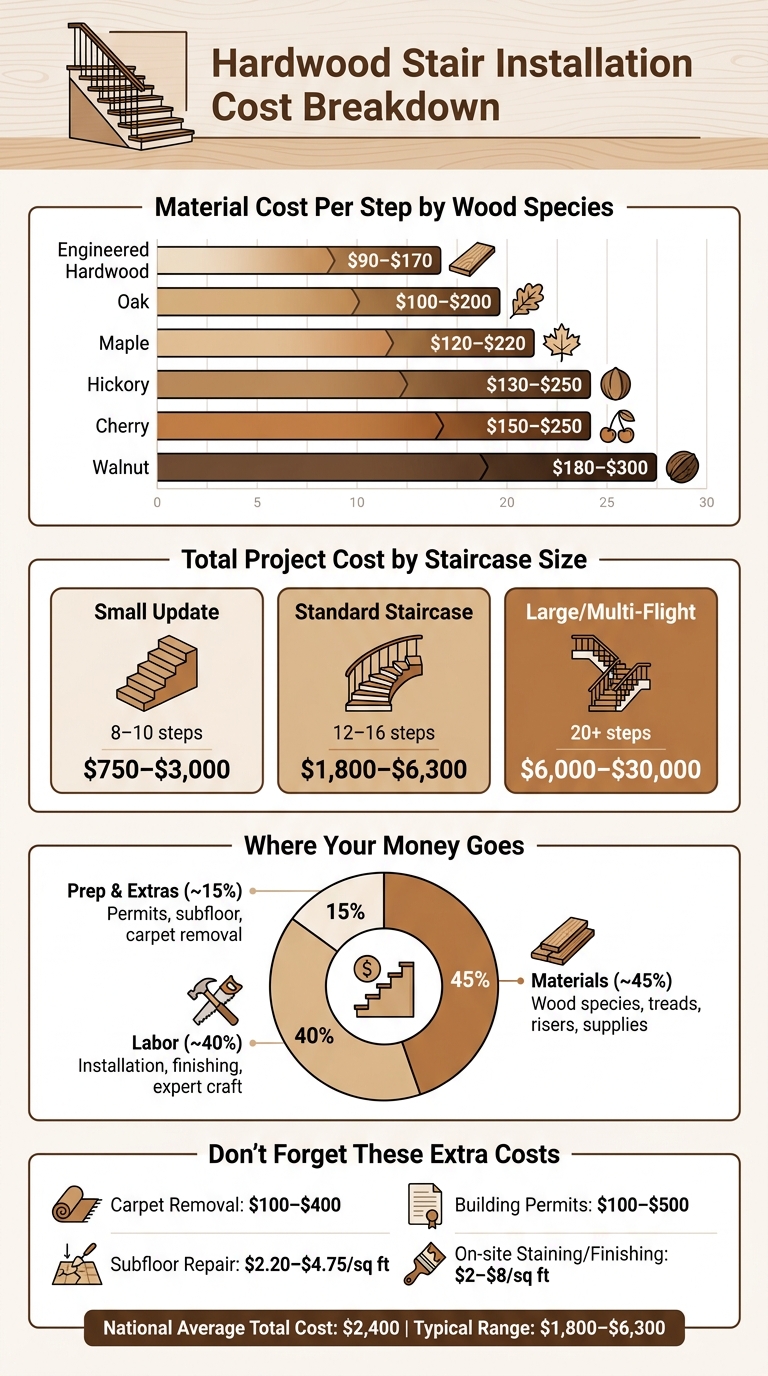
Hardwood Floor Stair Installation Cost Breakdown by Wood Type & Design
Building on the earlier discussion of cost ranges and factors, let’s take a closer look at the detailed breakdown of expenses.
Material Costs
Materials are usually the biggest expense when installing a staircase. For a typical 12–16 step staircase, material costs range from $600 to $2,400. This includes treads, risers, nosing, adhesive, nails, wood putty, and finishing supplies.
The type of wood you select plays a major role in determining material costs. Here’s a breakdown of approximate costs per step based on wood species:
| Wood Species | Cost per Step (Materials Only) |
|---|---|
| Engineered Hardwood | $90 – $170 |
| Oak | $100 – $200 |
| Maple | $120 – $220 |
| Hickory | $130 – $250 |
| Cherry | $150 – $250 |
| Walnut | $180 – $300 |
Prefinished treads may cost more upfront but save on-site sanding and staining expenses. On the other hand, unfinished wood is cheaper initially but requires an additional $2–$8 per square foot for finishing. If you’re considering premium options, keep in mind that high-quality or thick treads can go up to $160 per unit before installation.
Once you’ve chosen your materials, the next step is factoring in labor costs for installation.
Labor Costs
Labor typically accounts for around 40% of the total project cost. Rates range between $50 and $100 per hour, or about $40–$100 per step. For a standard staircase, labor costs usually fall between $600 and $1,600, with projects taking two to five days to complete.
The complexity of your design can significantly influence labor costs. Straight staircases are the most straightforward and economical to install. Designs like L-shaped or U-shaped stairs require more intricate cutting and framing, which increases costs. Spiral or curved staircases are the most labor-intensive and can cost $10,400 or more. Open risers also require additional labor due to stricter safety codes.
Additional elements like handrails, balusters, and newel posts are billed separately, adding anywhere from $50 to $1,500, depending on the complexity.
Preparation and Repair Costs
Preparation work is another key expense that’s often overlooked. For example, removing old carpet from the staircase can cost $100–$400. Doing this yourself can save you that amount.
Subfloor repairs are another potential cost, ranging from $2.20 to $4.75 per square foot, with full updates averaging around $1,560. Addressing issues like squeaky steps or loose treads during this phase is crucial. Minor repairs in this category can cost between $200 and $600.
Skipping these steps can lead to bigger problems down the road. Additionally, if structural changes are necessary, you may need to budget an extra $100–$500 for building permits. Proper preparation is key to ensuring a durable and long-lasting staircase installation.
Choosing the Right Hardwood and Finish for Your Stairs
Wood Species and Cost Differences
When it comes to choosing the right wood for your stairs, balancing cost, durability, and style is key. Oak is a go-to option for many homeowners because it’s sturdy, widely available, and has a timeless grain pattern – all at a reasonable price. If your stairs see a lot of foot traffic, Maple and Hickory are worth considering. These woods are harder and more resistant to wear. Maple typically ranges from $120 to $220 per step, while Hickory costs between $140 and $250 per step.
For a more luxurious aesthetic, Walnut and Cherry are excellent choices. Cherry has a unique quality – it darkens beautifully over time, adding depth to its appearance. Walnut, on the other hand, offers rich, chocolate tones and is often used in high-end interiors. If budget is a top concern, engineered hardwood might be the solution. It’s more affordable and handles humidity changes better, but its thinner wear layer means it can only be refinished a limited number of times.
| Wood Species | Cost per Step | Hardness | Best For |
|---|---|---|---|
| Oak | $100–$200 | High | Classic look, everyday use |
| Maple | $120–$220 | Very High | Modern style, high-traffic stairs |
| Hickory | $140–$250 | Extremely High | Rustic look, heavy-use areas |
| Cherry | $150–$250 | Moderate | Elegant, lower-traffic stairs |
| Walnut | $180–$300 | Moderate | Luxury interiors |
| Engineered | $90–$170 | Moderate | Humid climates, tighter budgets |
How Finishes and Stains Affect Costs
The type of finish you select for your stairs impacts both initial and long-term expenses. Prefinished treads are ready to install, saving time and hassle on-site, but they come with a higher upfront cost. Meanwhile, unfinished wood is cheaper initially, though finishing it on-site can add $2–$8 per square foot. Be sure to revisit earlier cost breakdowns for more details on finishing expenses.
Sheen levels also matter. Matte and satin finishes are practical choices – they do a better job of concealing minor scratches and provide better traction. High-gloss finishes, while visually striking, tend to highlight wear and may require additional anti-slip treatments. If you want a custom color or a multi-step stain to match existing flooring or trim, unfinished wood gives you that flexibility, though it increases both the time and cost of the project.
These finishing choices not only influence costs but also tie into the overall design of your stairs, which brings us to the next consideration – how the staircase layout affects your budget.
Staircase Design and Its Effect on Cost
The design of your staircase plays a significant role in determining the final cost. Straight staircases are the most straightforward and, therefore, the least expensive to build. However, adding complexity – like L-shaped or U-shaped designs – raises costs. These layouts require landings, more framing, and precise cutting, which increases labor expenses.
At the high end of the spectrum are spiral and curved staircases, with installation costs averaging around $10,400. These designs demand intricate craftsmanship and specialized skills. Floating or cantilevered stairs also come with a hefty price tag due to the need for advanced engineering and premium materials. Open risers, while stylish, are typically more expensive than closed risers because they must meet stricter safety codes.
If keeping costs under control is your goal, sticking with a straight staircase and standard tread widths is the most budget-friendly option.
Budgeting and Cost-Saving Tips for Stair Installation
How to Plan Your Stair Installation Budget
Start by figuring out how many stairs you need. Most homes have between 10 and 20 steps, so for a typical 15-step staircase, you’re looking at a cost range of $1,500 to $4,500. This aligns with the national average of about $2,400 for stair installation.
But don’t stop there – remember to account for additional expenses. Labor alone can make up around 40% of the total cost. Then there are other factors like removing old materials (like carpet), repairing subfloors, and paying for permits if structural changes are involved. Permits can range from $100 to $500, and sales tax (usually 5% to 10%) should also be included. By combining these estimates with the base cost, you’ll have a clearer picture of your total budget.
Ways to Cut Costs on Stair Installation
Choosing the right wood can make a big difference. For example, red oak costs about $100–$200 per step, and maple runs slightly higher at $120–$220 per step. Both are durable and more affordable than premium woods like walnut or cherry. If the staircase structure is still in good shape, refinishing it might be the way to go. Refinishing typically costs between $300 and $1,000, which is much cheaper than a full replacement.
Another way to save is by tackling some of the labor yourself. Removing old carpet or handling minor repairs can cut labor costs by as much as 40%, especially since professional labor rates range from $50 to $100 per hour. Prefinished treads are another cost-effective option because they eliminate the need for on-site staining and finishing. Plus, if you’re planning a larger hardwood flooring project, bundling it with your stair installation can give you more leverage when negotiating prices. These tips can help you stay within budget while still achieving the look you want.
How TriArt Hardwoods Helps With Cost Planning
TriArt Hardwoods makes budgeting easier by offering in-home consultations tailored to your project. A professional will measure your staircase, assess its condition, and identify any prep work needed. From there, they’ll provide a custom quote that matches your design preferences and budget. Whether you’re considering mid-range wood species, prefinished treads, or bundling projects for better pricing, TriArt can guide you through the process to create a plan that works for you.
Conclusion and Key Takeaways
Hardwood stair installations in Atlanta generally cost between $1,800 and $6,300, with the average landing around $2,400. The final price depends on several factors, including materials, labor, design complexity, and finishing options.
The design of your staircase is a major cost driver. Straight stairs are the most budget-friendly option, while spiral or curved designs can significantly increase expenses. Material selection also plays a big role: solid hardwood is more expensive upfront but lasts for decades with refinishing, while engineered hardwood offers a more affordable starting price and better resistance to moisture. Understanding these factors helps you make informed decisions that balance aesthetics and value – areas where TriArt Hardwoods excels.
Hardwood stairs also deliver a solid return on investment, typically between 60% and 80%. TriArt Hardwoods specializes in providing detailed assessments and custom quotes to ensure transparency. Their process includes measuring your staircase, checking the subfloor, and advising on the best wood species and finishes for your needs. With hardwood stairs and handrails as a core focus, their team brings expertise to every project, ensuring no detail is overlooked.
To prepare for your stair installation, set a clear budget, request an itemized quote, and choose materials that offer the right balance of durability and cost. This approach ensures your stairs will provide both lasting quality and value.
FAQs
What’s included in the per-step price?
The cost per step usually includes both materials and labor, with prices typically falling between $100 and $300 per stair. However, this range can shift depending on factors such as the type of wood, the finish selected, and how complex the installation process is.
Do I need new risers or just new treads?
If your staircase needs an update, whether to replace just the treads or both the treads and risers depends on their condition. If the risers are still sturdy and intact, you might only need to replace the treads, especially if they show wear or damage. On the other hand, if the risers are cracked, damaged, or look outdated, replacing both can give your staircase a more durable and unified appearance. A professional installer can help evaluate the situation and guide you during the planning process.
How can I tell if my stairs need subfloor repairs?
When preparing for hardwood installation on a staircase, keep an eye out for warning signs such as creaking noises, uneven steps, or visible damage to the subfloor. These issues can compromise both the stability and safety of the finished staircase. Taking the time to fix subfloor problems beforehand helps ensure a long-lasting and secure upgrade.


