

Hardwood flooring is a popular choice for businesses in Sandy Springs due to its durability, aesthetic appeal, and long-term value. Whether it’s a corporate office, boutique hotel, or retail store, hardwood floors can handle high foot traffic while maintaining a polished look. Key considerations for installation include selecting the right wood species, finishes, and installation methods tailored to the space’s needs.
Key Points:
- Durability: Hardwoods like Hickory, Maple, and Brazilian Cherry resist dents and scratches, making them ideal for high-traffic areas.
- Aesthetic Options: Choices range from modern White Oak to upscale Walnut, with design enhancements like herringbone patterns and mixed-width planks.
- Installation: Engineered hardwood is often preferred for commercial settings, especially over concrete slabs, due to its stability.
- Maintenance: Regular cleaning, protective measures, and periodic refinishing extend the lifespan of hardwood floors.
- Planning: Proper subfloor preparation, acclimation of wood, and choosing the right finish are essential for a successful installation.
TriArt Hardwoods specializes in commercial projects, offering expert consultations, precise installations, and refinishing services to ensure your floors stand the test of time.
How To Install Hardwood Floors
sbb-itb-9f8f869
Benefits of Hardwood Flooring for Sandy Springs Businesses
Understanding the advantages of hardwood flooring highlights why it’s a go-to choice for high-traffic commercial spaces in Sandy Springs. Plus, professional installation can make all the difference in achieving the best results.
Durability and Performance in High-Traffic Areas
In busy commercial environments, selecting the right wood species and finish is essential. Hickory, known for its exceptional hardness, resists denting even in the most demanding spaces. Maple is another excellent choice, thanks to its high density, while Brazilian Cherry stands out as one of the toughest options available.
The finish is just as important as the wood itself. Aluminum oxide coatings are highly recommended for retail and public areas because they offer excellent scratch resistance. Another top choice is UV-cured polyurethane, which can handle frequent cleaning and daily wear with ease. Many Sandy Springs businesses are also opting for matte or low-sheen finishes, which are better at concealing everyday scuffs compared to high-gloss options.
Beyond their durability, hardwood floors bring a level of visual appeal that enhances any space.
Aesthetics and Design Options
"Hardwood flooring communicates quality, attention to detail, and design credibility." – Tiffany Allegro
Hardwood flooring can transform how customers perceive a business. For example, White Oak creates a clean, modern vibe, while darker woods like Walnut or Brazilian Cherry lend a more traditional, upscale feel.
Businesses are also getting creative with their designs. Features like chevron and herringbone patterns, mixed-width planks, and stained borders are becoming popular for adding unique focal points to lobbies and conference rooms. These design choices make spaces feel purposeful and branded rather than generic. Custom touches, such as stair nosings and moldings, can further enhance the overall look, giving the property a polished and cohesive finish.
In addition to their aesthetic appeal, hardwood floors offer financial benefits that make them a smart long-term choice.
Long-Term Investment and Property Value
"While hardwood may have a higher initial cost compared to vinyl or laminate, its longevity and ability to be refinished make it a smart investment." – Tiffany Allegro, Allegro Custom Floors
Although hardwood flooring comes with a higher upfront cost than vinyl or laminate, its durability makes it a cost-effective option over time. Unlike synthetic alternatives that require complete replacement when worn, hardwood can be sanded and refinished multiple times, extending its life and maintaining its appearance over decades.
For commercial spaces at ground level or those installed over concrete slabs – common in Sandy Springs – engineered hardwood is a practical choice. Its dimensional stability helps it resist warping and shifting, making it a better option in conditions where solid hardwood might struggle. This added structural reliability ensures your investment is protected from the beginning.
Pre-Installation Planning for Commercial Hardwood Flooring
Getting everything right before installation begins can save you from headaches down the road. By focusing on three key areas – how the space is used, the subfloor’s condition, and proper wood acclimation – you can set the foundation for a hardwood floor that stands up to the demands of busy commercial spaces.
Assessing Space Use and Traffic Patterns
Start by understanding how the space will be used daily. For example, a bustling retail store, a restaurant, or a hotel lobby will each put different levels of stress on a floor. High-traffic areas call for tougher wood species like Hickory or Maple, paired with durable finishes to handle wear and tear.
"In high-traffic environments, the durability of the hardwood floor is heavily influenced by two main factors: wood species and surface finish." – Tiffany Allegro, Allegro Custom Floors
If moisture is a concern, engineered hardwood is a better choice than solid wood. Its layered design helps resist warping, something solid wood struggles with in damp conditions. Also, installing walk-off mats at entrances can help keep grit and debris from scratching the surface over time.
Subfloor Evaluation and Preparation
In many commercial buildings, especially those in places like Sandy Springs, concrete slabs are a common subfloor material. However, concrete can pose a moisture risk. Before any flooring goes down, the subfloor needs a thorough inspection for levelness, damage, and moisture levels. Skipping this step can lead to structural issues or floor movement later on. To address moisture concerns, consider installing a vapor retarder or moisture barrier. If the building’s HVAC system isn’t stable, running a dehumidifier during preparation can help create consistent conditions.
"The kind of subfloor our hardwood flooring company will be attaching your new hardwood flooring to is also a big factor in both options, labor, and ultimate end total on your estimate." – Sandy Springs Hardwood Flooring
This evaluation also helps you decide on the best installation method – whether glue-down or floating – to ensure stability in high-demand environments.
Climate, Acclimation, and Scheduling
Acclimating the wood is a step that often gets overlooked but is absolutely essential.
"Acclimation will likely be the longest part of your flooring installation project. Hardwood flooring needs time to adjust to the moisture in its environment." – Noel Brewick, Owner, Footprints Floors Sandy Springs
Before the wood even arrives, make sure the HVAC system is running under normal conditions for at least five days. Keep indoor temperatures between 60°F and 80°F and relative humidity between 30% and 50%. Once delivered, the wood needs time to adjust: about 5–7 days for standard strips and up to 10 days for wider planks.
| Flooring Type | Acclimation Time | MC Variance vs. Subfloor |
|---|---|---|
| Solid Strip (< 3") | 5–7 days | Within 4% |
| Wide Plank (≥ 3") | 7–10 days | Within 2% |
| Engineered Wood | 3–5 days | Follow manufacturer specs |
Plan for an 8- to 13-day window from delivery to the start of installation. Denser woods like Hickory might need extra time due to their higher sensitivity to moisture changes. During acclimation, measure the moisture content of at least 40 boards per 1,000 square feet upon delivery, and keep an eye on humidity levels with a digital hygrometer throughout the process.
Choosing Hardwood Materials and Installation Methods
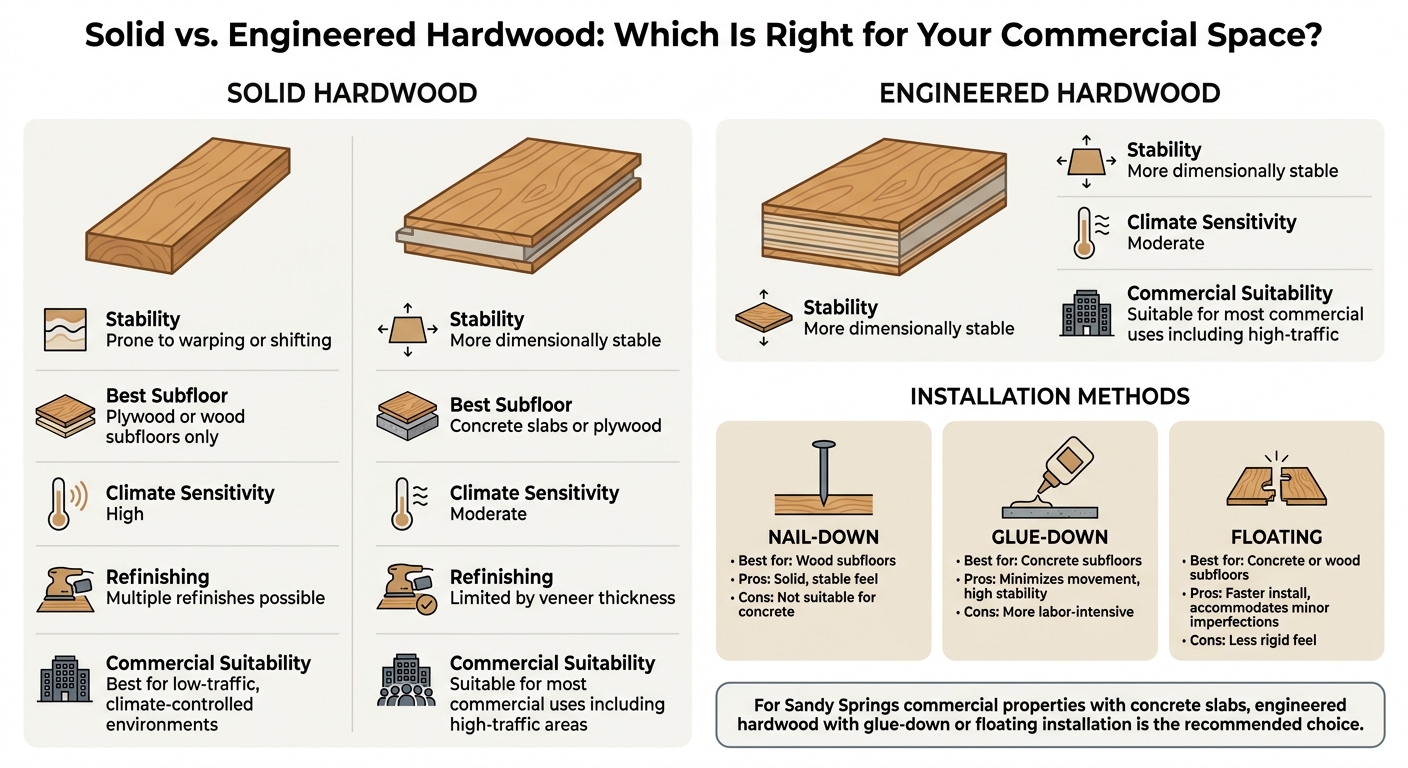
Solid vs. Engineered Hardwood for Commercial Spaces
Once pre-installation planning is complete, the next step is selecting the right hardwood material and installation method. These choices play a key role in how well your flooring performs over time.
Solid vs. Engineered Hardwood for Commercial Use
Solid hardwood is made from a single piece of wood and is known for its timeless appearance and ability to be refinished multiple times. However, it’s highly sensitive to moisture and humidity, which can make it less suitable for many commercial settings.
Engineered hardwood, by contrast, features a real hardwood veneer bonded to a plywood or HDF core. This layered construction provides greater stability, making it less prone to warping or shifting when exposed to fluctuating conditions.
"In ground-level installations or over concrete slabs – common in commercial buildings – engineered hardwood is typically the better choice due to its structural resilience." – Tiffany Allegro, Allegro Custom Floors
For commercial projects in Sandy Springs, especially those involving concrete slabs, engineered hardwood is often the practical option.
| Feature | Solid Hardwood | Engineered Hardwood |
|---|---|---|
| Stability | Prone to warping or shifting | More dimensionally stable |
| Best Subfloor | Plywood or wood | Concrete slabs or plywood |
| Climate Sensitivity | High | Moderate |
| Refinishing | Multiple refinishes possible | Limited by veneer thickness |
| Commercial Suitability | Best for low-traffic, controlled environments | Suitable for most commercial uses |
The next decision involves selecting hardwood species that combine durability with aesthetic appeal for high-traffic environments.
Hardwood Species and Grades for Commercial Spaces
Different wood species vary in their ability to handle heavy foot traffic. Harder woods generally perform better, resisting dents and wear more effectively. Below are some popular choices for commercial spaces:
- Hickory: Known for its extreme hardness, hickory is ideal for areas like retail floors and lobbies.
- Maple: Dense and smooth-grained, maple is a go-to for gyms, dance studios, and other high-activity settings.
- White Oak: Combines durability with versatility. It takes stains well, making it a popular choice for boutique hotels, showrooms, and branded interiors.
- Brazilian Cherry (Jatoba): A luxurious option prized for its exceptional hardness and rich aesthetics, perfect for upscale commercial spaces.
Oak remains a top choice in the Sandy Springs area due to its availability and versatility. For businesses looking to make a statement, design options like herringbone or chevron patterns, mixed-width planks, or stained borders can add a touch of individuality without sacrificing durability.
When it comes to finishes, UV-cured polyurethane offers excellent scratch resistance and quick drying times, making it ideal for high-traffic settings. Aluminum oxide coatings, commonly found on prefinished planks, provide long-lasting durability. For spaces where touch-ups might be needed, oil-based finishes allow for spot repairs but generally require more maintenance.
Installation Methods for Commercial Spaces
In commercial settings, three main installation methods are commonly used: nail-down, glue-down, and floating.
- Nail-down: This traditional method works well with wood subfloors and provides a solid, stable feel. However, it’s not suitable for concrete slabs, which limits its application in many Sandy Springs commercial properties.
- Glue-down: Perfect for concrete subfloors, this method involves adhering planks directly to the slab. It minimizes movement and enhances stability, making it ideal for high-traffic areas.
- Floating: This method involves interlocking planks that "float" above the subfloor. It’s compatible with both concrete and wood subfloors, allows for quicker installation, and accommodates minor subfloor imperfections.
For most commercial projects, glue-down or floating installations are preferred. These methods help reduce movement in the flooring, which is essential for busy environments where conditions can change frequently.
Maintaining Commercial Hardwood Floors
A proper maintenance routine is just as important as the initial installation when it comes to commercial hardwood floors. It not only keeps them looking great but also helps extend their lifespan – an essential consideration for businesses in Sandy Springs.
Daily and Routine Cleaning
Keeping hardwood floors clean on a daily basis is crucial for preserving their finish. Dirt and grit brought in from outside act like sandpaper, gradually wearing down the surface. To combat this, use a microfiber mop or a soft-bristled vacuum daily to remove debris. For spills, wipe them up immediately with a dry or slightly damp cloth. When damp mopping is required, ensure the mop is well-wrung to avoid excess moisture, which can damage the wood. If the floor has an oil finish, use a natural soap mixed with hot water, and always mop following the direction of the wood grain. Allow the floor to dry completely before resuming heavy foot traffic.
In addition to daily cleaning, taking proactive steps can help protect your floors from unnecessary wear.
Protecting Floors from Wear and Tear
Furniture is often a culprit when it comes to surface damage in commercial spaces. Adding soft protective pads to the legs of chairs and tables can prevent scratches, but these pads need to be checked and replaced periodically. For areas with rolling loads, such as office chairs or carts, consider using floor mats or area rugs to distribute weight more evenly. Keep a color-matched touch-up kit handy for quick repairs of minor scratches, which can prevent moisture from seeping into the wood. Regularly inspect the floors for signs of wear or finish degradation to address issues early.
Even with these precautions, high-traffic areas will eventually need professional attention.
Refinishing and Repair Services by TriArt Hardwoods
No matter how well you maintain them, the protective finish on commercial hardwood floors in high-traffic areas will wear down over time. Signs that refinishing is necessary include scratches that expose bare wood, persistent dullness that cleaning can’t fix, or visible moisture damage and staining. TriArt Hardwoods offers a thorough refinishing process that includes multi-stage sanding, final screening, and applying a fresh protective coating to restore the floor’s durability and appearance.
For businesses wanting a refresh, restaining during the refinishing process is a cost-effective way to change the floor’s tone without replacing it entirely. If only certain areas are damaged, individual boards can be replaced to fix localized issues.
Proper refinishing requires professional-grade equipment. Attempting the job with rental machines can lead to uneven surfaces and leftover sawdust, which can compromise the new finish. TriArt Hardwoods uses specialized tools and experienced craftsmanship to ensure a smooth, high-quality result while maintaining a clean workspace.
To make the process even more convenient, TriArt Hardwoods offers free in-home consultations and estimates. This allows business owners in Sandy Springs to evaluate their flooring needs before committing to any services.
Conclusion
Every step of your hardwood flooring installation plays a role in ensuring its durability and long-term performance. For businesses in Sandy Springs, hardwood flooring is more than just a design choice – it’s a solid investment. Durable species like Oak, Maple, and Walnut can handle heavy foot traffic and, thanks to their ability to be sanded and refinished, can last as long as the building itself.
Careful planning is key. From analyzing traffic patterns and preparing the subfloor to choosing the ideal wood species and scheduling refinishing services, these decisions safeguard your flooring investment and maintain its polished look for years to come.
TriArt Hardwoods has been a trusted partner for commercial clients across metro Atlanta since 2012. Their NWFA-certified expertise ensures every project is completed with precision. With a clear and organized process – from the initial consultation to the final walkthrough – they make the entire experience seamless for business owners.
"After all work is completed to our satisfaction, we’ll walk you through the project, answer any questions and give you cleaning & maintenance recommendations." – TriArt Hardwoods
For Sandy Springs business owners ready to elevate their space, scheduling a free in-home consultation with TriArt Hardwoods is a smart first step. You’ll receive a detailed proposal within 24 hours.
FAQs
How do I choose the best hardwood for my business?
To select the right hardwood for your business, prioritize durability to withstand heavy foot traffic while complementing your space’s design. Working with a professional flooring provider, such as TriArt Hardwoods, can help you find the perfect balance between strength, style, and ease of maintenance. Their expertise ensures your flooring remains both practical and visually appealing for years to come.
What’s the best install method for concrete slabs?
The glue-down method is often the go-to option for installing hardwood flooring on concrete slabs, especially in commercial spaces. It works by applying adhesive directly to the concrete and firmly securing the planks, creating a strong bond that minimizes movement.
For the best results, the concrete surface needs to be clean, dry, level, and properly prepared. This approach is particularly well-suited for high-traffic areas because of its stability and long-lasting performance.
How much downtime should I plan for installation?
For most hardwood flooring projects, the actual installation usually takes 1 to 3 days. But before that, there’s an important step called acclimation. This process, which helps the wood adjust to the environment, can take an additional 5 to 10 days. So, when you factor in both the preparation and installation, you’re looking at a total timeline of 6 to 13 days, depending on the size and details of the project.


