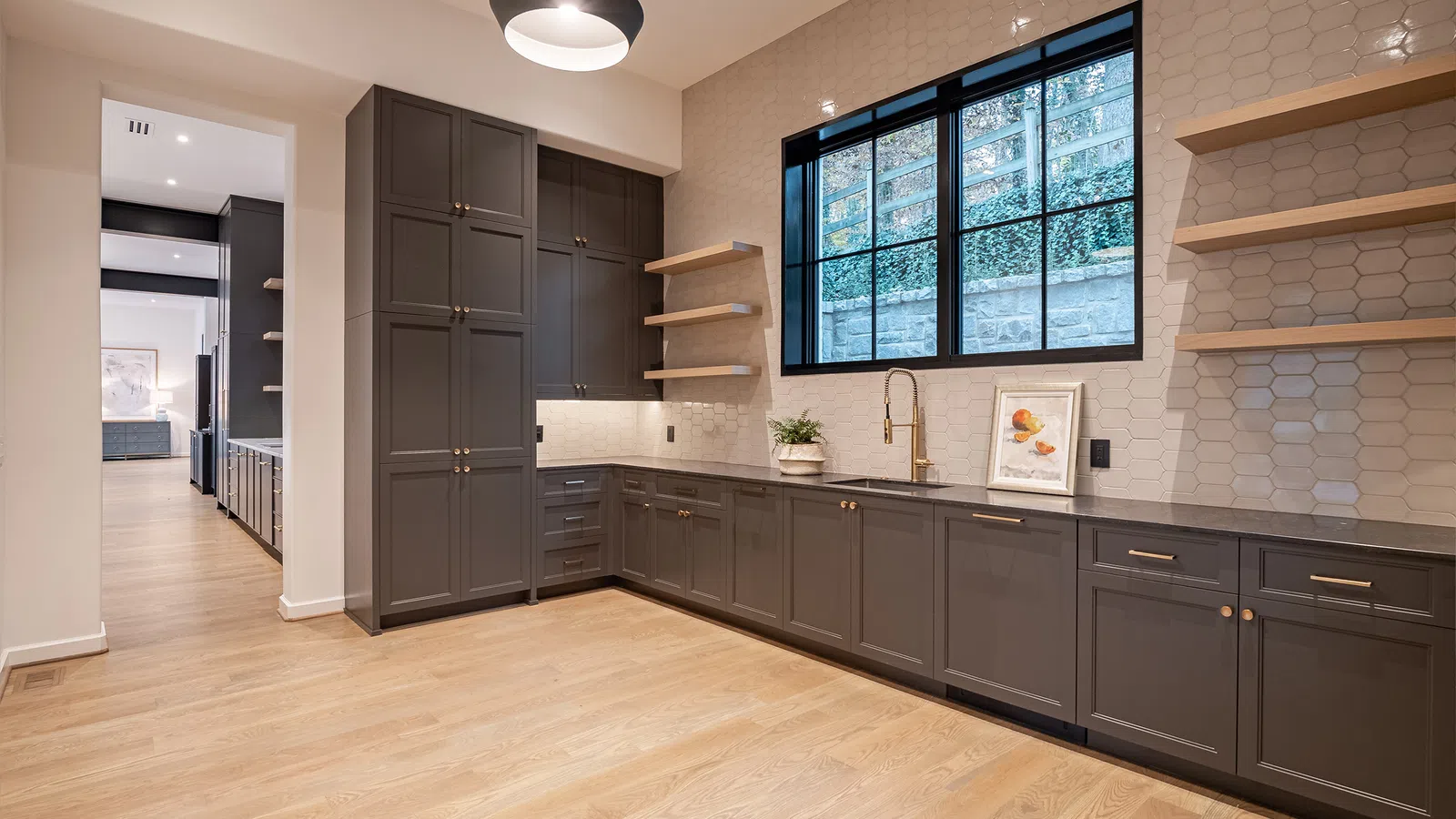
Hardwood Floor Refinishing and Installation in Dunwoody, GA
Clear Quotes, Clean Job Sites
TriArt refinishes, installs, and repairs hardwood floors across Dunwoody, including the original oak that turns up under carpet in most of the split-level stock. Wood floors and stairs only, with one crew start to finish.
Get a free estimate
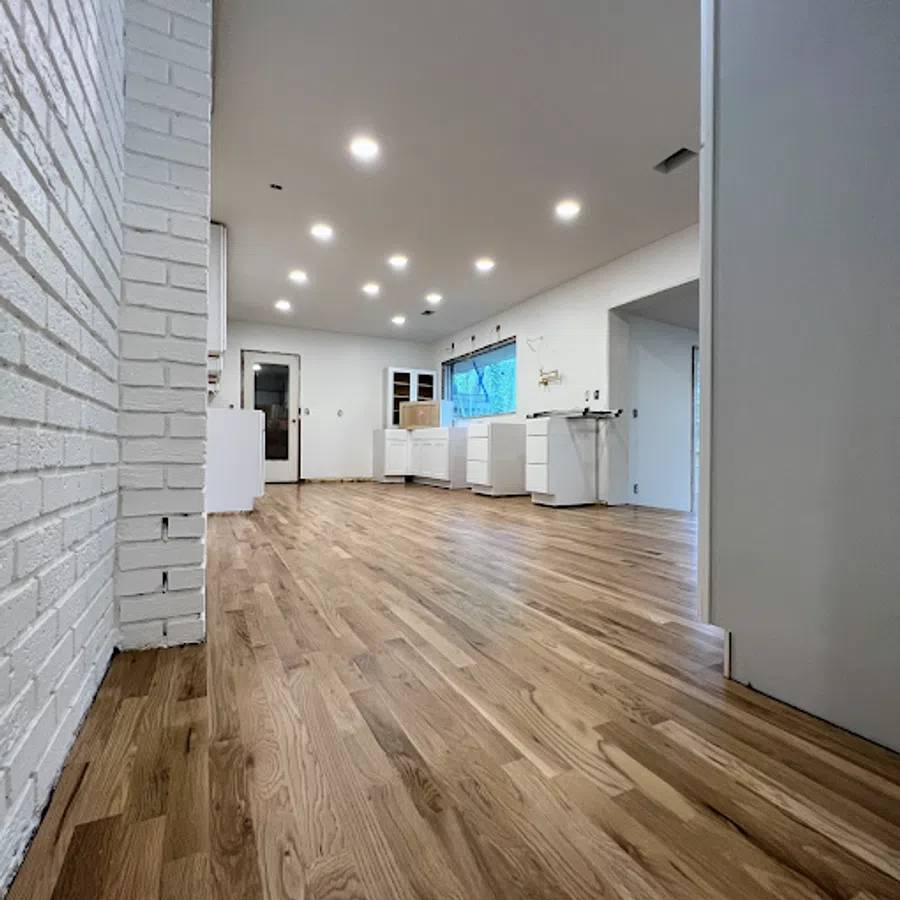
Refinishing Floors in Dunwoody Split-Levels
Forty years of protection
Floors that have spent forty years under carpet are usually in better condition than their owners expect. Carpet and pad protect wood from UV, from traffic, and from the moisture cycles that damage an exposed finish. What we typically find is a floor that has never been sanded, with tack-strip holes confined to a few inches at the perimeter where the trim will cover them.
The work is straightforward from there: staples and tack strip out, three grits down to bare wood, stain sampled on your own floor, three coats of finish. Dust is captured at the drum and vented outside.
Floor sanding and finishing runs $3.00 to $4.00 per square foot. Furniture returns 48 to 72 hours after the final coat. We hold Georgia general contractor license RBCO008240, which means a floor job that turns out to involve subfloor or framing does not stop at the flooring.
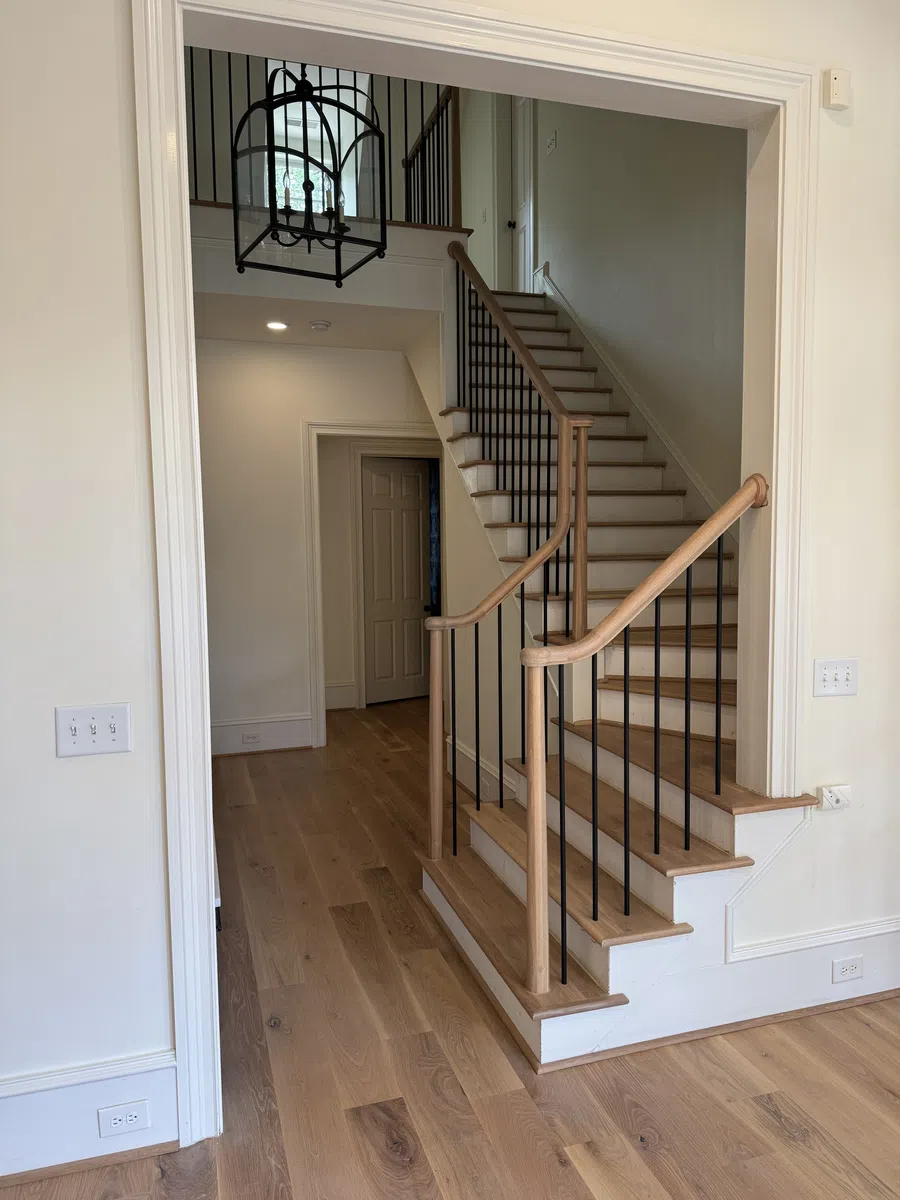
Installing Hardwood Across Split-Level Homes
Levels, landings and tread
Split-levels present one problem that ranch and two-story homes do not: the house has three or four floor levels connected by short flights, and every one of those transitions is a decision.
Running the same floor throughout is usually the right answer visually, but it means matching material and stain across levels finished at different times, and it means the short staircases between them need stair treads and risers that agree with both floors they connect. Doing that in one project with one stain batch is the only reliable way to get it right.
Lower levels that sit at or below grade need engineered rather than solid product. See hardwood installation for the full specification.
Hardwood Projects Across Metro Atlanta
Photos from our jobs
Six jobs completed and photographed in the house. Species, stain, city, and what the floor looked like when we walked in are listed on each. Nothing here is stock photography or rendered.
What Is Under Dunwoody Carpet
A common surprise
1960s-70s split-levels and ranches, largely with original hardwood still sitting under carpet, plus Perimeter-area condos.
Hardwood recovered from under carpet
01
The signature Dunwoody job. Forty-year-old oak protected by carpet and pad, usually never sanded, with tack-strip damage limited to the perimeter where trim covers it. These floors frequently come out better than anything currently on the market.
Second and third sands on well-maintained floors
02
Where floors have been exposed and cared for, we check remaining thickness before committing. Nail heads at the surface or gaps at the tongue mean the floor has reached its limit, and we will say so rather than take a pass it cannot afford.
Color change away from mid-tone red oak
03
A large share of Alpharetta floors went down in mid-tone red oak stains that now read as dated. The most common request we get is a shift toward white oak tones or a natural matte finish. That is a stain-and-finish decision, not a replacement decision, and we sample on your actual floor first because red oak's pink undertone fights grays and light neutrals in ways a showroom chip will not show you.
What Dunwoody Homeowners Say About TriArt
In their words
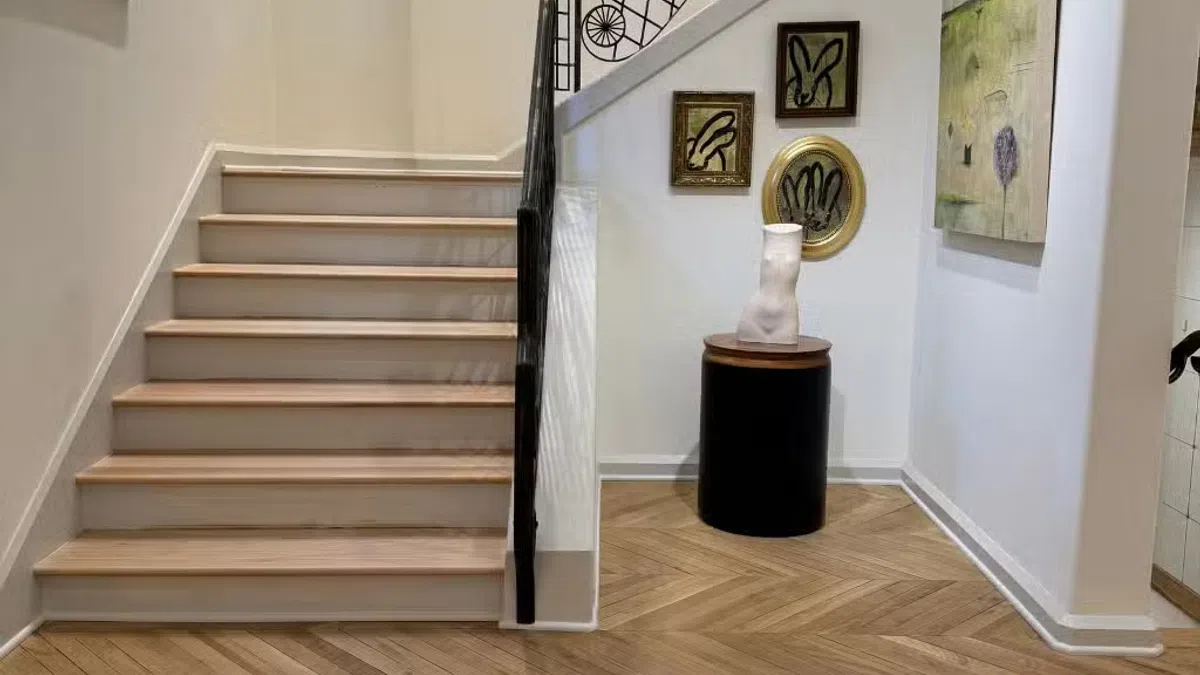
Dunwoody Areas We Cover
We work across every Dunwoody neighborhood. These are the areas our crews are in most often, with the work we are usually called for in each:
Dunwoody Homeowner Questions
Before the carpet comes up
We pulled up carpet in our Dunwoody split-level and found hardwood. Is it worth refinishing?
Usually, and often more than people expect. Carpet protects wood from UV, traffic and moisture cycling, so floors that have been covered since the seventies are frequently on a first sand despite the age of the house. Tack strip holes sit at the perimeter where trim covers them.
Can you match floors across a split-level's different levels?
Yes, and it is worth doing in one project rather than level by level. Stain mixed in one batch and applied across all levels at the same sanding grit is the only reliable way to get them to agree. Done in stages months apart, they commonly end up visibly different.
What about the short staircases between levels?
Those get treads and risers that agree with the floors on both sides. Treads are milled from different stock than flooring and take stain differently, so doing them alongside the floors with the same batch is far more reliable than matching afterward.
How many times can a floor be sanded?
It depends on remaining thickness rather than age. Nail heads showing at the surface or visible gaps at the tongue mean the floor has reached its limit. We measure during the estimate and will tell you plainly when replacement is the better spend.
How much dust will there be?
Considerably less than people expect. Dust is captured at the drum and vented to a sealed unit outside, and we seal off the work area. No sanding process is completely dust-free, and we would rather say so than claim otherwise.
Can you work on just one level and leave the rest?
Yes. Split-levels lend themselves to it, because each level is a natural work zone that can be sealed off on its own. The one caution is color: a level done now and another done next year may not match, since stain batches and sanding grit both affect the result. If both are in the plan, doing them together is more reliable.