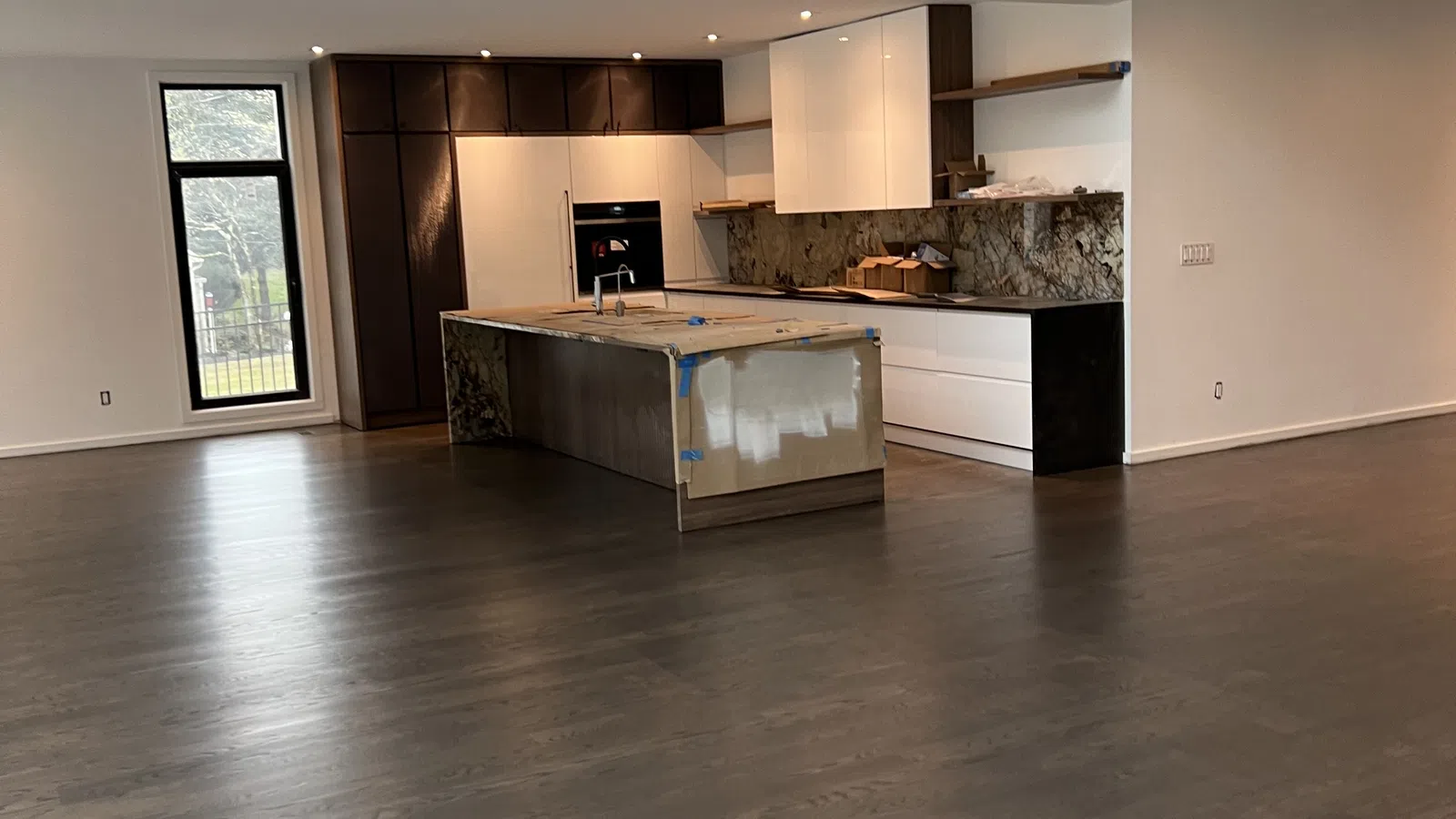
New Construction Flooring for Atlanta Builders and Contractors
Beautiful Floors for a New Home
Get a free estimate
Coordinating With the Rest of the Site
Working alongside your other trades
Most flooring problems on a build are not flooring problems. They are sequencing problems.
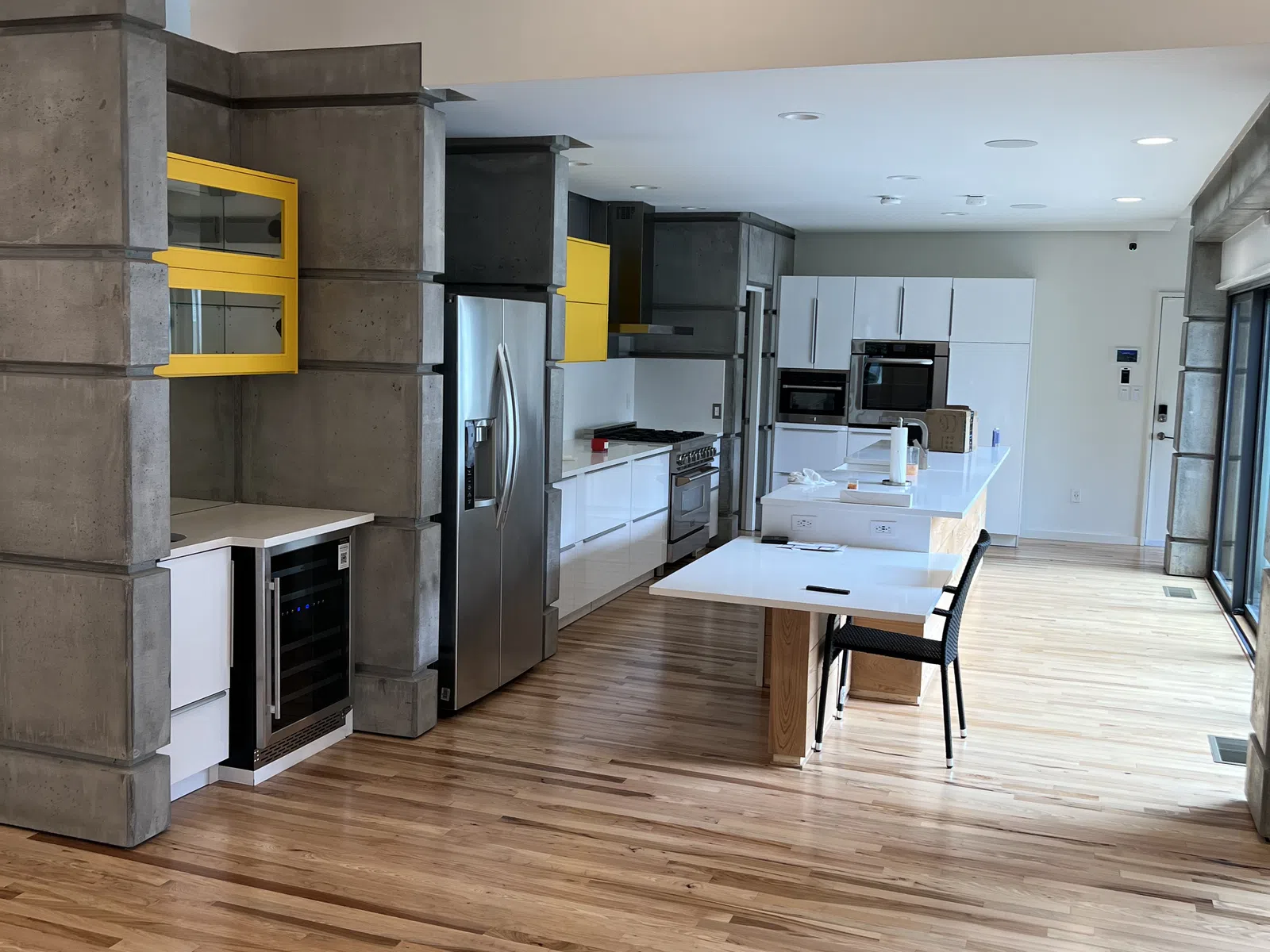
Cabinets before or after the floor changes what happens at the toe kick and what happens if the layout ever changes. Stair treads have to agree with the floor they land on, and if the stairs are a different sub the two rarely match. Paint after finish means somebody is taping to a floor we just cured. Tile at a doorway needs a height decision before either trade orders material.
We will flag those before they happen rather than after. If you want us to talk directly to your cabinet or tile sub, we will, and it usually saves a week. Where the stairs are in our scope as well, see our hardwood stairs and tread work. Doing floors and stairs with one crew and one stain batch is the only reliable way to get them to match.
What You Need From Us on Paper
Terms, paperwork and how we invoice
Builders ask the same four questions of every sub, so here are the answers before you have to ask. This is how we show up on a commercial or residential build, from mobilization to the final walk.
Before We Mobilize
Certificate of insurance naming you as additional insured, delivered before the crew arrives. Georgia general contractor licence RBCO008240 on file and available on request.
Billing and Changes
We invoice against your draw schedule, no deposit up front. Change orders in writing before the work happens. Nothing appears on the final invoice that you have not already approved.
Before We Leave
Punch list walked with your super before we demobilize, not after. Anything flagged on the walk is closed out while the crew and tools are still on site, so you are not scheduling a return trip for a transition strip.
Builder Grade Is a Specification, Not an Insult
Grades, species and what a spec buyer actually needs
A builder buying for a spec house and a homeowner buying for the house they will live in are solving different problems, and pretending otherwise wastes everyone's time.
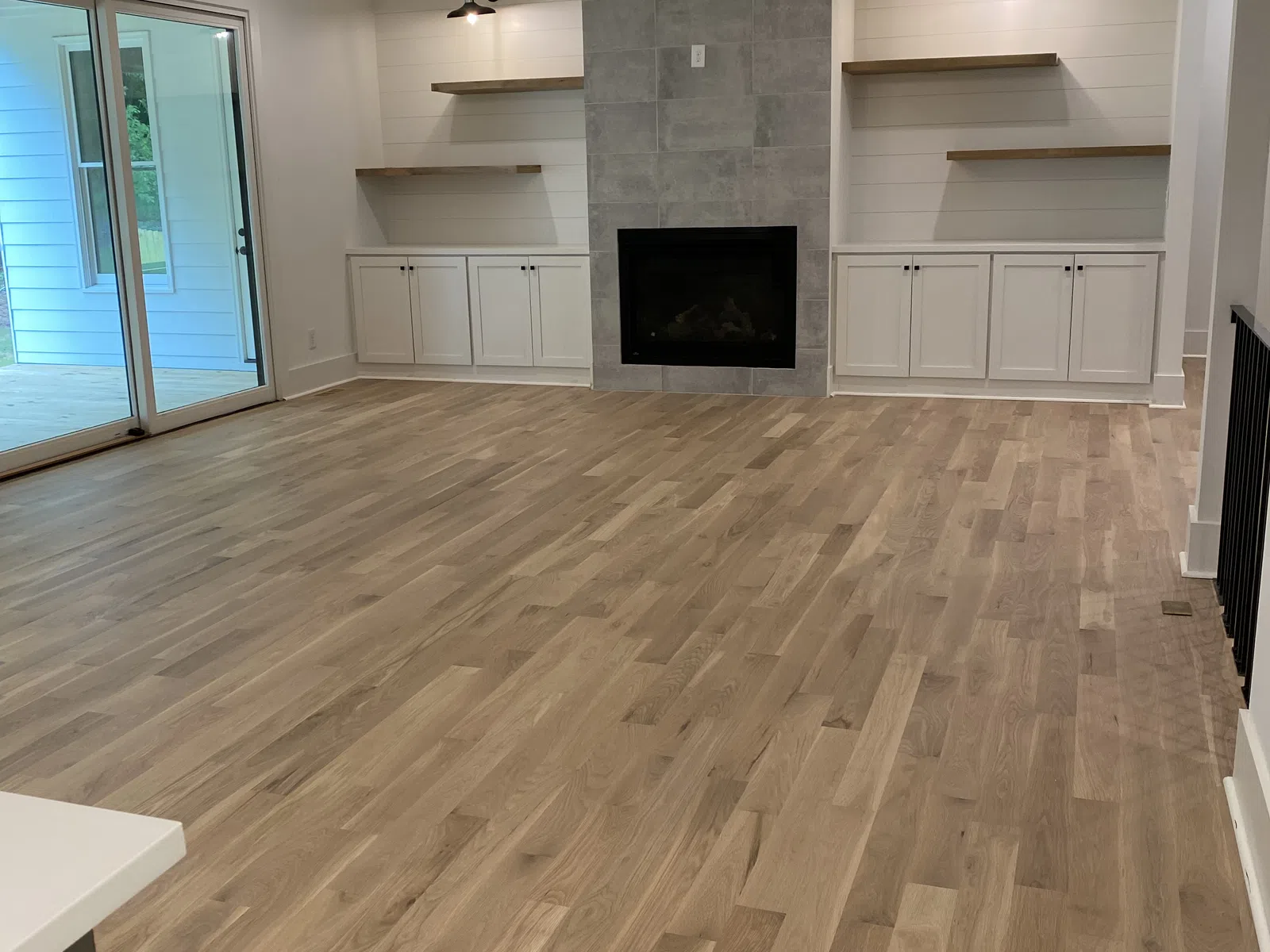
On a spec build the floor has to photograph well, survive the rest of the trades, and not date the house before it sells. Character grade white oak in a natural or light finish does all three and has held its value in this market for years. Very dark floors show every scuff in a listing photo and read as a previous decade.
On a custom build for a known buyer the calculus changes and we will spec accordingly, including wider boards, site finishing and custom stain blends. We will give you a straight answer on where the money makes a difference and where it does not. Wear layer on engineered product matters. Total plank thickness mostly does not.
What Happens After the Closing
Warranty on a house you are selling
This is the question builders actually ask and most flooring subs answer badly.
A homeowner who finds a problem in year two calls the builder, not the sub. So the warranty position needs to be clear before the house sells rather than negotiated after somebody is unhappy.
What we can say now: we document moisture readings and conditions at installation, and we keep them. When a floor moves later, that record is usually what settles whether it was the wood, the install, or the house.
We Have Been the Builder
Proof that we understand your side

Most flooring subs have never carried the risk on a build. We have.
We bought a distressed property in Cobb County, took it to the studs, and rebuilt every system with our own money: full permits on every trade, four months from demolition to final inspection, over $200,000 of our own capital in the ground.
The sequencing conversation above is not theory. We have been the one waiting on a trade, and we have paid for the week it cost.

New Construction FAQ
What Builders Ask Before the First Slot
Do you work as a subcontractor for builders and general contractors?
How far in advance do builders need to book flooring?
What matters more than the lead time is the trigger: tell us when drywall is finished and HVAC is holding temperature, and we will schedule from there rather than from a date set three months out that the build will not hit.
What conditions do you need before installing hardwood in a new build?
HVAC running and holding temperature, drywall finished and dry, and a slab or subfloor moisture reading we can take rather than assume. Wood acclimates to the conditions in the building, so laying into a house that is still drying out moves the floor after we leave.
Who handles the warranty once the house sells?
We document moisture readings and site conditions at installation and keep them on file, because that record is usually what settles whether a later problem was the wood, the installation, or the house.