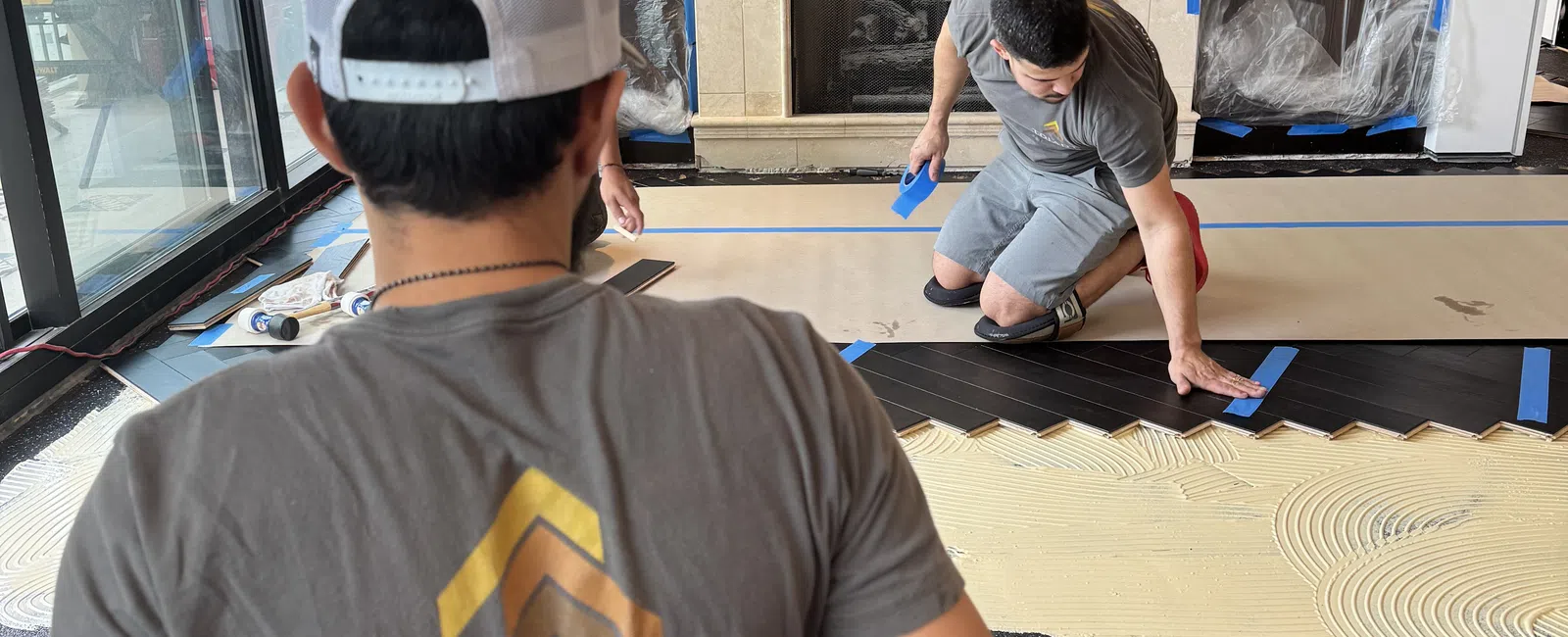
Expect roughly $9 to $19 per square foot all in, which is a modest premium over a straight hardwood installation into an empty room. The carpet removal itself is one of the cheaper parts. What varies is what the carpet was hiding.
Where the Money Goes
| Line item | Typical range | Notes |
|---|---|---|
| Carpet and pad removal | $1 to $2 per sq ft | Includes pulling tack strip and staples. Glued-down carpet costs more. |
| Disposal | Sometimes included | Carpet is bulky and many landfills charge by volume. Ask whether it is in the quote. |
| Subfloor prep | Highly variable | The unknown. See below. |
| Hardwood material | $3 to $14 per sq ft | Species, grade, width, solid or engineered |
| Installation labor | $4 to $8 per sq ft | Higher for pattern work or site finishing |
| Trim and transitions | Per linear foot | Floor height changes, so shoe molding usually needs replacing |
| Door trimming | Small | Interior doors often need cutting down. Sometimes the opposite. |
The hardwood side of that table (species, grade, board width, and labor) carries the same ranges as a standard installation. What follows here is specific to coming off carpet.
The Part Nobody Can Quote Upfront
Carpet and pad forgive a great deal. They absorb sound, flex over dips, and hide everything underneath. Hardwood does none of that, so the subfloor has to meet a standard it has never been held to.
What turns up when carpet comes off, in rough order of frequency:
- Squeaks that were muffled and now are not. Almost every carpeted floor has some, and this is the single best moment to fix them, with the subfloor open and nothing to damage.
- Staples and tack strip, sometimes thousands of them in a single installation. Every one has to come out, and it is slow rather than difficult.
- Flatness problems. Carpet bridges a dip that hardwood telegraphs, so leveling is common and is the most likely cost surprise.
- Pet damage. Carpet in a home with pets frequently hides stained subfloor, and the smell is often worse than expected once the carpet is out.
- Old adhesive or previous flooring, such as carpet laid over vinyl that was laid over something else. Each layer adds removal cost.
- Water damage, less common, but a slow leak under carpet can run for a long time unnoticed.
A good contractor quotes the known work and names subfloor repair as a possible change order with a rate attached. A contractor who guarantees no additional cost either has not looked under the carpet or is padding the quote to cover the risk.
Ways to Keep the Number Down
- Pull the carpet yourself. This is genuinely DIY-able and saves real money: cut it into strips with a utility knife, roll them, pull the pad, then pry the tack strip. Wear gloves and knee pads, and leave the staples if you would rather, but tell your installer either way.
- Do the whole level at once. Mobilization, delivery, and setup are spread further, so two rooms done separately costs meaningfully more than two rooms done together.
- Choose prefinished. It skips several days of on-site sanding and finishing labor, and the house is usable sooner.
- Skip the pattern. Straight-lay is dramatically cheaper than herringbone or chevron.
- Ask about matching existing flooring rather than replacing all of it, if some of the house is already hardwood. Sometimes feasible, sometimes not, and worth asking before assuming.
Whether It Is Worth Doing
Hardwood consistently performs well in resale surveys and buyers frequently state a preference for it over carpet, particularly in main living areas. It also lasts far longer: carpet is typically replaced every eight to twelve years, while hardwood can be refinished several times across decades.
Where carpet still wins is bedrooms for some households, stairs for sound and safety reasons, and any room where warmth underfoot matters more than resale. Replacing every square foot of carpet in a house is not automatically the right call.
The strongest case is main floor living areas, hallways, and any room that opens onto existing hardwood, where mismatched flooring is the thing buyers notice.
What to Expect During the Work
- Acclimation takes several days. The flooring sits in the conditioned house before installation, and nothing visible happens during this stretch.
- Removal takes half a day to a day per level, and it is dusty and loud.
- Subfloor prep is variable. This is where the schedule moves if something turns up.
- Installation takes one to three days for a typical main floor.
- Sanding and finishing takes three to five days if site-finished, including cure time, and is skipped entirely with prefinished flooring.
- Cure time before furniture goes back varies by finish, so ask for the specific number rather than assuming.
Checking for Hardwood Under the Carpet First
Before pricing out new flooring, it is worth finding out whether there is already hardwood under the carpet, which is common in houses built before the 1970s. Pull up a corner in a closet or under a heat register, somewhere a small reveal will not matter, and look for tongue-and-groove strip flooring rather than plywood. A magnet dragged near the edge of the room can also help, since older hardwood is usually face-nailed close to the baseboards. If hardwood is there, refinishing it is almost always cheaper than removing it and installing new material, though the condition underneath still has to be assessed once it is exposed.
Getting Glue and Tape Residue Off the Subfloor
Older carpet installations, and any carpet laid directly over a slab, often used adhesive rather than tack strip, and that residue has to come off before new hardwood can go down cleanly. A citrus-based adhesive remover or a heat gun on low, worked in small sections with a floor scraper, lifts most carpet glue without gouging the subfloor. Carpet tape tends to peel more easily but can leave a sticky residue behind that needs the same adhesive remover treatment. This step adds time rather than much cost, but it is not optional, since new flooring will not bond properly, or lie flat, over leftover glue.
Thinking About Pulling the Carpet
The honest quote depends on what is underneath, and that is worth looking at before you commit to a number. TriArt Hardwoods installs hardwood across Atlanta, Johns Creek, and Sandy Springs. See our installation service or get in touch.