A floor is not a repaint. Most people live with a floor color for fifteen or twenty years, and refinishing to change it costs real money and one of the floor's finite sandings.
So it is worth knowing which colors have survived several complete turns of the trend cycle, and which ones dated hard. A dominant flooring color trend historically lasts eight to twelve years, which is shorter than most people keep a floor, and that mismatch is the whole argument for staying close to a color that will not read as a decade later.
What the Last Twenty Years Actually Did
Four distinct waves, each of which felt permanent at the time:
- Golden oak was the default through the 1990s and into the 2000s. It faded not because it stopped working but because it became shorthand for a specific era of house.
- Dark espresso dominated the late 2000s and early 2010s. Dramatic, photographed beautifully, and impossible to keep clean, it dated fastest of the four.
- Cool grey took over in the mid 2010s. Stark greys now read distinctly as that period.
- Light natural and greige are the current default. It is too early to say how it ages, though it sits closer to the natural tone of wood than the previous three, which is usually a good sign.
The pattern is worth naming: the colors that dated hardest were the ones furthest from what the wood looks like on its own. Espresso and stark grey both fight the material. Golden oak and natural work with it.
The Colors That Keep Working
Natural and clear-finished
No stain, just a clear coat over sanded wood. This has never been out of style in any decade, because it is not a style choice so much as the absence of one. Every trend since has been a departure from it and a return to it.
On white oak it gives a soft pale floor. On red oak it reads warmer and pinker, which is honest to the material. If you want it to stay pale rather than amber over time, the finish matters: waterborne finishes stay close to the raw color while oil-based finishes warm considerably over years.
Medium warm browns
The tones that sit roughly where oak naturally sits, slightly enriched. Never fashionable, never unfashionable. They hide wear better than any other family, because a scratch exposing bare wood creates minimal contrast against a mid-tone floor.
This is the safest choice in the entire palette and the one we recommend most often to people who are not sure.
Soft neutral greige
The grey-brown middle ground that replaced pure grey. It kept the cool cast that made grey appealing while retaining enough brown to work with oak rather than against it. Early evidence suggests it ages considerably better than the stark greys did, for exactly that reason.
Weathered and driftwood tones
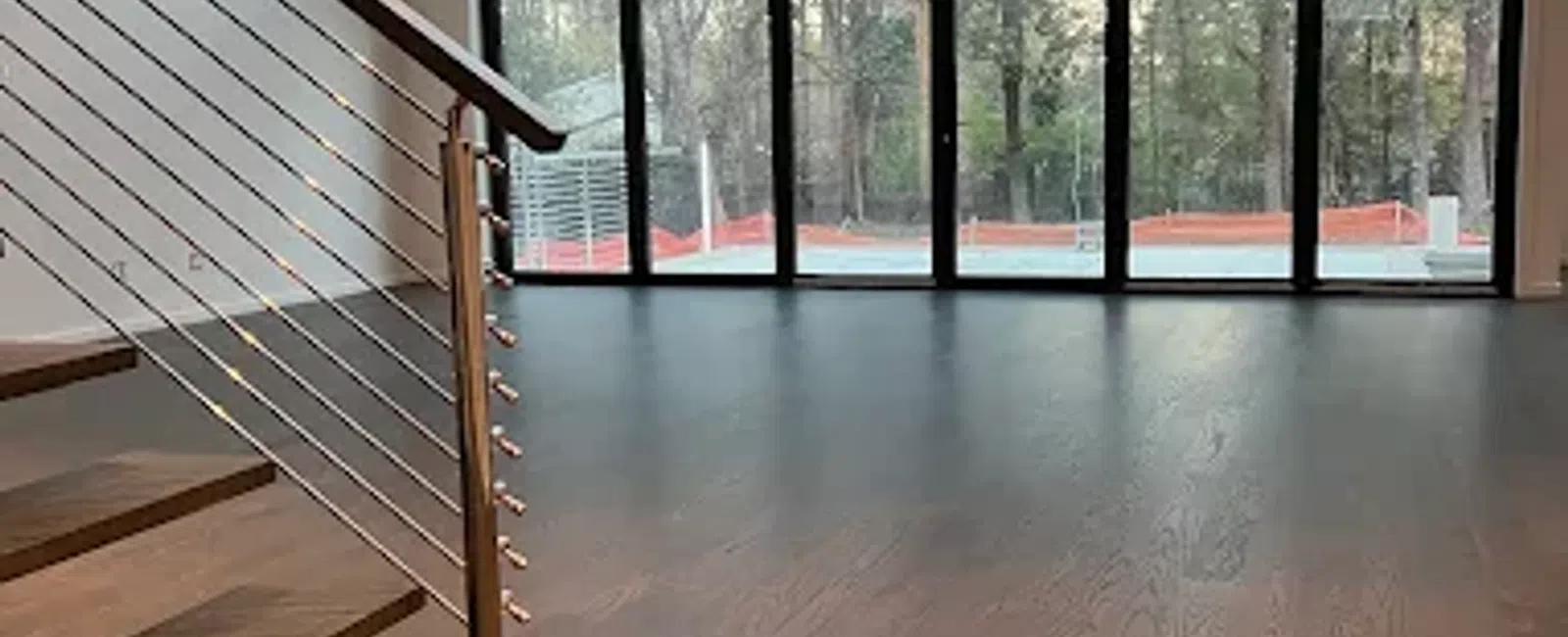
Muted, slightly silvered browns that read as aged rather than as a color decision. They work because they reference how wood actually looks after decades of light, rather than imposing something on it. Our Chastain Park white oak project shows this direction across a full floor.
Three Rules That Predict Longevity
- Stay near the wood's natural tone. The further a color sits from what the species does on its own, the more it reads as a dated decision later, and this single rule explains most of the last twenty years.
- Avoid the extremes. Very dark and very cool both dated, while mid-range survives.
- Pick a color that hides wear. A timeless color on a floor that shows every scratch is not timeless in practice, because you will refinish it sooner. Mid-tones and textured surfaces buy years.
The Thing That Matters More Than Color
Species. White oak has outlasted every color trend of the last two decades and is currently in higher demand than ever, because its neutral brown-olive undertone accepts almost any direction cleanly. Red oak's pink undertone limits which directions are available without extra work.
If you are installing new rather than refinishing, the species decision constrains your color options for the life of the floor. That is a bigger commitment than the stain.
Consistency matters too, more than most people plan for. On a single level, matching floor color across connected rooms is usually worth doing, particularly across open sight lines, since mismatched flooring between rooms is one of the first things a buyer notices. Separate levels can differ without looking accidental, and this is also where a broadly appealing mid-tone or natural color earns its keep: it suits the widest range of taste, so it reads less like a previous owner's decision than an unusual color would, whether or not it happens to be trending.
A Color You Will Still Like in Fifteen Years
We sample directly on your floor so you are judging your own wood in your own light. TriArt Hardwoods refinishes hardwood across Atlanta, Johns Creek, and Sandy Springs. See our refinishing service or get in touch.