

When choosing hardwood flooring for a restaurant, the decision often comes down to solid hardwood or engineered hardwood. Both have their strengths, but the right choice depends on your restaurant’s specific needs. Here’s a quick breakdown:
- Solid Hardwood: Made from a single piece of wood, it’s durable, long-lasting, and can be refinished multiple times. Best for dry areas like dining rooms.
- Engineered Hardwood: Built with a hardwood veneer over a plywood core, it’s more resistant to moisture and temperature changes. Ideal for bars, kitchens, and entryways.
Quick Comparison
| Feature | Solid Hardwood | Engineered Hardwood |
|---|---|---|
| Durability | High | High |
| Moisture Resistance | Low | High |
| Refinishing | 8–10+ times | 1–2 times |
| Installation | Nail-down only | Nail, glue, or floating |
| Cost | $5–$15+ per sq. ft. | $2.50–$10 per sq. ft. |
| Best Use | Dining rooms | Bars, kitchens, entryways |
For restaurants in Atlanta, TriArt Hardwoods offers expert advice and services to ensure the right flooring is chosen for every area. Whether you need the elegance of solid hardwood or the practicality of engineered hardwood, they can help you make the best choice for long-term performance and style.
Solid Hardwood vs Engineered Hardwood: What’s the Difference?
sbb-itb-9f8f869
What Restaurant Floors Need to Handle
Restaurant floors endure a lot of wear and tear. From servers darting across dining rooms to guests sliding chairs and kitchen staff bringing in moisture, the flooring takes a constant beating. These challenges make it essential to choose hardwood that can handle the demands of a busy restaurant.
Durability and Traffic Resistance
With so many people moving through a restaurant daily – guests, wait staff, bar staff – the floor is under constant pressure. Shoes scuff the surface, furniture legs leave scratches, and dropped items create dents. The Janka hardness scale is a key tool for evaluating how well a wood species can resist these types of damage. A higher Janka rating means the wood is better equipped to handle the rigors of a commercial setting, while a lower rating could result in a floor that looks worn out in no time.
Factory-applied finishes are another important consideration. These finishes typically hold up better in high-traffic areas compared to those applied on-site, extending the time before refinishing becomes necessary. For restaurants, choosing a hardwood that can withstand heavy use is non-negotiable.
Moisture and Temperature Challenges
Spills are inevitable in a restaurant – whether it’s drinks, sauces, or cleaning water – and they can lead to stains or even warping. On top of that, temperature changes and fluctuating humidity levels, often caused by kitchen heat or air conditioning, can cause the wood to expand and contract.
"Solid hardwood… can be affected by humidity, moisture, and temperature fluctuations. It can also become stained from spilled food and drink." – Nydree Flooring
These factors make moisture management a top priority when selecting hardwood for a restaurant. Without proper precautions, issues like swelling, staining, or warping can quickly become major problems.
Noise Levels and Visual Appeal
Hardwood floors don’t just face physical challenges; they also affect the atmosphere of a restaurant. One common issue is noise – hardwood reflects sound, amplifying clinks, scrapes, and footsteps. To counteract this, many restaurants add rugs, upholstered furniture, or acoustic panels.
Visually, hardwood has a way of transforming a dining space. It brings a sense of warmth and quality that materials like tile or vinyl often lack. The type of wood, its stain, and the finish all play a role in setting the tone of the room, whether it’s a cozy, rustic vibe or a sleek, upscale look.
Solid Hardwood Flooring in Restaurants
Construction and Characteristics
Solid hardwood flooring is crafted from a single, continuous piece of wood, cut from one species without any added layers or composites. In commercial spaces like restaurants, species such as oak, maple, and hickory are popular choices due to their durability and ability to handle heavy foot traffic. Each plank showcases its own natural grain, giving the floor a distinctive, high-end appearance that can elevate the ambiance of a dining space. This makes solid hardwood a go-to option for restaurant owners who want a balance of durability and aesthetic appeal.
Advantages of Solid Hardwood
Solid hardwood flooring comes with a range of benefits, making it a practical choice for restaurant settings. One standout feature is its ability to be refinished multiple times. Since the material is solid all the way through, it can be sanded down and refinished to repair wear or scratches – or even to change the stain color – without needing a full replacement.
"With proper care and maintenance, wood flooring can last for decades, making it a cost-effective investment for restaurant owners." – The Solid Wood Flooring Company
Beyond its long lifespan, solid hardwood adds a sense of warmth and sophistication to dining areas. It’s also a cleaner option compared to carpeting, as it doesn’t trap allergens or odors and can be easily cleaned after a busy service. However, while it has many advantages, there are some limitations to keep in mind when deciding where to install it.
Limitations and Best Use Cases
Solid hardwood’s natural sensitivity to humidity makes it less suitable for areas with high moisture levels. This means it’s not the best choice for kitchens, bar areas, or restrooms, where spills and humidity are common. Additionally, its installation process, which requires nails or staples, adds a layer of complexity. For these reasons, solid hardwood is best suited for dry areas like dining rooms and hallways, where its durability and elegance can truly shine.
Engineered Hardwood Flooring in Restaurants
Construction and Characteristics
When it comes to busy restaurants with heavy foot traffic and fluctuating conditions, engineered hardwood is a smart choice. It’s built with a hardwood veneer on top of a core made from multiple layers of plywood arranged in a crisscross pattern. This layered design, typically made up of 3 to 10 layers, helps the flooring resist the natural expansion and contraction caused by humidity and temperature changes – an essential feature for restaurant environments. Engineered hardwood usually measures between 3/8 and 1/2 inch thick, compared to the 3/4 inch thickness of solid hardwood. For dining spaces where aesthetics matter, sliced or sawn veneers can be used to replicate the look of solid wood. This construction not only enhances its appearance but also ensures better performance in demanding settings like restaurants.
Advantages of Engineered Hardwood
One of the standout benefits of engineered hardwood is its resistance to moisture. As Nydree Flooring puts it, "Engineered wood… won’t be significantly impacted to humidity and moisture changes. So you can confidently place it in areas such as bars and refreshment areas." This makes it a reliable choice for spaces prone to spills or humidity. Additionally, its ability to be installed directly over concrete and its durable factory-applied finishes make it easier to maintain and longer-lasting in high-traffic areas.
Take BrewDog’s London Waterloo location as an example. They selected "Harlesden Smoked Oak" engineered herringbone parquet for its classic design paired with durability to handle large crowds. Similarly, Mowgli Restaurants opted for pre-finished engineered white oak flooring, which stands up to the heavy wear and tear of a bustling dining environment. These real-world applications highlight engineered hardwood’s practical and aesthetic appeal.
Limitations and Best Use Cases
That said, engineered hardwood does come with some drawbacks. Its biggest limitation is refinishing. Unlike solid hardwood, which can be sanded and refinished up to 10 times, engineered hardwood typically allows for only 1 or 2 refinishes during its lifespan. Once the veneer wears down, the flooring will need to be replaced. Installation quality is another critical factor – if seams aren’t tightly fitted, moisture and debris can seep into the gaps, especially near high-risk areas like kitchens and bars.
Even with these limitations, engineered hardwood shines in areas where solid hardwood may fall short, such as entryways, bar sections, and areas built over concrete slabs. For high-traffic spaces, choosing boards with 7 to 10 core plies adds extra durability and stability, ensuring the floor holds up under constant use.
Solid vs. Engineered Hardwood: Side-by-Side
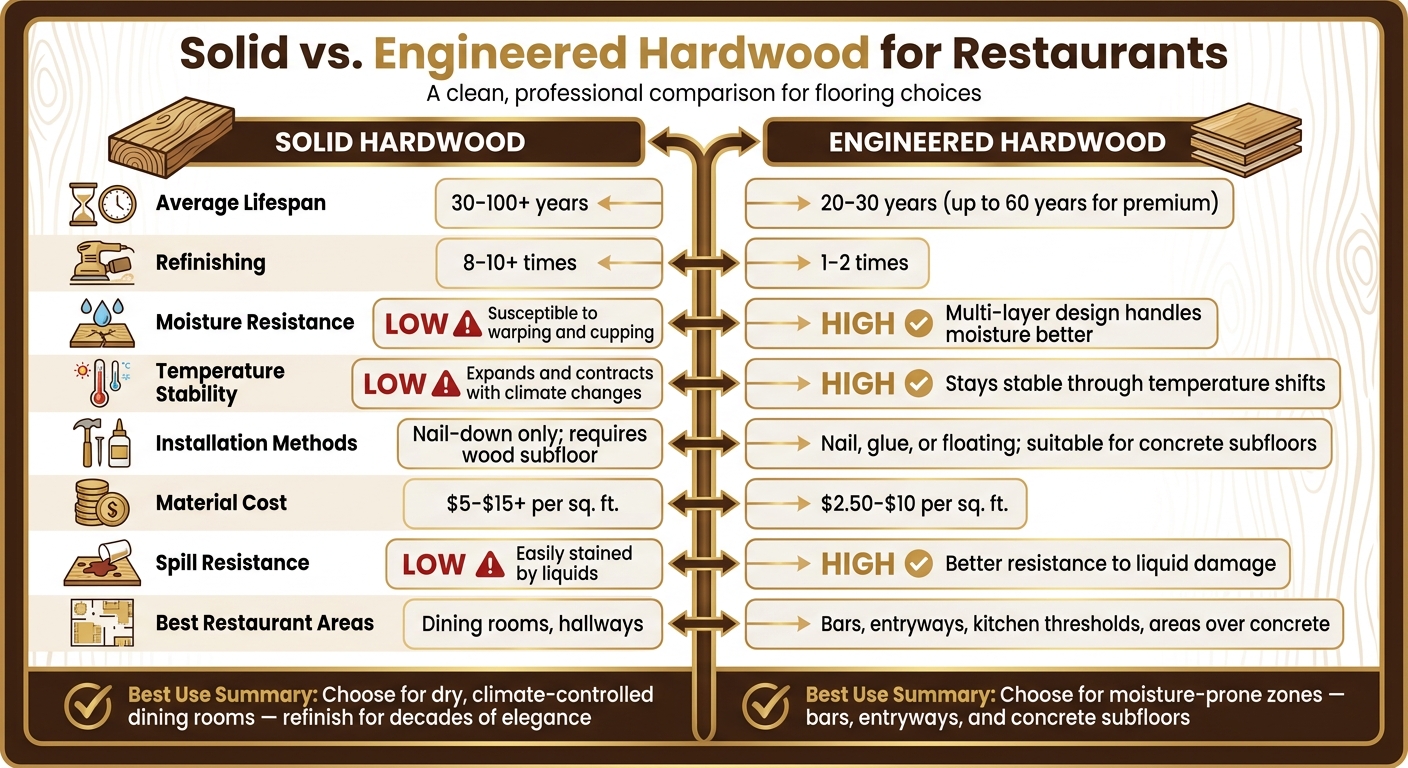
Solid vs. Engineered Hardwood for Restaurants: Side-by-Side Comparison
Performance Comparison Table
Both solid and engineered hardwood offer distinct advantages, but their performance varies based on the location and conditions of the restaurant. Here’s a breakdown of how they stack up:
| Feature | Solid Hardwood | Engineered Hardwood |
|---|---|---|
| Average Lifespan | 30–100+ years | 20–30 years (up to 60 years for premium options) |
| Refinishing | 8–10+ times | 1–2 times (depending on wear layer thickness) |
| Moisture Resistance | Low; susceptible to warping and cupping | High; multi-layer design handles moisture better |
| Temperature Stability | Low; expands and contracts with climate changes | High; stays stable through temperature shifts |
| Installation | Nail-down only; requires wood subfloor | Nail, glue, or floating; suitable for concrete subfloors |
| Material Cost | $5–$15+ per sq. ft. | $2.50–$10 per sq. ft. |
| Spill Resistance | Easily stained by liquids | Better resistance to liquid damage |
When it comes to installation costs, solid hardwood typically adds $3 to $8 per square foot on top of material costs. Engineered hardwood, especially when installed using a floating floor method, often reduces labor expenses. These cost and performance factors make both options well-suited for different restaurant areas, depending on the specific conditions and needs.
Which Floor Works Best in Each Area
Looking at the performance details, each flooring type has areas where it truly shines in the restaurant environment.
Main dining rooms are ideal for solid hardwood. These areas, while exposed to high foot traffic and frequent chair movement, are usually dry and climate-controlled. With the ability to refinish solid hardwood 8 to 10 times or more, it can maintain its charm and durability for decades.
Bars, entryways, and kitchen thresholds face more challenges, like spills, tracked-in moisture, and concrete subfloors. Engineered hardwood is better suited for these spaces due to its layered construction, which resists humidity and prevents issues like warping or gapping. To ensure durability, opt for boards with a 4–6 mm wear layer, allowing at least one refinishing session.
For any hardwood surface – solid or engineered – that uses an oil finish, it’s crucial to reapply the finish annually. This helps maintain its protective seal against spills and wear in high-traffic restaurant areas.
How TriArt Hardwoods Can Help
Deciding between solid and engineered hardwood comes down to the specific needs of each area in your restaurant. TriArt Hardwoods partners with restaurant owners in the Atlanta area to assess the unique demands of every space – from the dining room to the bar and entryway – before starting any installation.
Their process includes determining the best installation method, selecting wood species and finishes that align with your brand, and deciding where solid or engineered hardwood will work best. As TriArt explains, "Our mission is to renovate your flooring with detailed consideration of every detail. Quality and communication is at the heart of everything we create." This thoughtful approach ensures their mixed-floor strategy delivers both functionality and style.
A mixed-floor approach works particularly well for restaurants. Solid hardwood is ideal for dining rooms, offering durability to withstand heavy foot traffic and the ability to be refinished multiple times. Meanwhile, engineered hardwood performs better in areas like bars, entryways, or near refreshment stations, where humidity and spills are more common. By carefully matching wood species, stains, and grain patterns, TriArt ensures a cohesive look across all areas.
TriArt doesn’t stop at installation. They offer refinishing, repairs, and deep cleaning services to help maintain restaurant floors over time. For establishments with worn hardwood, restoration can be a cost-effective way to refresh floors without the need for a complete replacement. Each project concludes with a final walkthrough and tailored maintenance tips to extend the life of your floors.
TriArt serves the Metro Atlanta area, including Buckhead, Marietta, Roswell, Sandy Springs, and Alpharetta. For multi-level restaurants, they also provide hardwood stair and handrail services, ensuring the design flows seamlessly from one level to the next.
Conclusion
Selecting the best hardwood flooring for your restaurant boils down to understanding your specific needs. Solid hardwood stands out for its durability and ability to be refinished up to 8–10 times, making it ideal for dining areas. On the other hand, engineered hardwood offers better stability in moisture-prone spots, like bars and entryways, and works seamlessly with concrete subfloors.
Your choice will depend on factors like subfloor type, moisture levels, and how often you plan to refinish. For instance, if your restaurant has a concrete slab, solid hardwood may not be an option, as it requires a nail-down installation. In such cases, engineered hardwood becomes the practical solution.
To make the best decision, consulting with experts can make all the difference. TriArt Hardwoods specializes in evaluating restaurant spaces across the Atlanta area, ensuring the right flooring is chosen for each zone. They also provide installation, refinishing, repairs, and ongoing maintenance to keep your floors looking their best.
"Careful planning and consideration can allow you to select the right flooring for your restaurant. Research your options and functionality of each wood flooring option. Then pick the one that will offer your food establishment the best advantages."
If you’re a Metro Atlanta restaurant owner, start with a consultation at TriArt Hardwoods to find the perfect flooring solution for your space.
FAQs
What wood species is best for high-traffic restaurant floors?
Durable hardwood options such as Oak, Maple, and Walnut are great for high-traffic restaurant floors. These woods are known for their resilience, standing up well to the constant foot traffic typical in busy dining areas. Among them, Oak is a standout choice due to its exceptional hardness and ability to retain its look and strength over time. These features make it a reliable option for maintaining both the appearance and durability of restaurant floors in demanding environments.
How do I choose the right finish for spills and heavy wear?
To keep up with spills and heavy use, go for flooring with a thicker wear layer – at least 3mm – as it allows for refinishing and boosts durability. Look for a finish with high abrasion resistance to guard against scuffs and scratches. For added protection, especially against spills, a moisture-resistant finish is a must. Regular upkeep, like promptly cleaning up spills and using the right cleaning products, will help maintain the finish and make your floors last longer.
Can I install hardwood over concrete in my restaurant?
Yes, it’s possible to install hardwood over concrete, but preparation is crucial. The concrete slab needs to be sealed and completely dry to avoid problems like warping or mold. Engineered hardwood is a popular choice for this type of subfloor because it handles moisture better than traditional hardwood. To ensure the flooring lasts, use moisture barriers, the right adhesives, and rely on professional installation – especially in busy areas like restaurants.


