

When deciding between hardwood and waterproof flooring, the choice depends on your needs, lifestyle, and budget. Hardwood offers a classic, long-lasting look but struggles with moisture. Waterproof flooring, like luxury vinyl plank (LVP), is durable, water-resistant, and cost-effective but has a shorter lifespan. Here’s a quick breakdown:
- Hardwood: Timeless appeal, lasts 50–100 years, adds home value, but expensive and moisture-sensitive.
- Waterproof Flooring: Affordable, water-resistant, low maintenance, ideal for kitchens and bathrooms, but lasts 15–25 years and can’t be refinished.
Quick Comparison
| Feature | Hardwood (Solid/Engineered) | Waterproof Flooring (LVP) |
|---|---|---|
| Water Resistance | Low/Moderate | High |
| Lifespan | 50–100 years/20–50 years | 15–25 years |
| Cost | $8–$15+/sq ft | $2.50–$5/sq ft |
| Maintenance | High | Low |
| Best Areas | Living rooms, bedrooms | Bathrooms, kitchens |
For a balanced approach, consider hardwood in dry spaces and waterproof flooring in moisture-prone areas. Continue reading for a deeper dive into performance, costs, and installation tips.
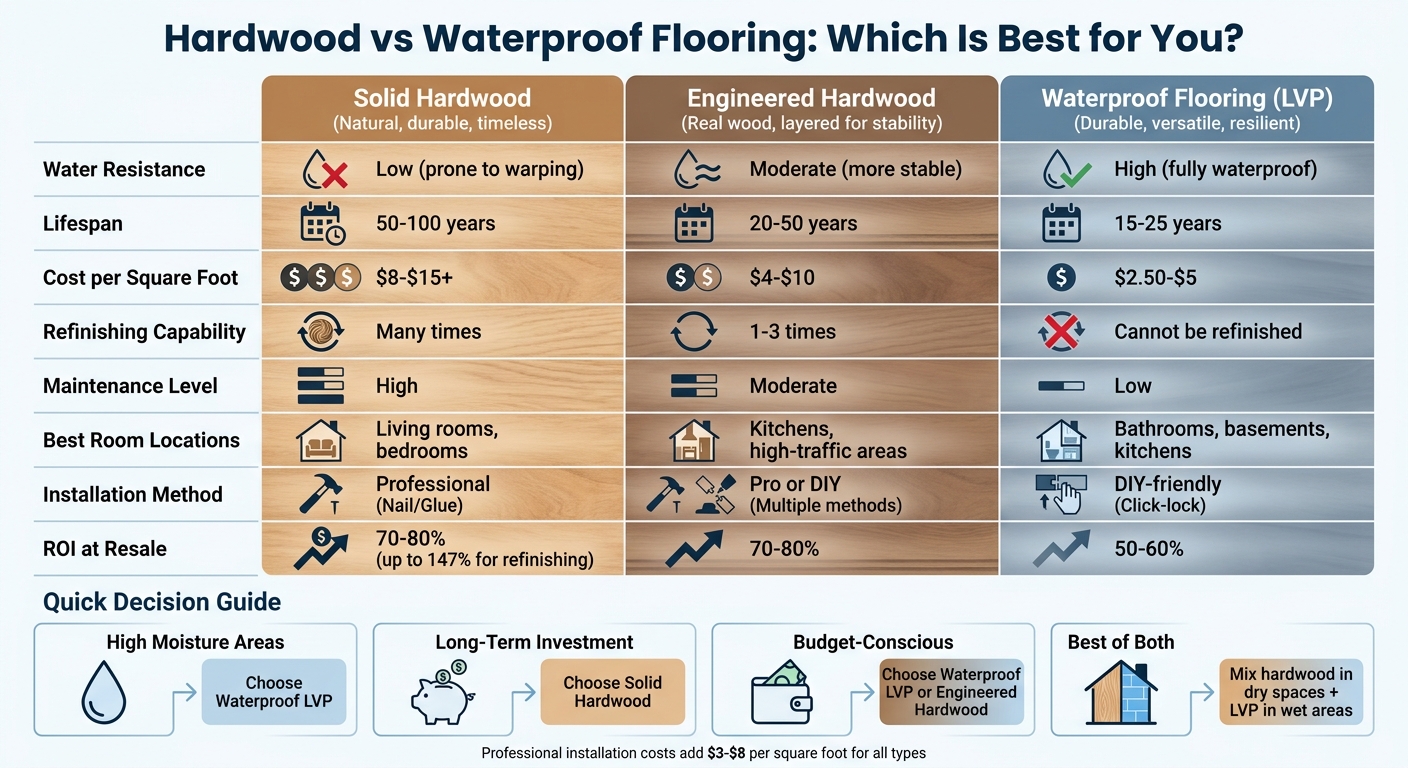
Hardwood vs Waterproof Flooring Comparison Chart
Solid Hardwood Floors VS LVP VS Engineered Hardwoods (Which flooring type to choose?)
sbb-itb-9f8f869
What You Need to Know About Hardwood Flooring
Before comparing hardwood to waterproof flooring, it’s important to understand the basics of hardwood flooring. Hardwood comes in two main types: solid and engineered. Both highlight the beauty of real wood but differ in how they’re made and where they work best. Solid hardwood is crafted from a single piece of wood, usually 3/4 inch thick. Engineered hardwood, on the other hand, has a thin layer of real wood on top of a plywood or composite core, which adds stability [3,6].
Because solid hardwood is a natural material, it reacts to moisture and changes in humidity, which can lead to warping, cupping, or shrinking. For this reason, it’s best suited for dry, above-grade areas and is typically installed by nailing it down [3,6]. Engineered hardwood is more resistant to these issues, making it a good choice for basements, concrete slabs, or even over radiant heating systems. It can be installed using nails, glue, or floating methods [3,6].
"If you plan to stay in your home long-term, and you can afford it, solid hardwood is best. If you want real wood but need something more stable and more affordable, engineered hardwood is a fantastic choice."
– Melissa Welsh, Interior Designer, Welsh Design Studio
Solid Hardwood vs Engineered Hardwood
One of the biggest differences between the two types is how long they last. Solid hardwood can be refinished multiple times, giving it a lifespan of 50–100 years. Engineered hardwood, with its thinner wood layer, can only handle 1 to 3 refinishing cycles [3,6].
Price is another factor to consider. Solid hardwood typically costs $8–$15 or more per square foot, with premium species reaching around $28 [3,7]. Engineered hardwood is more budget-friendly, ranging from $4–$10 per square foot, with high-end options nearing $23. Installation costs for both types add $3–$8 per square foot, so a 2,000‑sq‑ft project can run anywhere from $12,000 to $36,000.
If you’re installing hardwood in high-traffic areas, harder species like Hickory or Oak are better choices since they resist dents more effectively than softer woods like Pine or Cherry [6,7]. To ensure the best results, solid hardwood planks should acclimate to the room’s temperature and humidity for 1 to 2 weeks before installation. This step helps prevent future issues like gaps or buckling.
How Long Hardwood Flooring Lasts
The lifespan of hardwood flooring depends on the wood species, construction type, and how well it’s maintained. The Janka Hardness Scale measures a wood’s resistance to dents, with species like Hickory and Maple ranking high for durability. Softer woods like Walnut may be better suited for low-traffic areas.
Solid hardwood can last for decades, thanks to its ability to be sanded and refinished repeatedly. This means deep scratches, stains, or even a desire to change the floor’s color can be addressed over time [8,9]. Engineered hardwood, however, has a shorter lifespan – around 20 to 30 years – due to its thinner veneer, which limits refinishing options.
To keep hardwood floors in great shape, avoid standing water and high humidity. Use pH-neutral cleaners and microfiber tools for regular cleaning. Harsh methods like steam cleaning or oil-based soaps should be avoided. Furniture pads and trimmed pet claws can also help prevent scratches.
Beyond durability, hardwood’s appearance and feel add to its appeal.
The Look and Feel of Hardwood
Hardwood flooring is prized for its natural grain patterns, knots, and rich colors that bring a timeless elegance to any space. Homeowners can further personalize their floors by choosing from a variety of wood species – like Oak, Maple, Walnut, or Cherry – and selecting patterns such as herringbone, chevron, or traditional plank layouts.
In addition to its aesthetic charm, hardwood flooring can increase a home’s value. New installations typically deliver an average return on investment (ROI) of 118%, while refinishing existing floors can yield an ROI of up to 147% when selling a home. Some studies even suggest that homes with hardwood flooring may sell for up to 2.5% more. These benefits make hardwood a smart choice for homeowners looking to boost both style and resale value.
Solid hardwood also tends to feel sturdier and more substantial underfoot compared to floating engineered floors, which can sometimes sound hollow if not installed correctly. This density contributes to better sound absorption and adds to the premium experience that many homebuyers appreciate.
What You Need to Know About Waterproof Flooring
Waterproof flooring is a practical choice for areas prone to moisture, combining resilience with a wood-like aesthetic. Unlike hardwood, which can warp or deteriorate when exposed to water, waterproof flooring is designed to handle everything from minor spills to standing water. Luxury Vinyl Plank (LVP) is the most popular option, offering a balance of functionality and style. As with hardwood, waterproof flooring is often judged based on its durability, ease of installation, and overall appearance. A deeper comparison of these factors will follow in the side-by-side analysis.
How Waterproof Flooring Is Made
The construction of waterproof flooring involves multiple layers, each serving a specific purpose. At its core, there’s a plastic-based layer – usually SPC (stone plastic composite) or WPC (wood plastic composite) – designed to repel moisture. Above this is a photographic layer that mimics the look of natural materials like wood or stone, topped with a clear wear layer for scratch resistance. Beneath it all, a backing layer provides stability and helps with sound absorption.
Brands like CoreLuxe incorporate rigid core technology to ensure their products are fully waterproof. Many of these floors feature click-lock systems, making installation straightforward without the need for nails or glue. With proper care, waterproof flooring generally lasts 15 to 25 years, depending on its quality and the amount of foot traffic it endures. This layered design not only ensures durability but also creates a surface that closely resembles the appearance of natural wood.
How Waterproof Flooring Looks
Modern waterproof flooring has come a long way in replicating the appearance of real wood. High-quality photographic layers capture details like wood grain, color variations, and knots, while premium options may include textured surfaces and beveled edges for added realism. From a short distance, it can be difficult to distinguish quality LVP from authentic hardwood.
"Today’s LVP looks so realistic that it’s hard to tell it’s not wood."
– Melissa Welsh, Interior Designer and Founder, Welsh Design Studio
However, despite its convincing appearance, waterproof flooring feels different underfoot. Its plastic composition lacks the warmth and natural flexibility of real wood. Some designers describe it as an imitation of nature rather than a true replacement for solid hardwood. Another notable difference is that waterproof flooring cannot be sanded or refinished – once the wear layer or photographic image is damaged, the affected planks must be replaced.
On the cost side, waterproof vinyl flooring is an affordable alternative to hardwood. Prices typically range from $1 to $5 per square foot, with some high-quality options available for less than $1 during sales. In contrast, solid hardwood flooring starts at about $8 per square foot.
Installing Waterproof Flooring
Beyond its realistic appearance, waterproof flooring is also known for its straightforward installation. Most products feature a click-lock system, allowing the planks to float over existing surfaces like tile, concrete, or old vinyl with minimal preparation. This makes it a favorite among DIY enthusiasts. For those opting for professional help, installation usually takes 1–3 days, which is quicker compared to the 3–7 days often required for hardwood.
"Waterproof vinyl flooring will not absorb moisture or swell, and it can be installed in every room of the home; including bathrooms, kitchens, basements, and laundry rooms."
– Giant Floor
Its versatility makes waterproof flooring suitable for any level of the home, including moisture-heavy areas like basements and bathrooms where hardwood isn’t ideal. For maintenance, a soft-bristled vacuum (avoiding beater bars) is recommended to protect the wear layer. For deeper cleaning, wet mopping or occasional jet mopping works well.
Hardwood vs Waterproof Flooring: Side-by-Side Comparison
Feature Comparison Table
Here’s a quick comparison of how these flooring types stack up across key features:
| Feature | Solid Hardwood | Engineered Hardwood | Waterproof Flooring (LVP) |
|---|---|---|---|
| Water Resistance | Low; prone to warping | Moderate; more stable | High; fully waterproof |
| Durability (Scratches/Dents) | High (but shows wear) | High | Very High |
| Lifespan | 50–100 years | 20–50 years | 15–25 years |
| Refinishing | Many times | 1–3 times (if thick) | No |
| Best Areas | Living rooms, bedrooms | Kitchens, high-traffic | Bathrooms, basements, kitchens |
| Installation | Professional (Nail/Glue) | Pro/DIY (Nail/Glue/Float) | DIY-friendly (Click-lock) |
| Price Range | $8–$15+ per sq ft | $4–$10 per sq ft | $2.50–$5 per sq ft |
Solid hardwood can last up to a century because it can be refinished multiple times. In contrast, waterproof flooring (LVP) has a shorter lifespan of 15–25 years, as it must be replaced once its wear layer wears out. However, LVP stands out for its resistance to water, scratches, and dents, making it a practical choice for areas with heavy use or moisture concerns.
Performance in Busy Areas and Wet Spaces
Waterproof flooring shines in moisture-heavy spaces. Bathrooms, basements, laundry rooms, and kitchens benefit greatly from LVP’s ability to withstand standing water without damage. Solid hardwood, on the other hand, is highly sensitive to moisture. Even a single water event can lead to cupping, warping, or irreversible damage that requires replacement.
"LVP wins for scratch and water resistance. Its plastic composition resists dents, scratches, and spills. LVP excels in households with pets or heavy foot traffic."
– WifPros Team
In high-traffic areas like hallways or living rooms, the decision often comes down to your priorities. Hardwood delivers a classic, high-end aesthetic and can be refinished to erase surface scratches over time. Meanwhile, LVP’s tough wear layer offers unmatched scratch resistance, making it a go-to for homes with kids or pets. Some homeowners opt for a hybrid solution, using hardwood in dry spaces like bedrooms and living rooms, while installing matching LVP in wet areas to maintain a cohesive look.
Which Flooring Works for Your Household
Your lifestyle and household needs will play a big role in choosing the right flooring. If you have pets or young children, LVP is often the better option. It stands up to spills, accidents, and dropped toys without showing damage, and it’s easier to clean – just sweep and mop as needed. Hardwood, by contrast, requires careful cleaning with specialized products and consistent humidity control to avoid damage.
Climate is another factor to consider. In humid or rainy areas like the Pacific Northwest, hardwood demands rigorous moisture management to prevent warping or gaps. LVP, with its low-maintenance nature, is more practical in such environments. However, if resale value is a priority, hardwood remains a strong investment, offering a 70–80% return and continuing to be a favorite among buyers. For those prioritizing durability and ease of care in their daily lives, LVP offers a more practical solution.
Cost Breakdown and Long-Term Value
Upfront Costs for Materials and Installation
Hardwood flooring comes with a steeper upfront cost compared to waterproof options. Professional hardwood installation typically costs between $6 and $25 per square foot, bringing the total for an average project to anywhere from $2,500 to $7,000. Material costs alone range from $6 to $12 per square foot for standard hardwood, while premium options like wide planks can push that up to $13–$25 per square foot. On top of that, installation labor generally adds $3–$6 per square foot.
Waterproof flooring, such as luxury vinyl plank (LVP), is much easier on the wallet. Entry-level LVP starts at about $1.39 per square foot for materials, and its straightforward installation keeps labor costs low. For a 500-square-foot space, hardwood might cost $3,000–$12,500, while waterproof flooring could run you approximately $700.
Don’t forget preparation costs. Removing old flooring can cost $1–$5 per square foot, while fixing water-damaged or moldy subfloors might add another $1,000–$3,000. Additionally, harder wood species like Brazilian walnut or white oak often require more labor, which can increase installation time and expenses.
Ongoing Maintenance Expenses
Hardwood flooring requires more care and ongoing costs. You’ll need to use specialized wood floor cleaners regularly, and refinishing – an essential process to maintain hardwood’s appearance – costs between $1,100 and $2,700 every 10 to 20 years. Hardwood’s sensitivity to moisture also means spills or high humidity can lead to expensive repairs if not addressed quickly.
Waterproof flooring, on the other hand, is much easier (and cheaper) to maintain. A damp mop and mild cleaner are all you need for daily upkeep, and there’s no need for sealing or refinishing. Its scratch-resistant and stain-resistant surface means fewer repair costs, which is especially beneficial in homes with kids or pets. Over two decades, these maintenance savings can significantly offset the initial price difference.
Return on Investment Over Time
Hardwood flooring offers the best resale value among flooring options. Refinishing existing hardwood floors provides a 147% cost recovery, the highest return among all interior remodeling projects, while installing new hardwood has a 118% cost recovery. Additionally, homes with hardwood floors can see sale prices increase by around 2.5%, and 54% of buyers are willing to pay more for this feature.
"Refinishing existing hardwood floors returned 147% of the project cost… the single highest cost recovery of all interior remodeling projects."
– National Association of Realtors (NAR)
In comparison, waterproof flooring like LVP typically offers a 50–60% return on investment, compared to hardwood’s 70–80%. While LVP may not elevate your home’s value as much, it’s an excellent choice for areas prone to moisture, such as basements or bathrooms. Solid hardwood, with its lifespan of 50 to 100 years, serves as a long-term investment that can span generations. By contrast, LVP generally lasts 10 to 20 years before needing replacement. If you’re staying in your home for the long haul or want to maximize resale appeal, hardwood’s higher upfront cost can be well worth it.
How to Choose the Right Flooring for Your Home
Consider installation area, lifestyle, and budget when selecting flooring. Start by identifying which rooms need new flooring. For spaces prone to moisture, like bathrooms, kitchens, basements, and laundry rooms, waterproof options such as luxury vinyl plank are ideal. These materials resist warping and rotting caused by spills or humidity. On the other hand, living rooms, dining rooms, and bedrooms often benefit from the warmth and elegance of hardwood flooring.
Daily habits also play a big role in determining the right flooring. Homes with pets, kids, or frequent spills might find waterproof flooring a practical choice due to its stain and spill resistance. As Lumberjack Direct puts it, "For homes or spaces with extremely high, rambunctious traffic areas – if you have children or pets, or if you entertain frequently – waterproof flooring may be a better choice as it is more resistant to spills and stains". However, if you’re planning to stay in your home long-term and aim to boost resale value, hardwood is a strong contender. It offers a 70–80% return on investment at resale and, with proper care, can last anywhere from 50 to 100 years.
A mix-and-match approach – hardwood for living spaces and waterproof flooring for moisture-prone areas – balances style and practicality. Always view samples in the actual room under different lighting conditions to ensure the look matches your vision.
Don’t overlook the finer details. Allow flooring materials to acclimate for 1–3 days before installation. To account for waste and cutting errors, buy 7% to 10% more material than your measured square footage. If you’re opting for waterproof flooring, look for the "FloorScore" logo to ensure low VOC emissions and healthier indoor air quality. For hardwood installations, a perfectly level subfloor is essential. While luxury vinyl plank can handle minor imperfections, hardwood demands a stable, flat surface to avoid future problems.
TriArt Hardwoods provides in-home consultations to help you assess your needs and choose between solid hardwood, engineered hardwood, or luxury vinyl plank. Whether you’re updating one room or your entire home, expert advice can help you find flooring that fits your lifestyle, budget, and future plans.
FAQs
Can I use hardwood in a kitchen or basement?
Yes, hardwood can work in a kitchen, but it demands consistent care. Spills need to be cleaned up quickly to avoid water damage. On the other hand, hardwood isn’t the best choice for basements. The high humidity and moisture levels common in basements can lead to warping. For these spaces, waterproof options like luxury vinyl plank are a much better fit since they can handle moisture without issue.
Which is better for pets and kids: hardwood or LVP?
For households with pets and kids, luxury vinyl plank (LVP) stands out as a practical flooring option. Its durability, water resistance, and scratch resistance make it ideal for handling pet claws, toy wheels, and accidental spills. Plus, cleaning is a breeze – just sweep or mop, and you’re good to go.
While hardwood offers a classic and timeless aesthetic, it’s more vulnerable to scratches, dents, and moisture damage. For busy homes, LVP often proves to be the smarter, low-maintenance choice.
How do I choose LVP wear layer thickness?
When selecting an LVP wear layer thickness, think about how much durability your space requires. For areas with heavy foot traffic or homes with pets and kids, a thicker wear layer – 20 mil or more – provides stronger protection against scratches and wear. On the other hand, thinner wear layers, typically 6-12 mil, are a good fit for low-traffic spaces. Choosing the right thickness ensures your flooring holds up to your lifestyle and daily use.


