

Hardwood floors can last decades, but they need proper care to maintain their beauty and durability. Over time, wear and tear can lead to damage that requires refinishing. Here are 7 key signs it’s time to refinish your floors:
- Scratches and Scuffs: Heavy foot traffic often leads to surface damage. Deep scratches expose raw wood, making it vulnerable to moisture and stains.
- Dull or Faded Finish: Loss of shine or uneven color indicates the protective layer has worn off.
- Water Damage: Dark spots or cupping from spills, leaks, or humidity can weaken the wood.
- Cupping or Warping: Moisture imbalance causes boards to rise or distort.
- Splintering or Rough Surface: Exposed wood fibers can lead to safety hazards and further damage.
- Gray or Worn Spots: Gray patches mean the finish has worn away, exposing wood to dirt and moisture.
- Sun Damage: UV rays cause discoloration and weaken the wood over time.
Refinishing costs $3–$10 per square foot, far less than the $8–$25 per square foot needed for replacement. Addressing these issues early can save money and extend the life of your floors. If you notice any of these signs, consider scheduling a professional refinishing service to restore your floors’ appearance and strength.
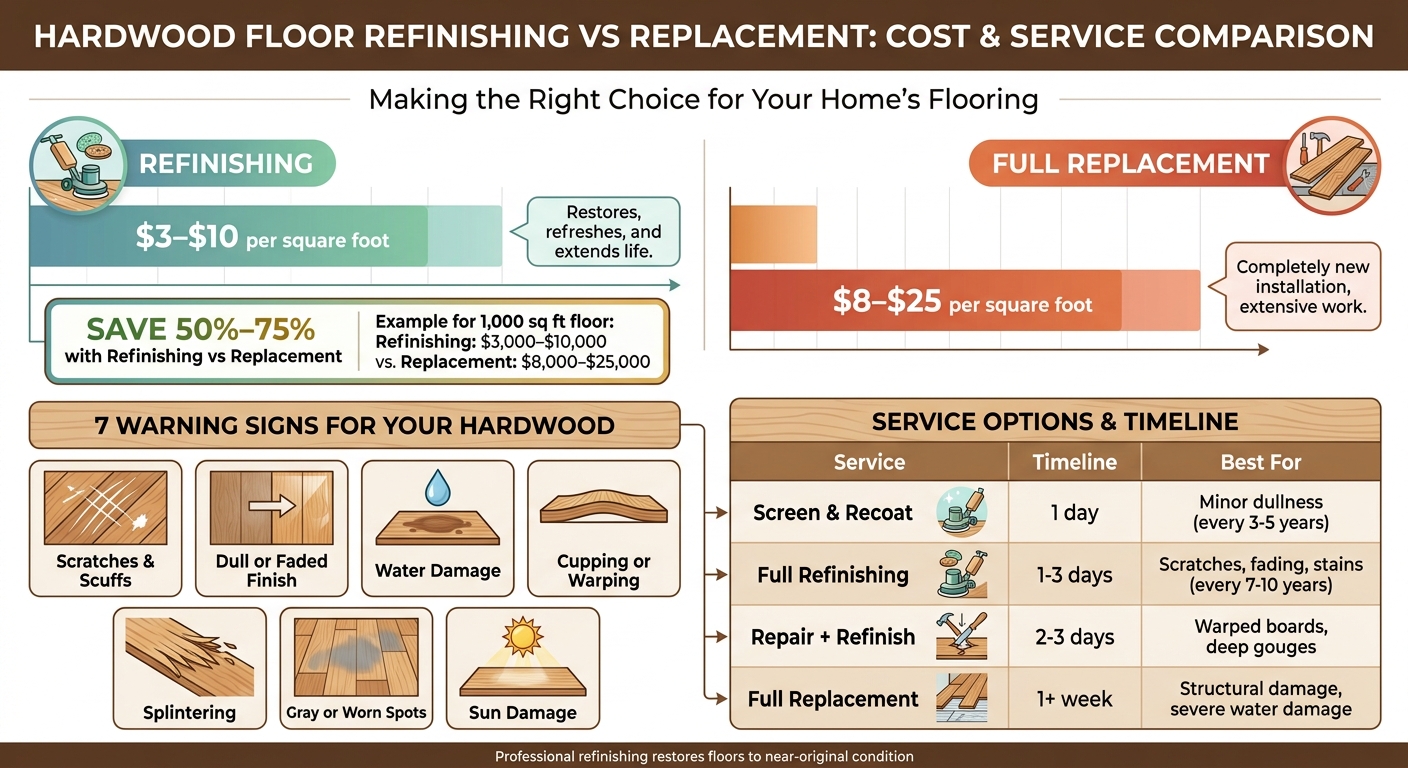
Hardwood Floor Refinishing vs Replacement Cost Comparison
1. Scratches and Scuffs Covering the Surface
Impact on Floor Appearance and Aesthetics
Scratches and scuffs are most common in hallways, kitchens, and living rooms, where foot traffic tends to be the heaviest. Deep scratches go beyond the surface finish, exposing the raw wood underneath and leaving floors looking uneven and poorly maintained.
"Worn floors make a home look old and neglected, impacting resale value." – Ben Kimminau, Hardwood Floor Specialist
What might begin as a few minor scratches can quickly turn into a network of discoloration that regular cleaning can’t fix. Over time, the floor’s smooth texture and polished appearance fade, leaving a dull and patchy surface. Exposed wood also points to bigger concerns beyond just aesthetics.
Effect on the Longevity of the Hardwood
While shallow scratches may only affect the surface, deeper gouges compromise the protective finish. This opens the door for moisture to seep in, potentially leading to damage that requires expensive board replacements.
"Deep scratches that penetrate the finish expose the raw wood beneath, making it vulnerable to moisture, stains, and dirt buildup." – Ben Kimminau, Hardwood Floor Specialist
Refinishing is a much more cost-effective solution. It typically costs $3–$10 per square foot, compared to $8–$25 per square foot for full replacement. On a 1,000-square-foot floor, refinishing could save you 50% to 75% versus starting over with new boards.
Ease of Restoration Through Refinishing
Tackling scratches early can prevent them from turning into a bigger problem. Refinishing removes the damaged surface layer and applies a fresh finish, restoring the floor’s smoothness and shine in as little as 1–3 days. To keep your floors looking their best, use furniture pads and area rugs in high-traffic areas and recoat the finish every 3–5 years.
sbb-itb-9f8f869
2. Dull or Faded Finish
Impact on Floor Appearance and Aesthetics
When hardwood floors lose their shine, it can make your entire home feel less vibrant. This dullness happens when the protective topcoat wears down due to everyday foot traffic, harsh cleaning products, or prolonged exposure to sunlight. Rooms with large windows often show more noticeable fading, while areas under rugs retain their original color, creating a patchy, uneven look that regular cleaning can’t fix.
"A lackluster shine means the protective finish has worn off." – Ben Kimminau, Owner, Kimminau Wood Floors
UV rays and strong cleaners don’t just dull the finish – they can also leave a cloudy residue that further diminishes the floor’s appearance. Beyond aesthetics, this wear can weaken the floor’s protective layer.
Effect on the Longevity of the Hardwood
A dull surface isn’t just a cosmetic issue – it’s a warning sign. Without the protective finish, wood becomes vulnerable to moisture, which can lead to deep stains, trapped dirt, and even warping over time.
Ease of Restoration Through Refinishing
The good news? You can bring your floors back to life, especially if you act quickly. Addressing dullness early can save you money. A screen and recoat process is often enough to restore the shine, but more severe fading may require a full refinishing. When refinishing, opt for a finish with UV protection to prevent future sun damage. Also, steer clear of oil-based soaps, as they tend to leave behind a residue. One simple way to check if it’s time to refinish? Lift an area rug and compare the color underneath to the exposed floor – if there’s a noticeable difference, it’s time to take action.
EVERYTHING you need to know about hardwood refinishing (Complete Homeowners Guide)
3. Water Damage and Dark Stains
Water damage is another major clue that your hardwood floors might need some serious care.
How Water Damage Affects Appearance
Water damage often shows up as dark, gray, or black stains. These unsightly marks can result from things like spills, pet accidents, plumbing leaks, or even high humidity levels. Another common issue is cupping, where the edges of the floorboards rise higher than the center, giving the floor an uneven, wavy appearance.
The Long-Term Impact on Hardwood Floors
Water damage doesn’t just ruin the look of your floors – it can also weaken their structure. When moisture seeps into the wood, it can cause decay or even lead to mold growth if left untreated.
"Excessive moisture can lead to mold growth and wood deterioration if not addressed." – National Wood Flooring Association (NWFA)
If you wait too long to tackle the problem, the stains can sink deeper into the wood, and the moisture might cause warping that’s beyond repair with simple sanding. To keep your floors protected, refinishing them every 7–10 years is generally recommended.
Restoring Water-Damaged Floors
Refinishing can often breathe new life into water-damaged floors. The process involves sanding down the surface to eliminate stains and smooth out uneven areas. But here’s the catch: you have to fix the moisture issue first. Whether it’s a leaky pipe or high indoor humidity, addressing the root cause is essential to prevent the damage from coming back. Refinishing typically costs between $3 and $8 per square foot. In cases where boards are severely warped or rotting, those sections may need to be replaced before refinishing can begin.
Spotting water damage early can save you from more expensive repairs later and ensures your floors are ready for proper restoration.
4. Cupping or Warping
Cupping and warping are common signs of moisture-related damage in hardwood floors, often pointing to underlying moisture imbalances.
Cupping happens when the edges of a plank rise higher than its center, giving the floor a wavy, uneven appearance. This is typically caused by issues like spills, plumbing leaks, pet accidents, or excessive indoor humidity levels.
Impact on Floor Appearance and Aesthetics
The effect of cupped or warped floors on a room’s appearance is hard to miss. Instead of a smooth, polished surface, the flooring looks uneven and distorted, which can make the space feel neglected. This type of damage often comes with dark stains and visible swelling, amplifying the issue. Beyond aesthetics, such floors can also lower the resale value of your home and draw attention to potential maintenance concerns.
Effect on the Longevity of the Hardwood
If moisture problems are left unresolved, the damage can worsen over time. Cupping may lead to mold growth and even permanent wood deterioration.
"Excessive moisture can lead to mold growth and wood deterioration if not addressed." – National Wood Flooring Association (NWFA)
This highlights the importance of addressing moisture issues promptly to preserve the lifespan of your hardwood floors.
Ease of Restoration Through Refinishing
Refinishing can often restore cupped floors, but only after tackling the root cause of the moisture problem. Whether it’s a plumbing issue or high humidity, ignoring the source ensures the problem will resurface. In cases where the damage is severe, replacing the affected boards may be necessary before refinishing can smooth out the surface.
5. Splintering or Rough Surface
If your hardwood floor feels rough to the touch, like sandpaper, or snags on fabric, it’s a sign that the protective finish has worn away, leaving the raw wood exposed. Without this coating, the wood dries out, becomes brittle, and can eventually develop sharp splinters.
Potential Safety Concerns
Splintering floors aren’t just uncomfortable – they’re also a safety risk. Bare feet and paws are especially vulnerable to sharp wood fibers, which can pierce the skin. Plus, the rough surface can make cleaning a hassle, as mops and cloths may snag on the uneven texture.
"Splinters indicate the wood is dry and unprotected, making it more susceptible to damage." – Ben Kimminau, Owner, Kimminau Wood Floors
Impact on Floor Appearance
Splintered hardwood floors can make your home look poorly maintained. The smooth, polished look of the wood fades, often replaced by a dull or grayish tone. This not only detracts from the overall aesthetic of your home but could also leave a negative impression on potential buyers.
Long-Term Effects on Hardwood Durability
When the finish wears off, the exposed wood absorbs moisture, dirt, and stains more easily. Over time, this can lead to deeper damage, making repairs more complicated and costly. Instead of just refinishing, you might end up needing to replace individual boards, which can quickly escalate expenses.
Refinishing as a Solution
A professional refinishing job can restore splintered floors by sanding away the damaged surface and applying a new protective coating. This process not only smooths out the wood but also helps prevent future issues – all at a much lower cost than replacing the flooring entirely. According to the National Wood Flooring Association, refinishing should be done every 7–10 years, with a screen and recoat every 3–5 years, to keep your floors safe, smooth, and visually appealing. Addressing splintering early is key to preserving both the beauty and lifespan of your hardwood floors.
6. Gray or Worn Spots
Gray or worn spots on hardwood floors often signal deeper damage beyond surface-level issues. These patches are a clear indication that the protective finish has worn away, exposing the wood underneath to potential harm.
When you see gray or discolored areas, it means the wood fibers are drying out and deteriorating. This happens when the finish is no longer shielding the floor from moisture, dirt, and oxidation. Over time, these unprotected areas develop a grayish tone, standing out starkly against the rest of the floor.
Impact on Floor Appearance and Aesthetics
Gray spots can make your floors look neglected. The uneven patches create a worn and unattractive look, especially in high-traffic zones like hallways and entryways. This can be a red flag for potential homebuyers, as worn floors are often associated with poor upkeep. According to the National Wood Flooring Association, UV rays can further damage unprotected wood, leading to permanent discoloration. This not only diminishes the floor’s appearance but also lays the groundwork for more severe structural problems.
Effect on the Longevity of the Hardwood
The issues go beyond just how the floor looks. Without a protective seal, the wood becomes highly vulnerable to absorbing moisture and dirt, which can lead to serious damage.
"Once the finish chips away, the wood underneath is exposed to dirt, moisture, and further deterioration. If left too long, sanding may not be enough".
If gray areas are ignored, they can darken to black, indicating moisture damage or even mold. At that stage, refinishing might not suffice, and replacing the affected boards could become necessary – a far more costly fix.
Ease of Restoration Through Refinishing
The good news? Gray spots are often fixable with professional refinishing if addressed early. This process involves sanding off the damaged top layer to expose fresh wood, followed by applying a new protective finish. The National Wood Flooring Association advises full refinishing every 7–10 years and a maintenance recoat every 3–5 years to avoid exposing the bare wood.
If you’re unsure whether your floors need immediate attention, try the splash test: pour a small amount of water on the floor. If it soaks in rather than forming beads, it’s time to schedule refinishing. Acting promptly can save you from more extensive repairs down the road.
7. Sun Damage and Fading
Sun damage is another telltale sign that your hardwood floors are in need of care. Just like scratches or water damage, fading caused by sunlight not only affects how your floors look but can also compromise their durability over time.
While sunlight can brighten up your home, prolonged exposure to UV rays can have a bleaching effect on hardwood floors. This often leads to visible "tan lines" in areas protected by rugs or furniture, making the contrast hard to ignore.
Impact on Floor Appearance and Aesthetics
Sun damage can result in an uneven, patchy appearance. UV rays are a major culprit, responsible for 40% to 60% of the fading seen on hardwood floors. This discoloration can make your floors look worn and neglected, detracting from the overall aesthetic of your space.
Effect on the Longevity of the Hardwood
The effects of sun damage go beyond surface appearance. According to Dave’s Floor Sanding & Installing, Inc.:
"Sun bleaching can sometimes cause hardwood floors to dry out and shrink, leading to small cracks and separation between the boards".
As the wood loses moisture, it can shrink and develop gaps between planks, weakening the structural integrity of your floor. Additionally, the continuous breakdown of the protective finish under UV exposure leaves the wood more susceptible to damage from dirt, moisture, and everyday use.
Potential Safety Concerns
Sunlight doesn’t just alter the look of your floors – it can also change their texture. Prolonged exposure dries out the wood, which, as Dave’s Floor Sanding & Installing, Inc. points out, can lead to:
"Rough textures, splintering, or even breaking".
This dried, splintering wood can pose a safety hazard, especially for bare feet.
Ease of Restoration Through Refinishing
The good news? Sun-damaged hardwood floors can often be restored through professional refinishing. Sanding away the bleached surface reveals fresh, evenly colored wood underneath. Ben Kimminau, Owner of Kimminau Wood Floors, explains:
"Refinishing removes the top layer of wood, exposing fresh, evenly colored wood, and applying a UV-protectant finish can prevent future discoloration".
Refinishing typically costs between $3 and $10 per square foot, which is far less than the $8 to $25 per square foot it would cost to replace the flooring entirely. To prevent future damage, consider installing UV-resistant window film, which blocks up to 99% of harmful rays, or use blinds and shades during peak sunlight hours. Combining regular refinishing with UV protection measures can help preserve both the look and longevity of your hardwood floors.
Why Choose TriArt Hardwoods for Refinishing

When your hardwood floors start to show wear and tear, TriArt Hardwoods offers professional refinishing services across Metro Atlanta, covering areas like Alpharetta, Buckhead, Brookhaven, Dunwoody, Johns Creek, Marietta, and Sandy Springs. Their focus on precision and clear communication ensures a seamless experience from start to finish, keeping your floors looking stunning and protected for years to come.
The refinishing process involves sanding away the old finish, with the option to add stain for enhanced color, followed by sealing the wood with a durable topcoat. To get started, a 50% deposit secures your project, which includes an in-home consultation, a detailed proposal within 24 hours, and a final walkthrough complete with maintenance tips.
Refinishing is a cost-effective solution, eliminating surface damage and restoring your floors’ beauty for 50%–75% less than a full replacement. Most medium-sized refinishing jobs are completed in about two days, keeping disruptions to a minimum.
Here’s a quick breakdown of the services offered:
| Service | Scope of Work | Relative Cost | Best For |
|---|---|---|---|
| Refinishing | Sanding to raw wood, optional staining, and topcoats | $3–$10 per sq. ft. | Surface scratches, dullness, fading, minor wear |
| Repairs | Replacing damaged planks, fixing warping, or subfloor issues | $50–$100 per hour | Deep gouges, pet stains, or broken boards |
| Full Replacement | Demolition and new hardwood installation | $8–$25 per sq. ft. | Structural damage, water damage, or new wood species |
Refinishing not only brings your floors back to life but also increases your home’s value by restoring them to near-original condition. For those looking for more extensive upgrades, TriArt Hardwoods also offers services like transforming carpeted stairs into elegant hardwood with premium oak treads.
Conclusion
The warning signs we’ve discussed shouldn’t be overlooked. Hardwood floors are a major investment, and addressing issues early helps maintain their appearance and longevity. Problems like deep scratches can turn into permanent gouges, while untreated stains may become impossible to remove. When the protective finish wears away, the exposed wood is vulnerable to moisture, which can cause mold, warping, or even structural damage.
"NWFA strongly advises against waiting until floors are too damaged to refinish, as replacement is far more expensive." – National Wood Flooring Association
Delaying refinishing doesn’t just risk irreversible damage – it can also be costly. Refinishing your floors can save 50%–75% compared to a full replacement. If you notice multiple warning signs, like water stains, a dull finish, or scratches that lead to splintering, it’s time to act. A professional evaluation can determine whether your floors need a quick recoat or a full sand-and-refinish. Ignoring these signs could mean the damage progresses to the point where refinishing is no longer an option, leaving replacement as the only solution.
TriArt Hardwoods offers in-home consultations across the Metro Atlanta area to assess your floors and provide a detailed plan. Their experts can identify whether your floors need a simple touch-up or a more extensive restoration, while also checking for hidden issues like moisture damage or structural problems.
Don’t let minor issues turn into major expenses – contact TriArt Hardwoods today to bring back the beauty and strength of your hardwood floors.
FAQs
Should I recoat or fully refinish my hardwood floors?
The decision to recoat or refinish your hardwood floors comes down to their current condition. If your floors have minor surface imperfections – like light scratches, dull areas, or general wear – recoating can be a great option. It involves applying a new layer of finish to refresh the look. On the other hand, refinishing is the way to go for more serious issues, such as deep scratches, discoloration, water damage, or heavy wear. This process requires sanding the floors down to the bare wood, followed by staining and sealing to bring them back to life.
How can I tell if water damage needs repair or board replacement?
To evaluate water damage on your floors, look for telltale signs such as discoloration, warping, or buckling. Smaller issues, like surface discoloration, can often be addressed with refinishing. However, more serious problems, such as deep warping or structural instability, typically call for replacing the damaged boards. When the damage threatens the floor’s stability, board replacement is the best option to maintain both its strength and appearance.
How long do I need to stay off floors after refinishing?
It’s best to steer clear of walking on refinished floors until the finish has completely dried and cured. This process usually takes anywhere from 24 to 72 hours, depending on the specific type of finish applied. To be certain, check with your flooring professional or the manufacturer of the finish for detailed instructions on curing times before returning to regular use.


