

Commercial hardwood floor refinishing in Atlanta is vital for maintaining the durability and appearance of floors in high-traffic spaces like offices, restaurants, and retail stores. Atlanta’s humid climate and constant foot traffic can cause hardwood to warp, scratch, or lose its finish. Refinishing restores the surface by sanding, staining, and sealing, offering a cost-effective alternative to floor replacement.
Key Points:
- Cost: $3–$8 per square foot for a full refinish.
- Process: Sanding, staining, sealing, and optional repairs.
- Challenges: Atlanta’s climate causes wood to expand and contract, leading to wear.
- Maintenance: Daily cleaning and recoats every 3–5 years extend floor life.
- Professional Services: Local companies like TriArt Hardwoods specialize in commercial refinishing tailored to Atlanta’s conditions.
Refinishing is a practical solution to keep floors looking polished and professional while protecting them from long-term damage.
UV Instant Curing Wood Floors for a Commercial Building before moving in tomorrow
sbb-itb-9f8f869
Assessing Commercial Hardwood Floors for Refinishing
Start with a detailed evaluation of the floor to pinpoint necessary treatments. This step is crucial for spotting damage and deciding on the best refinishing method for commercial spaces in Atlanta.
Evaluating Floor Condition
Inspect the floor carefully, paying close attention to high-traffic areas like entryways, hallways, and lobbies. Look and listen for signs of damage. Creaks, squeaks, or hollow sounds often point to structural issues beneath the surface, which need to be addressed before refinishing begins.
A dull finish or exposed wood usually signals wear caused by moisture or heavy foot traffic. Warped or cupped boards are a red flag for moisture problems, often found in areas like commercial kitchens or restrooms. Uneven planks not only look bad but also pose safety risks.
"By addressing damage early, property owners can extend the lifespan of their hardwood floors while maintaining a professional and inviting environment for employees, clients, or visitors." – Floor Refinishing Pros
Localized damage – like a few warped boards or a small water-stained section – might only require minor repairs before refinishing. However, widespread issues like deep scratches or finish failure across large areas often indicate the need for a full refinish.
These assessments are especially important when factoring in the unique challenges of Atlanta’s environment.
Atlanta-Specific Factors That Affect Hardwood Floors
Atlanta’s climate presents its own set of challenges. The city’s fluctuating humidity levels cause wood to expand and contract, which can lead to wear and tear that isn’t always immediately obvious. Additionally, commercial spaces such as retail stores, restaurants, and offices endure heavy foot traffic, which accelerates the breakdown of finishes.
Equipment like restaurant carts, office chairs, or warehouse dollies can also cause deep gouges that go beyond surface-level wear. Combined, these factors mean that hardwood floors in Atlanta’s commercial spaces can deteriorate quickly, making regular inspections and timely maintenance essential.
These considerations help determine whether a repair, screen and recoat, or full refinishing is the best option.
Repair, Screen and Recoat, or Full Refinish?
Choose the right approach based on the extent of the damage and your business needs:
| Method | Best For | Average Cost in Atlanta |
|---|---|---|
| Spot Repair | Small scratches, dents, or individual damaged boards | $100 – $400 per repair |
| General Repair | Issues like water damage, loose planks, or deep gouges | $300 – $1,200 per project |
| Screen & Recoat | Light surface scuffs and dull finishes with intact coatings | Lower than full refinishing |
| Full Refinish | Deep scratches, failed finishes, or changing stain colors | $3 – $8 per sq. ft. |
A screen and recoat is a light maintenance process that refreshes the topcoat without stripping the floor down to bare wood. It’s a great option when floors look dull but the finish remains intact. On the other hand, a full refinish involves sanding the floor to bare wood, applying new stain, and sealing it with fresh coats. The choice between these methods depends entirely on the assessment of the floor’s condition.
"Unlike most flooring, wood floors can be refinished, and the stain color can be changed to give them an updated look, providing you decades of value." – Mr. Hardwood
If you’re unsure about what your floors need, consider scheduling an on-site consultation. Many Atlanta contractors, like TriArt Hardwoods, offer free assessments to help you make an informed decision – without the guesswork.
The Commercial Hardwood Floor Refinishing Process
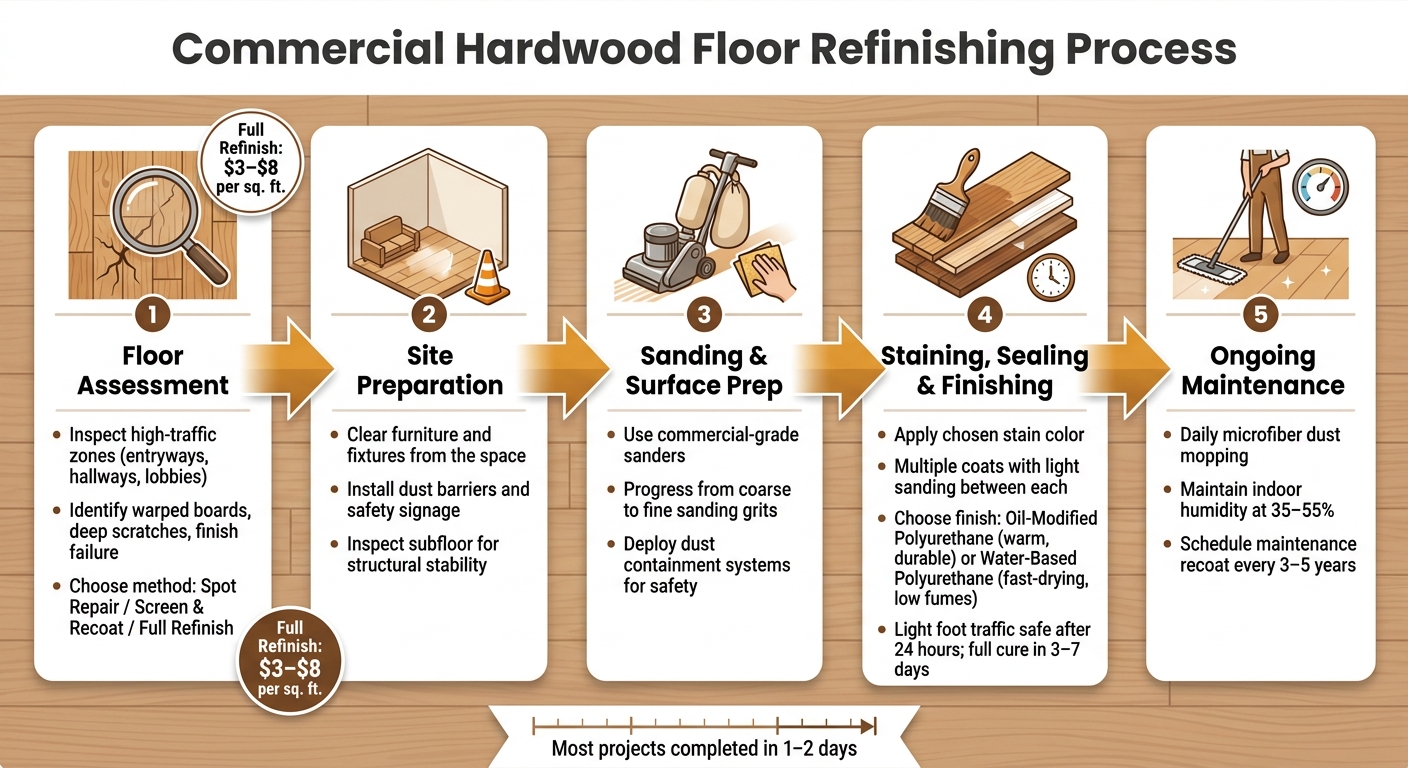
Commercial Hardwood Floor Refinishing Process: Step-by-Step Guide
When it’s time for a full refinishing job, following a clear and thorough process is key to achieving durable, high-quality results. Each step is interconnected, so skipping or rushing through any part can harm the final outcome.
Site Preparation and Planning
Proper preparation ensures the job runs smoothly with minimal interruptions. Scheduling the work to reduce downtime is critical, especially in busy commercial settings. Before sanding begins, the space must be cleared of furniture and fixtures. Contractors also set up dust barriers and safety signage to protect nearby areas. At this stage, the subfloor is inspected for stability – because even the best finish won’t last if the base isn’t solid.
"Clear communication and well-defined written expectations are essential when working with local hardwood repair specialists." – Floor Refinishing Pros
Once the area is secure and ready, the focus shifts to sanding and surface preparation.
Sanding and Surface Preparation
Sanding is a demanding but crucial step in the process. Professionals use commercial-grade sanders to remove the old finish and create a smooth, even surface. They typically work through a series of sanding grits, starting with coarse to eliminate damage and then moving to finer grits for a polished finish.
In commercial spaces, high-traffic areas often show uneven wear due to constant movement and equipment use. Sanding evens out these inconsistencies, setting the stage for a flawless finish. To keep the workspace clean and safe, dust containment systems are used to minimize airborne particles – especially important in partially occupied buildings.
Staining, Sealing, and Finishing
Once the floor is sanded and leveled, the next step is applying stain, sealant, and finish. The stain should not only enhance the floor’s appearance but also meet the durability needs of a commercial space. Multiple coats are applied, with light sanding between each, to ensure proper adhesion.
For finishes, contractors often choose between oil-modified polyurethane, which offers durability and a warm look, or water-based polyurethane, known for its quick drying time and lower fumes. These finishes are designed to handle the heavy demands of commercial environments, like those in Atlanta. While full curing takes 3–7 days, light foot traffic is usually safe after 24 hours.
Choosing the Right Products and Techniques for Commercial Spaces
When it comes to commercial flooring, selecting finishes that boost durability and simplify maintenance is key to long-term success.
Durable Finishes for High-Traffic Areas
Not all finishes can handle the wear and tear of busy commercial spaces. For high-traffic businesses in Atlanta, aluminum oxide coatings stand out as one of the toughest options, making them ideal for retail stores and public areas. Another excellent choice is UV-cured polyurethane, which not only resists scratches but also cures quickly – minimizing downtime for businesses.
In bustling environments, matte or low-sheen finishes are often a better fit than glossy ones, as they hide everyday scuffs and wear more effectively. Next, let’s explore how different types of businesses influence the choice of refinishing techniques.
Refinishing by Business Type
Each commercial space has its own set of needs, and these directly impact refinishing decisions. In Atlanta, business-specific challenges shape these tailored recommendations:
| Business Type | Primary Goal | Recommended Focus |
|---|---|---|
| Retail & Lobbies | First impressions | Aluminum oxide coatings, high-durability finishes |
| Restaurants | Safety & moisture control | Moisture-tolerant finishes, easy-to-clean sealants |
| Office Buildings | Professional aesthetics | Low-sheen finishes, minimal disruption scheduling |
| Warehouses | Structural durability | Heavy-duty coatings, focus on floor integrity |
These tailored refinishing strategies align with the preparation steps discussed earlier, creating a seamless and effective process.
Repairs and Upgrades Before Refinishing
A flawless finish starts with a solid foundation. Refinishing won’t hide existing floor problems, so addressing issues like warped boards, loose planks, or subfloor damage is essential. For example, resolving concrete slab problems or replacing water-damaged sections ensures the new finish adheres properly.
Additionally, it’s smart to complete other renovations – like painting or cabinet installations – before refinishing. This avoids accidental damage to the freshly finished surface. By combining thorough repairs with the right products, you can achieve a durable and visually consistent result from start to finish.
Maintaining Commercial Hardwood Floors After Refinishing
After refinishing your hardwood floors, keeping up with proper maintenance is key to preserving their look and durability. The effort you put into daily care can make a big difference in how long your refinished floors stay in great shape. Simple, consistent habits go a long way in protecting your investment.
Daily and Routine Maintenance
Believe it or not, the biggest threat to refinished hardwood floors isn’t heavy foot traffic – it’s grit and dirt. As Oakerds Hardwood Floor Refinishing explains:
"Grit and sand act like sandpaper on your finish."
To keep your floors looking their best, use a microfiber dust mop daily and a vacuum with a hard-floor setting. For weekly cleaning, a damp mop with a pH-neutral cleaner like Bona works well. Avoid steam mops, vinegar, wax, and oil soaps, as these can leave residue that dulls the finish and makes future refinishing more difficult.
Spills should be blotted up immediately with a dry cloth to stop liquids from seeping into the wood grain. Additionally, maintaining indoor humidity between 35–55% is crucial to prevent issues like gapping or cupping, especially during Atlanta’s humid seasons.
Protecting the Finish in High-Traffic Areas
Beyond cleaning, physical protection is essential. Place mats at all exterior doors to catch dirt and moisture before they reach the hardwood. Attach felt pads to furniture legs and replace them every six months to prevent scratches. If you need to move heavy furniture, use sliders or lift the items instead of dragging them.
Be cautious with rug choices – rubber-backed rugs can trap moisture and cause discoloration over time. For areas exposed to sunlight, UV-filtering window films can help prevent uneven fading or darkening of the wood. These protective measures, combined with regular cleaning, help maintain the floor’s integrity.
Long-Term Care and Recoat Scheduling
Even with diligent care, high-traffic areas like entryways and corridors will eventually show signs of wear. A maintenance recoat of polyurethane every 3–5 years is an excellent way to restore the finish and protect the wood without the need for a full refinishing job.
For commercial properties in Atlanta, scheduling seasonal inspections twice a year is a smart approach. Look for signs like surface dullness, hollow sounds, or squeaking, as these often indicate that a recoat is needed. Addressing these issues early can help you avoid costly repairs and keep your floors looking professional. Regular inspections and timely recoats ensure your hardwood floors remain a lasting asset to your space.
Conclusion
Refinishing commercial hardwood floors is a practical way for Atlanta businesses to maintain their professional image while avoiding the high cost of full replacement. The process, which includes assessment, sanding, staining, and maintenance, is designed to be efficient and minimally disruptive. With projects often completed in just 1 to 2 days – and large spaces handled in as little as 2 days using advanced UV curing technology – it’s a solution that works for busy commercial environments. Plus, refinishing provides durable results at a fraction of the cost of new flooring.
A professional assessment ensures that the refinishing process is tailored to meet the specific needs of your floors. To keep the finish in top condition, regular daily care and a recoat every 3–5 years can help extend the life of your hardwood without causing major interruptions to your business.
TriArt Hardwoods offers the expertise Atlanta businesses need for every step of the refinishing process. From retail spaces to restaurants and corporate offices, their team handles everything from initial assessments to sanding, staining, and maintenance recommendations. Choosing the right refinishing partner can make all the difference in keeping your space looking polished and professional for years to come. Trust TriArt Hardwoods to deliver results that enhance both the appearance and performance of your floors.
FAQs
How do I know if my floors need a recoat or a full refinish?
To figure out whether your floors need a recoat or a full refinish, start by assessing their condition. Recoating is a good option if you’re dealing with minor surface scratches, fading, or slight wear. But if the floors have deeper scratches, gouges, water damage, or uneven areas, a full refinishing – which involves sanding, staining, and sealing – might be necessary. In short, recoating handles surface-level problems, while refinishing tackles more serious damage or wear.
How long will my business be closed during refinishing?
Refinishing hardwood floors is a multi-step process that usually spans several days. It involves sanding, staining, sealing, and allowing adequate curing time between each coat. Depending on factors like the size of the space, the methods used, and drying conditions, businesses might need to close for anywhere from 2 to 5 days. To get a precise estimate tailored to your situation, it’s best to consult local professionals who can assess your specific requirements and environment.
Which finish type is best for my building’s traffic and humidity?
A polyurethane finish is a great choice for buildings that face a lot of foot traffic and high humidity. Its strong resistance to wear and moisture makes it perfect for tough environments, offering durable protection that lasts over time.


