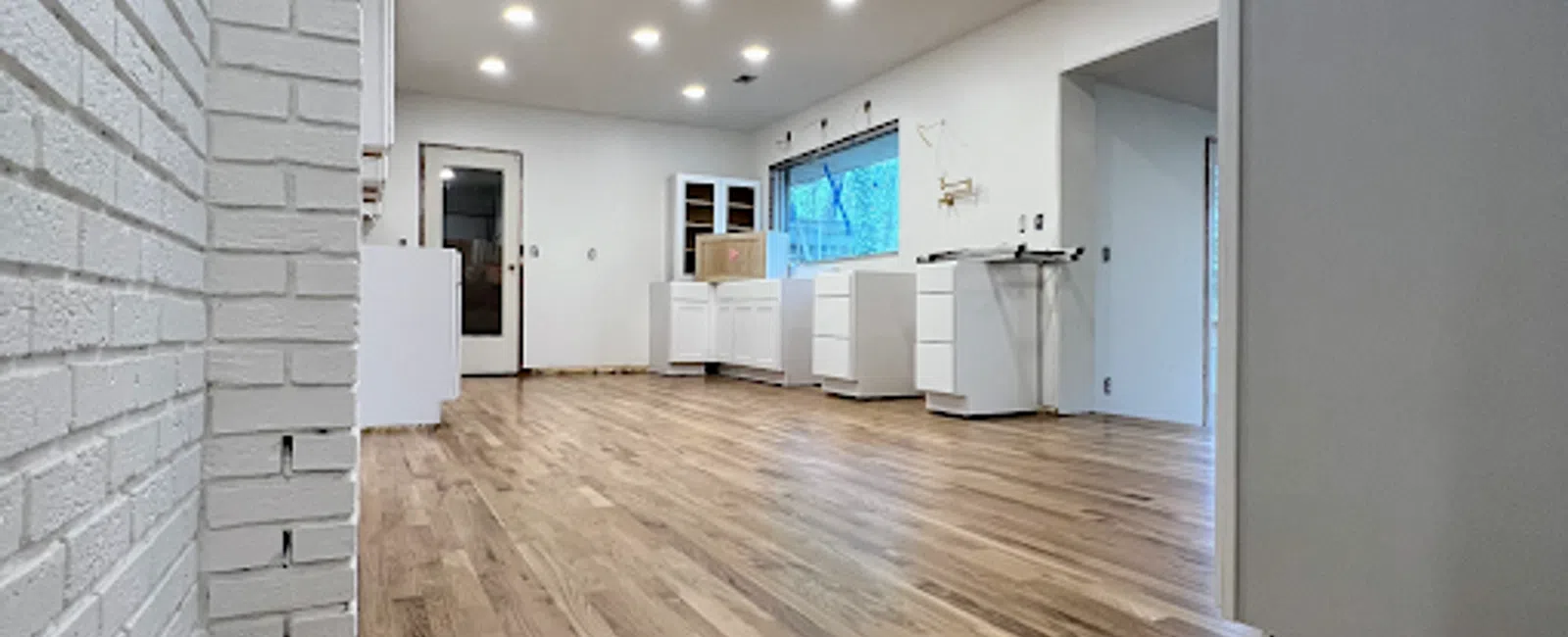
TriArt refinishes hardwood floors across Atlanta, and the wrong mop is one of the fastest ways to wear a finish down early. A floor that should hold up for twenty years before it needs refinishing can show real wear at eight, and the mop is usually part of that story.
The short version: a flat microfiber mop with a dry pad for daily dust and a lightly dampened pad for weekly cleaning is the safest thing you can put on a hardwood floor. Almost everything that goes wrong with hardwood cleaning comes down to too much water sitting on the surface for too long.
Quick Picks
- A spray mop with a washable microfiber pad, such as the Bona Premium Spray Mop, is the best all-around option because of the controlled mist and the lack of a bucket, wringing, or standing water.
- An 18-inch microfiber dust mop is the best tool for daily dust, since it traps grit before it gets ground into the finish, which causes most surface scratching.
- A basic microfiber flat mop with two or three spare pads and a spray bottle of hardwood-safe cleaner is the best budget option, doing the same job as a spray mop for a fraction of the price.
- The O-Cedar Hardwood Floor 'N More or a similar wide microfiber head works best on large open floors, cutting the number of passes roughly in half.
- String mops, sponge mops, steam mops, and any system that requires wringing a soaked head out over the floor are worth avoiding.
Why Microfiber Wins on Hardwood
Hardwood floors are not sealed the way tile is. A polyurethane finish is a surface film, and every seam between boards is a path down to raw wood. Water that sits in those seams wicks into the board edges, swells them, and lifts the grain. Do it once and you probably get away with it. Do it weekly for five years and you get cupped boards, whitened haze along the seams, and a finish that fails early.
Microfiber solves this because the fabric holds cleaner in the fibers rather than releasing it as a puddle. A properly damp microfiber pad leaves a film thin enough to evaporate in under a minute. If your floor is still visibly wet thirty seconds after you pass over it, there is too much liquid on it.
What We Look for in a Mop Head
A good mop head uses washable pads rather than disposable ones, since laundered microfiber generally picks up more grit than a disposable pad and costs less over time. It should have a swiveling flat head rather than a round or sponge head, which forces you to press down and push liquid into the seams between boards. Skip anything with a scrubbing strip: those abrasive pads are built for grout, and on a polyurethane finish they leave dull streaks that show up in raking light. If it is a spray mop, look for a refillable reservoir instead of a proprietary cartridge, since some cartridge formulas are not hardwood-safe.
Mop Types, Ranked for Hardwood
| Mop type | Safe on hardwood? | Best use |
|---|---|---|
| Microfiber dust mop (dry) | Yes | Daily grit removal. The single most valuable thing you can do for a finish. |
| Microfiber flat mop (damp) | Yes | Weekly cleaning with a hardwood specific cleaner. |
| Spray mop with washable pad | Yes | The same job as a flat mop with less setup. Best default for most homes. |
| Spin mop and bucket | Only if wrung nearly dry | Workable, but the bucket makes over-wetting easy. Not our first choice. |
| Sponge mop | No | Holds and releases too much water, and the sponge drags trapped grit. |
| String or cotton mop | No | Puts far more water on the floor than a wood finish can handle. |
| Steam mop | No | Heat plus moisture drives water vapor through the finish film, which shortens the life of the coating. |
| Robot vacuum with mop pad | Usually yes | Fine for light maintenance if the water tank setting is on low. Not a substitute for a real clean. |
The Mop Matters Less Than the Routine
Here is the part most roundups skip. The best mop on the market will not save a floor that never gets dust mopped. Scratching on hardwood is almost never caused by the mop itself. It is caused by sand, road salt, and grit tracked in on shoes, which sits on the surface until something drags it across the finish. That something is often the mop.
A workable routine looks like this:
- Dust mop the floor dry every day or every other day, especially in entryways and traffic lanes.
- Damp mop weekly with a pH-neutral hardwood cleaner on a microfiber pad, working in the direction of the boards.
- Skip vinegar, ammonia, oil soaps, wax over polyurethane, and anything that promises to shine and restore, since the acid and residue damage the finish over time.
- Check the floor twice a year: pull back rugs, look for cupping or dull traffic lanes, and inspect the finish in raking light from a low window.
If those checks turn up dull traffic lanes that no longer respond to cleaning, the finish is worn through rather than dirty. That is a refinishing question, not a mopping one.
The Cleaner Matters More Than the Mop
Whatever mop you buy, the liquid matters more. Use a cleaner formulated for polyurethane-finished wood. Bona, Loba, and Rubio all make one, and most flooring manufacturers sell their own. What they have in common is a neutral pH, no wax, no oil, and no residue.
Residue is the quiet failure mode. Oil soaps and shine restorers build a layer on top of the polyurethane that looks fine for a year and then goes cloudy. Worse, that layer has to be chemically stripped before a floor can be recoated, which turns a straightforward screen and recoat into a full sand. We see this several times a year.
Dish soap is not built for hardwood. It is formulated to cut grease, and on a polyurethane finish it leaves a soapy film that dulls the surface and attracts more dirt over time rather than less. Bleach is worse: it can lighten or discolor the wood itself if it works its way into a scratch or seam, and it breaks down a polyurethane finish faster than almost anything else homeowners reach for. If a floor already looks streaky or hazy from years of the wrong cleaner, that buildup usually has to be stripped before a fresh coat of finish will hold.
When Mopping Is Not the Answer
Reach for a professional instead of a better mop when you are dealing with:
- Grey or black patches that do not lift with cleaning, which usually means moisture or pet damage has gone through the finish into the wood.
- Boards that feel raised at the edges, which is cupping from moisture and needs the source found before anything else happens.
- A whitish haze across a whole room, which is often finish damage rather than dirt.
- Traffic lanes that stay dull after cleaning, which means the wear layer is gone.
Our hardwood floor cleaning service handles the deep-clean end of this, and our repair team handles the rest. A consistent dust-and-damp-mop routine between visits keeps the finish from wearing down before its time.
How Often Hardwood Floors Need Mopping
Most homes need a damp mop about once a week, with kitchens and entryways sometimes needing it twice because more grit and moisture pass through those rooms. Bedrooms and formal spaces with less foot traffic can usually go two to four weeks between damp cleanings without any issue. Dust mopping runs on a different schedule and should happen daily or every other day, since dry grit grinding into the finish causes more long-term damage than water ever does. A floor that only gets a wet mop once a season, with no dust mopping in between, is usually the one that shows early wear.
Past the Point a Mop Can Help
If cleaning is not bringing your floors back, the finish is likely worn rather than dirty. TriArt Hardwoods refinishes, repairs, and deep cleans hardwood across Atlanta, Johns Creek, and Sandy Springs. Take a look at our hardwood floor refinishing service, or get in touch for an assessment.