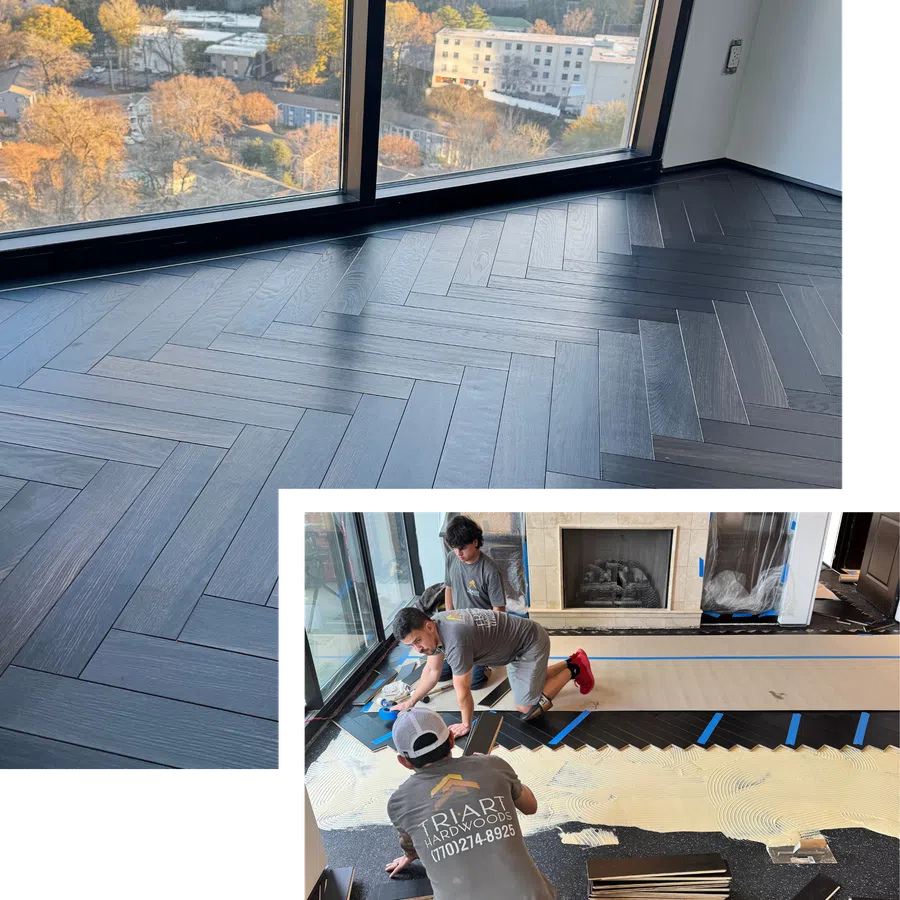
1,200 SF of 5,000-Year-Old Bog Oak, Laid in Herringbone
What TriArt Installed
Approximately
1,200 square feet of European engineered bog oak, installed in a custom
herringbone pattern in a Midtown home.
Bog
oak is oak that fell into a peat bog and stayed there. With no oxygen to rot
it, tannins in the wood reacted with dissolved iron in the water over thousands
of years, staining it from the inside out. The deep black and charcoal tones in
this floor are not applied. They go all the way through the board.
The
material for this project was carbon dated at over 5,000 years old.
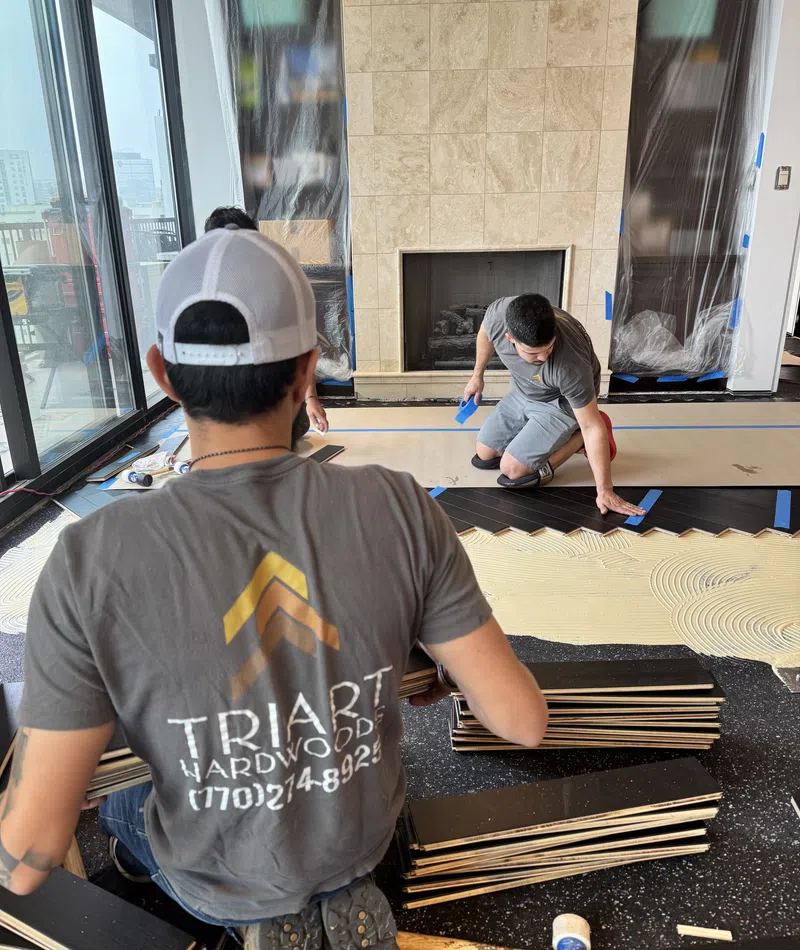
Herringbone
is a different installation from straight lay. Every board meets its neighbor
at a right angle, so the layout has to be set from a center line and worked
outward, and an error of a millimeter early in the run compounds across the
room. There is no adjusting it at the wall. The pattern also generates far more
cuts and far more waste than a straight floor, which is why the material order
runs higher than the square footage suggests.
Bog Oak, and What Herringbone Demands
The material and the pattern
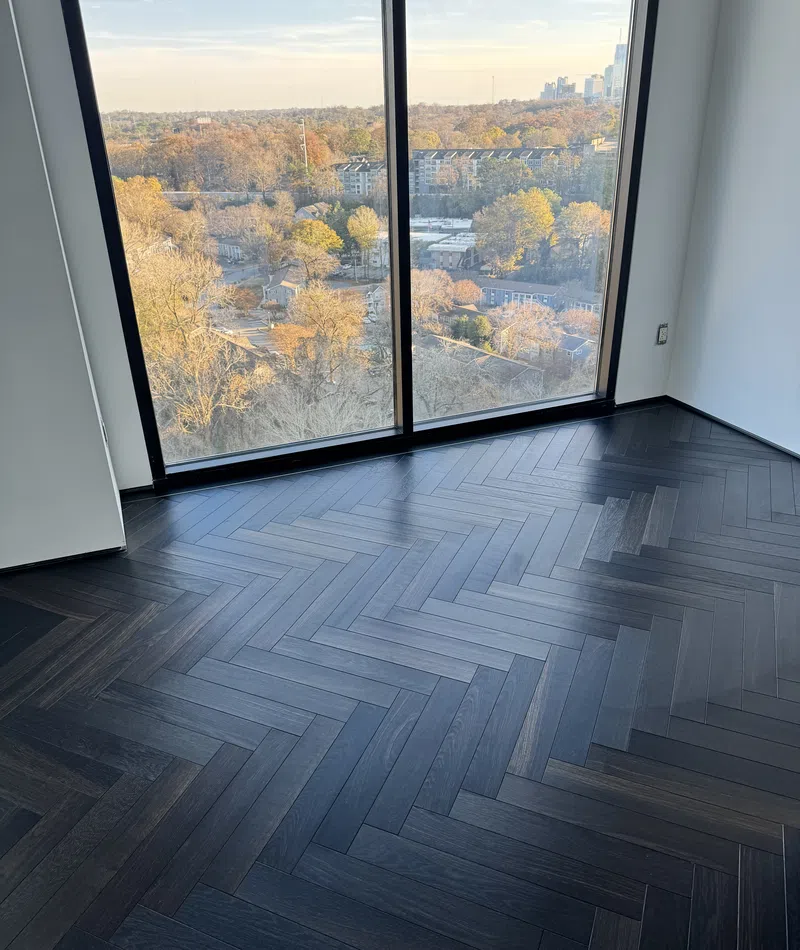
Bog
oak is oak that fell into a peat bog and never rotted. Without oxygen, the wood doesn't decay as usual. Instead, tannins in the wood react over thousands
of years with iron dissolved in the groundwater, and the resulting compound
stains the timber from the inside out. The black is not a finish. It goes
through the board.
That
process is slow, and the supply is finite, which is why bog oak is priced as a
rare material rather than a species. Most of what reaches the flooring market
is recovered from peat extraction in northern and eastern Europe and sold as
engineered rather than solid, both because the recovered timber is
dimensionally unpredictable and because a veneer stretches a scarce material
further.
Herringbone
is a different installation from straight lay, not a decorative variant.
Every board meets its neighbor at a right angle, so the pattern starts at a center line and works outward in both directions. A millimeter error early in the run compounds across the room, and you can't correct it at the
wall.
It
also generates far more cuts and far more waste. A straight floor is typically
ordered with around 5 to 10 percent overage; a herringbone floor needs
considerably more, and on a rare material that difference is a real number
rather than a rounding error. Worth building into the budget at the
specification stage rather than discovering mid-project.
Herringbone
and chevron are often confused. In herringbone, the boards are square-cut and
meet at 90 degrees, creating a staggered zigzag. In chevron, each board is cut
at an angle so the ends meet point to point in a continuous V. Chevron costs
more because every board is mitered.