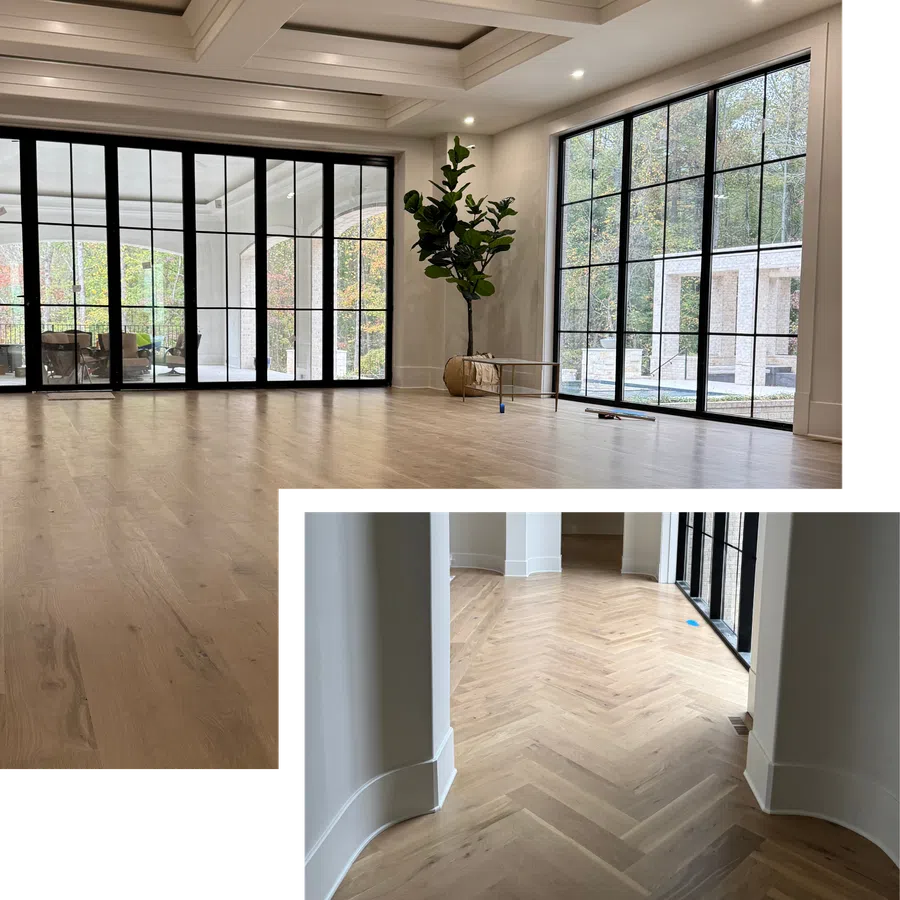
8,000 SF of Character Grade White Oak in a Custom Gray Blend
What TriArt Installed
Over
8,000 square feet of character grade white oak, supplied, installed and
site-finished across a home near Kennesaw Mountain.
At
this size, color consistency becomes the hardest part of the job rather than
the installation. Stain is mixed in batches and wood absorbs it differently
depending on how recently it was sanded and to what grit, so a floor this large
run in uncoordinated stages produces rooms that do not quite match. That only
becomes visible once the furniture is back. We mixed for the whole floor at
once and sanded every area to the same final grit.
The
color is a custom blend built on Silvered Gray over a Loba whitening sealer. The sealer lifts
the base tone before any color goes on, which is what keeps the result soft
rather than flat gray, and the character grade oak keeps its knots and mineral
visible through it.
The
finished floor reads modern without erasing the wood underneath, which is the
balance most gray floors miss in one direction or the other.
Custom Blends, Whitening Sealers, and Why Gray Floors Go Wrong
Getting gray right
Grade
describes how much natural variation a floor keeps, not how good the wood is.
Every board in every grade is structurally sound. What changes is what the mill
sorts out.
Clear
grade removes almost everything: knots, mineral streaks, sapwood, and most color
variation. The result is uniform and quiet, and it is the most expensive grade
because the mill discards the most material to produce it. Select sits just
below it with small, tight knots allowed.
Character
grade, sometimes sold as #1 common or rustic depending on the supplier, keeps
knots, mineral streaking, color variation between boards, and often some
sapwood. It costs less than clear because less is wasted, which is why it is
sometimes presented as the budget option. In a high-end house, it is usually the deliberate choice, because a floor with visible character stops competing with millwork, cabinetry, and stone, and because a uniform floor in a large open plan can read as a manufactured surface rather than as wood.
It
asks more of the installer. Boards have to be racked so heavy knots and dark minerals distribute across the whole floor instead of clustering, and that judgment is made board by board as the floor goes down. A character-grade floor installed without that attention looks patchy rather than characterful, which is the failure people react to when they say they do not like
knots.