

Hardwood stairs are a stylish, durable upgrade for any home, especially in Atlanta’s unique climate. They replace carpet with a cleaner, longer-lasting option that increases home value. Here’s what you need to know:
- Building Codes: Atlanta requires handrails on stairs with four or more risers, specific tread and riser dimensions, and safety standards for baluster spacing.
- Climate Impact: Atlanta’s humidity can warp wood. Use kiln-dried hardwood, acclimate materials indoors, and maintain indoor humidity levels between 35%-55%.
- Popular Choices: White Oak, Hickory, and Hard Maple are top wood species for their durability and moisture resistance. Engineered hardwood is also a great option for humid environments.
- Installation Essentials: Tools like a miter saw, brad nailer, and construction adhesive are key. Proper measurements, secure fastening, and three coats of polyurethane ensure a professional finish.
- Costs: DIY kits range from $100–$200 per step. Professional services like TriArt Hardwoods offer custom quotes and expert installation.
Hardwood stairs require precise planning and execution, but with the right materials and techniques, they can transform your home into a timeless centerpiece. TriArt Hardwoods specializes in Atlanta installations, ensuring your stairs meet local standards and withstand the climate.
Atlanta Considerations for Hardwood Stairs
Building Codes and Regulations
In Atlanta, building codes specify that handrails must be installed on enclosed stairways with four or more risers. These handrails should be positioned between 34 and 38 inches above the stair treads and must have a circular cross-section with a diameter between 1.25 and 2 inches. Additionally, there should be a clearance of at least 1.5 inches between the handrail and adjacent walls.
"Handrails must be able to withstand a concentrated load of 200 pounds applied in any direction at any point along the top of the rail." – Atlanta Railing Pros
Stair dimensions are also regulated. Treads need to have a minimum depth of 10 inches (measured nosing-to-nosing), while riser height cannot exceed 7.75 inches. Staircases must be at least 36 inches wide and provide a vertical headroom of no less than 6 feet 8 inches, measured from the tread nosing to the ceiling. To minimize tripping hazards, risers and treads within the same flight must be consistent in size. For safety, baluster spacing should be small enough to prevent a 4-inch sphere from passing through.
These regulations ensure safety, but Atlanta’s unique climate also plays a role in material selection and preparation.
How Atlanta’s Climate Affects Hardwood
Atlanta’s humid subtropical climate can be tough on hardwood stairs. Summers are hot and humid, and temperature shifts throughout the year cause wood to expand and contract. This can lead to issues like cupping, gaps, or buckling. To mitigate these problems, let hardwood materials acclimate indoors for several days before installation. Maintaining indoor humidity levels between 35% and 55% is crucial – humidifiers can help during winter, while dehumidifiers or HVAC systems are useful in summer.
Using kiln-dried wood is another key step to prevent moisture-related damage. For added protection, apply at least three coats of water-based polyurethane to stair treads. This not only shields against moisture but also helps withstand wear from heavy foot traffic.
These climate considerations directly influence the choice of wood species and finishes for hardwood stairs.
Popular Wood Species and Styles in Atlanta
Certain wood species stand out in Atlanta due to their durability and ability to handle humidity. White Oak is a top choice because its closed grain resists moisture effectively. Hickory, known for its hardness and striking grain patterns, is ideal for high-traffic areas. Hard Maple, with its smooth grain, performs well under fluctuating humidity levels.
For even greater stability, engineered hardwood is a strong contender. Its layered construction minimizes warping in humid environments.
When it comes to style, Atlanta homeowners are gravitating toward warmer wood tones and distressed finishes. Wide planks – ranging from 5 to over 10 inches – are particularly popular. Matte and satin finishes are favored for their ability to hide imperfections, while textured surfaces like wire-brushed or hand-scraped finishes are practical for concealing scratches caused by pets or heavy use.
sbb-itb-9f8f869
How to Install Hardwood Stair Treads & Risers…Key Techniques for Perfect Results
Tools and Materials for Hardwood Stair Installation
When tackling a hardwood stair installation, especially in areas like Atlanta where humidity can be a factor, the right tools and materials are crucial for a sturdy and visually appealing result.
Required Tools for Installation
Precision is the name of the game when it comes to installing hardwood stairs. You’ll need tools that ensure accurate cuts, secure fastening, and proper measurements. A table saw is perfect for ripping boards to the correct width, while a miter saw handles those clean angle cuts for a polished finish. For smaller, detailed cuts, a jigsaw is your go-to tool, especially for trimming nosing pieces. Before installation, tools like a pry bar and pliers come in handy for removing old carpet, tack strips, and staples.
To fasten everything securely, a 16-gauge brad nailer or finish nailer is essential for attaching treads and risers. A drill is also key for creating pilot holes, which prevent the wood from splitting during installation. For measurements, rely on a tape measure, carpenter’s square, and level to ensure the stringers and treads are aligned properly. To keep everything solid and squeak-free, apply construction adhesive in a zigzag pattern before fastening.
"The combination of adhesive and nails helps keep your stairs solid. The adhesive cuts down on noise, and the nails hold everything together while it sets." – Igor Patrascu, Founder, Simple Flooring
For the finishing touches, sanding equipment with medium to fine grit will smooth the surfaces, preparing them for stain or protective coatings like polyurethane. If you’re planning to DIY, expect a standard installation for 12 to 14 steps to take about a weekend (2–3 days).
Materials: Treads, Risers, and Finishes
Choosing high-quality materials is just as important as having the right tools. The main components of a hardwood staircase include treads (the horizontal steps), risers (the vertical backs), and nosings (the front edges). In Atlanta, using kiln-dried wood is a smart move to reduce the risk of expansion and contraction due to humidity. DIY material kits typically range from $35–$55 per tread and riser, which means each step could cost around $100–$200.
You’ll also need structural supplies like construction adhesive, epoxy kits (roughly $15.23), finish nails, screws, and newel fastening kits (about $10.38). For design elements, consider handrails and newel posts. Red Oak is a popular choice, with adjustable box newels priced at $134.66 and plain box newels at $158.29. If you’re adding iron balusters, they come in a black satin finish and range from $3.12 to $13.64, depending on the style.
To protect your stairs from wear and tear, apply three coats of polyurethane. Satin or matte finishes are recommended over gloss, as they’re less slippery and better at hiding minor scratches. If you’re working over a concrete subfloor, don’t skip the moisture barrier – plastic sheeting or specialized underlayment will prevent damage from residual moisture.
How to Install Hardwood Stairs
Step 1: Measure and Plan the Staircase
Start by measuring the floor-to-floor height, then divide that measurement by the number of steps. This will help you achieve risers between 7 and 7.75 inches high, with a tread depth of at least 10 inches. To ensure comfortable and safe stairs, follow the "27 Rule", which recommends that the riser height and tread depth together should total approximately 27 inches. Since older staircases can have slight variations, measure each tread and riser individually to avoid uneven steps or tripping hazards.
Before installation, let the hardwood acclimate for 48–72 hours to adjust to the environment. Create a detailed sketch of your staircase layout, noting any landings, turns, or weak areas that may need reinforcement.
"Even small measurement errors can lead to uneven, hazardous steps." – First Atlanta Flooring
Once you’ve measured everything accurately and planned your layout, you can move on to securing the structure.
Step 2: Install Risers and Treads
Begin by installing the risers, ensuring they are flush and level. Then, dry-fit the treads and nosings to check alignment before securing them with construction adhesive and fasteners. Make sure each tread is level to prevent alignment issues that could worsen as you move up the staircase. The nosing should overhang the riser uniformly by 1 to 1.5 inches and must be securely fastened to avoid creating a tripping hazard.
After confirming that all risers and treads are secure and level, you’re ready to move to the finishing and handrail installation.
Step 3: Apply Finishes and Add Handrails
Before applying any finishes, sand all surfaces to remove dust and imperfections. Use at least three coats of polyurethane, sanding lightly between each coat, to create a smooth, durable surface. For the treads, a satin or matte finish is ideal since it hides scratches better and provides more traction. If painting the risers, a semi-gloss finish is a practical choice because it’s easier to clean.
When it’s time to install handrails, start by anchoring the bottom newel post at the first tread and the top post at the upper landing. Use a level to ensure both are perfectly vertical. To cut the handrail at the correct angle, use a bevel gauge or angle finder to match the staircase’s slope. Building codes require handrails to be positioned 34–38 inches above the stair nosing, with baluster gaps of less than 4 inches for safety. Dry-fit the handrail before securing it, and attach the balusters with wood glue and screws for long-lasting stability.
TriArt Hardwoods Services for Hardwood Stairs

Custom Quotes and Consultations
TriArt Hardwoods provides in-home consultations to evaluate your staircase, take precise measurements, and recommend the most suitable hardwood options for Atlanta’s humid conditions. Within 24 hours, you’ll receive a detailed project proposal outlining the scope, timeline, and costs .
During this consultation, you can explore popular staircase trends in Atlanta, such as wide planks and natural finishes that showcase the beauty of wood grain. If your project involves structural changes – like updating rounded bottom steps to a squared-off design – scheduling this consultation ahead of installation ensures everything flows smoothly. To move forward, a 50% deposit is required upon accepting the proposal, covering initial materials and securing your project timeline .
This process sets the stage for a seamless transition to expert installation.
Professional Installation and Matching Stains
Using insights from your consultation, TriArt Hardwoods offers skilled installation and precise stain matching. With over 12 years of experience serving the metro Atlanta area , their team specializes in replacing carpeted staircases with premium hardwood installations, often using durable oak treads. Their NWFA-certified professionals ensure the work stands up to Atlanta’s climate .
"Professional installation ensures that your hardwood floors are correctly installed from the start, preventing issues like buckling, gaps, and unevenness." – TriArt Hardwoods
TriArt Hardwoods is known for custom stain matching, ensuring a seamless blend between your stairs, handrails, and surrounding flooring. Each project concludes with a thorough walk-through and personalized maintenance advice, including recommendations to recoat the finish every 3–5 years, depending on foot traffic . With a 4.5/5 rating from 115 Google reviews, customers frequently highlight the team’s clear communication and ability to address issues caused by previous contractors.
Common Mistakes and Troubleshooting Tips
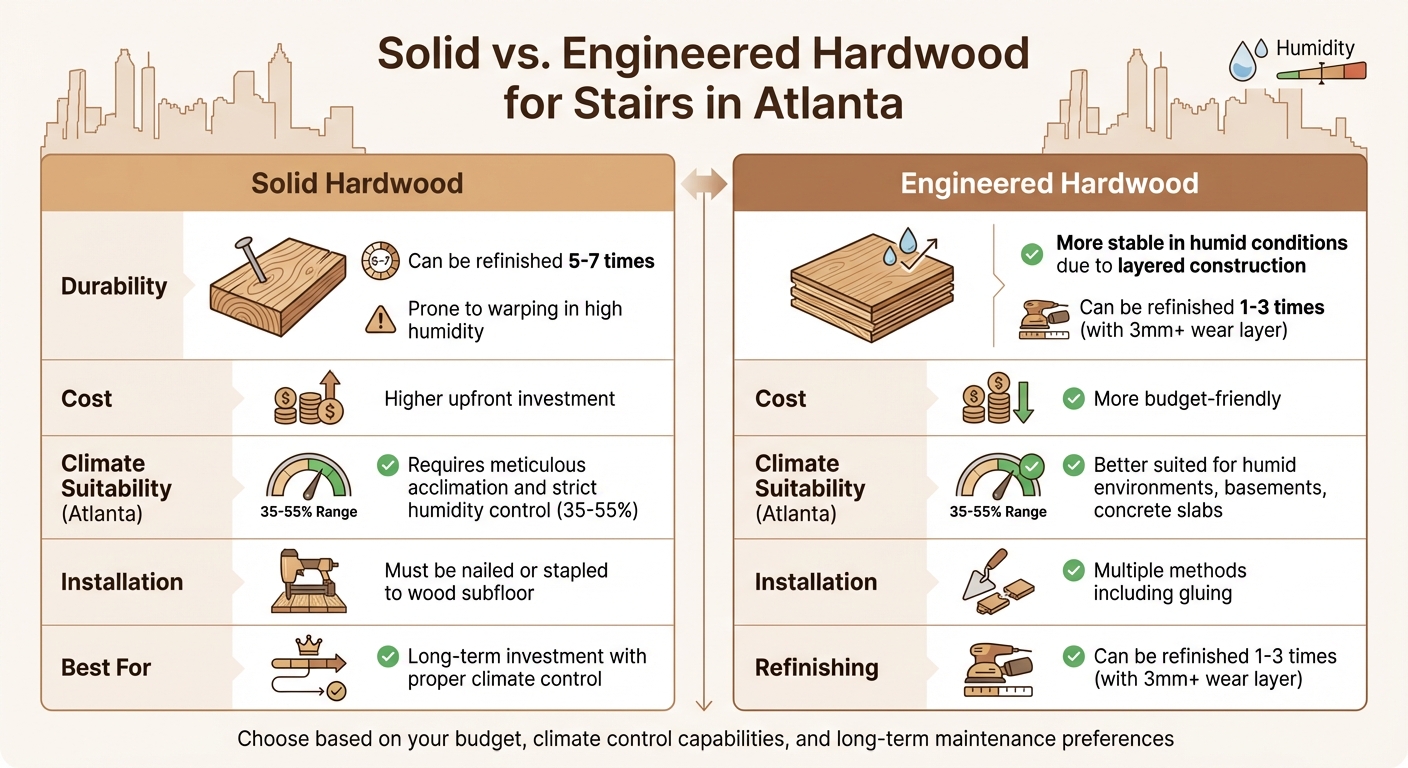
Solid vs Engineered Hardwood for Stairs: Climate Suitability and Durability Comparison
Preventing Warping and Gaps from Humidity
One common misstep in Atlanta is skipping hardwood acclimation. Wood naturally absorbs moisture, and in high humidity, it can expand by as much as 1/16 inch per foot. To avoid this, acclimate the hardwood in the installation room for several days before installation – up to two weeks for exotic species.
"Failing to allow hardwood floors to acclimate before installing them can lead to a lot of problems… it just takes a bit of patience." – First Atlanta Flooring
Maintaining consistent ambient humidity (ideally between 35–55%) is another crucial step. Use HVAC systems to stabilize conditions, running them for at least five days before installation. In winter, a humidifier can help combat dry air, while a dehumidifier is useful during humid summers. Also, don’t forget to leave proper expansion gaps, which can be concealed with baseboards or shoe molding. Skipping this step can result in buckling.
Other common mistakes include poor subfloor preparation, installing treads before risers, and relying only on nails for installation. To ensure a secure fit, use construction adhesive in addition to nails, and allow 24 hours for the adhesive to set (or 48–72 hours before moving furniture). These precautions help minimize moisture-related issues and ensure a more durable hardwood installation.
Solid vs. Engineered Hardwood for Stairs
Choosing the right type of hardwood is another key factor in avoiding moisture problems, especially in Atlanta’s humid climate. Here’s a handy comparison to help you decide between solid and engineered hardwood for your stairs:
| Feature | Solid Hardwood | Engineered Hardwood |
|---|---|---|
| Durability | Extremely durable and can be refinished 5–7 times, though it’s prone to warping in high humidity. | More stable in humid conditions thanks to its layered construction. |
| Cost Factors | Generally more expensive upfront. | Typically more budget-friendly. |
| Climate Suitability (Atlanta) | Requires meticulous acclimation and strict humidity control. | Better suited for humid environments, especially basements or areas over concrete slabs. |
| Installation Complexity | Must be nailed or stapled to a wood subfloor. | Can be installed using various methods, including gluing. |
Solid hardwood is a great long-term option since it can be refinished multiple times, but it demands careful moisture control to prevent warping. On the other hand, engineered hardwood, with its layered construction, handles Atlanta’s humidity better and is ideal for basements or concrete surfaces. Keep in mind that engineered hardwood can usually only be refinished 1–3 times, provided the wear layer is at least 3mm thick. Both options have their strengths, so consider your specific needs and conditions when making a decision.
Conclusion
Installing hardwood stairs can elevate your Atlanta home in more ways than one. Not only do they add a timeless touch of style, but they also increase durability and property value. Hardwood stairs are built to withstand decades of daily use with minimal wear, all while offering a cleaner, more polished look through a variety of wood species and finishes.
Given Atlanta’s humid climate, proper acclimation and humidity control (ideally between 35–55% year-round) are essential. Choosing resilient wood species like White Oak can help prevent common issues such as cracking, warping, or gaps. Whether you opt for solid or engineered hardwood, correct installation is key to avoiding future problems like buckling or warping.
TriArt Hardwoods has earned a solid reputation for expert stair installations across Metro Atlanta, boasting a 4.5+ rating from 115 reviews. Their skilled team handles every detail – from matching stains with precision to ensuring your stairs meet local building codes – so you can enjoy a staircase that’s both stunning and structurally sound.
Ready to upgrade your home? Reach out to TriArt Hardwoods for an in-home consultation and receive a detailed proposal within 24 hours. Their efficient five-step process ensures your hardwood stair project will be completed to the highest standards.
FAQs
How do I know if my stairs need structural repairs before hardwood?
Before installing hardwood on your stairs, it’s crucial to inspect them for any signs of damage. Check for loose or wobbly treads, cracked or rotted stringers, or uneven steps. Pay attention to sagging or instability, which could signal problems with the framing or supports. If you spot any of these issues, either fix them yourself (if you’re confident in your skills) or consult a professional to make sure your staircase is safe and properly prepped for the hardwood installation.
Will hardwood stairs be slippery for kids or pets?
Hardwood stairs may look stunning, but they can pose a safety risk for kids and pets due to their slippery nature. To address this, you can use non-slip treatments or treads. These solutions not only improve traction but also keep the elegant look of your hardwood intact.
How long should hardwood stairs cure before normal use?
Hardwood stairs need at least 48 hours to cure before you start using them normally. This waiting period gives the adhesive and finishes enough time to fully set, which is crucial for both durability and safety. By sticking to this timeframe, you reduce the risk of damage and help ensure the installation holds up over time.


