Hardwood flooring is a popular choice in Sandy Springs for its durability, aesthetic appeal, and potential to increase home value. With proper care, hardwood floors can last over 50 years and provide a 118% return on investment. Engineered hardwood is especially suited for the area’s humid climate, offering better resistance to moisture. Professional installation ensures the floors are installed correctly, avoiding issues like warping or buckling.
Key takeaways:
- Durability: Hardwood floors can last decades and can be refinished to look new.
- Health Benefits: Unlike carpets, hardwood doesn’t trap allergens like dust or pet dander.
- Climate Considerations: Engineered hardwood is a smart choice for humid conditions in Sandy Springs.
- Professional Expertise: Skilled installers prevent costly mistakes and ensure a polished finish.
- Cost: Installation typically ranges from $6–$12 per square foot, with premium options costing more.
Hiring professionals ensures proper acclimation, moisture testing, and precise installation methods, resulting in long-lasting, visually appealing floors. For Sandy Springs homeowners, hardwood flooring is a practical and stylish investment.
Engineered Hardwood Floor Install // TOP Pro Tips
sbb-itb-9f8f869
Why Hire Professionals for Hardwood Floor Installation
Installing hardwood floors might seem straightforward, but achieving a durable and visually appealing result takes skill and precision. Professional installers understand the nuances of Sandy Springs’ humid climate, ensuring materials acclimate properly before installation. They also determine the ideal method – nail-down, glue-down, or floating – based on your subfloor type and wood species. Let’s dive into how professional expertise delivers flawless floors that stand the test of time.
Accurate Installation and Finishing
Professionals focus on details that DIY attempts often miss. For instance, they use self-leveling compounds to ensure the subfloor is perfectly flat, which helps prevent warping or buckling down the line. They also rely on moisture meters to confirm both the subfloor and wood meet manufacturer requirements. When it comes to sanding, professional-grade equipment ensures smooth, even surfaces without deep scratches.
"Refinishing hardwood floors is something you want to leave to the professionals… if operated incorrectly, [sanding equipment] can leave your hardwood floor very uneven." – Sandy Springs Hardwood Flooring
Applying stains and protective coatings evenly is another area where expertise matters. For example, in March 2026, Footprints Floors Sandy Springs installed oak flooring in a second-floor hallway for a client, Jim Remshik. They achieved a seamless match with the existing floors by applying uniform stain and polyurethane. From clean transitions between rooms to precise trim work, professional craftsmanship ensures a polished, long-lasting finish.
In addition to delivering high-quality results, professionals streamline the process, saving both time and money.
Saving Time and Money
On average, professionals can install 300–500 square feet of flooring per day, completing most projects in Sandy Springs within 2–5 days. This efficiency avoids the extended timelines that often plague DIY efforts. Moreover, trained installers prevent costly mistakes – like failing to use proper moisture barriers or skipping acclimation periods – that can lead to issues like warping or swelling.
While installation costs typically range from $6–$12 per square foot (and premium projects can go up to $13–$25 per square foot), this upfront investment pays off. Professionally installed hardwood floors last 30 to 100 years and can yield up to a 118% return on investment.
Getting Quality Materials and Expert Advice
Beyond installation, professionals guide homeowners in selecting the best materials for their needs. They use tools like the Janka hardness scale to recommend wood species suited to Sandy Springs’ climate and household traffic levels. For instance, tougher options like Hickory (1820 rating) or White Oak (1360 rating) are ideal for high-traffic areas, while softer woods like American Cherry (950 rating) work better in low-traffic spaces. Additionally, they often suggest engineered hardwood for its superior stability and moisture resistance in humid environments.
| Wood Species | Janka Hardness Rating | Best Use Case |
|---|---|---|
| Hickory | 1820 | High-traffic areas; extremely durable |
| White Oak | 1360 | Busy living spaces; strong and long-lasting |
| Red Oak | 1290 | Standard home environments; versatile |
| Walnut | 1010 | Low-frequency use; adds warmth and elegance |
| American Cherry | 950–995 | Low-traffic areas; softer species |
Consider this: in October 2025, TriArt Hardwoods repaired damage caused by an unqualified installer for a homeowner, Derek Anthony. The team, led by Hugo, performed meticulous sanding and refinishing, leaving the homeowner thrilled with the results. This example highlights how professional expertise not only avoids potential issues but can also fix problems caused by improper installation. Plus, during final walkthroughs, professionals provide tailored maintenance tips to help protect your investment for years to come.
Sandy Springs Climate and Housing Factors
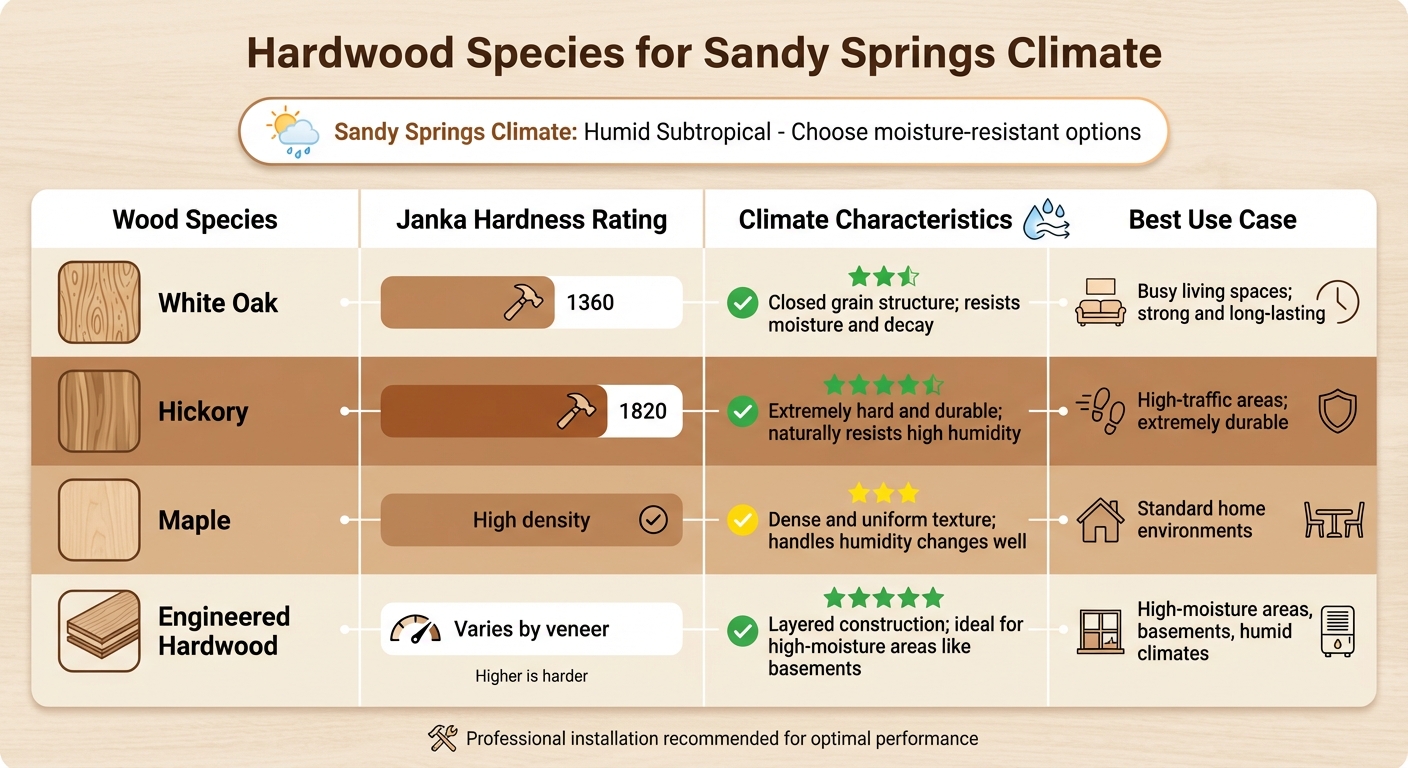
Hardwood Species Comparison Guide for Sandy Springs Climate
The humid subtropical climate in Sandy Springs presents unique challenges for hardwood flooring. Natural wood reacts to changes in humidity by expanding and contracting, which can result in issues like cupping, gapping, buckling, or warping if the wrong materials or methods are used during installation. This makes it essential to carefully consider both materials and installation techniques.
Dealing with Humidity and Climate
To minimize potential problems caused by humidity, allow hardwood planks to acclimate indoors for a few days before installation. This step is crucial.
"No matter which wood you choose, it must acclimate inside your home for several days before installation. This allows the wood to equalize with your home’s ambient humidity and is the single most important step to preventing future problems." – Peachy Flooring Solutions
Maintaining a consistent indoor humidity level is also vital. Use a humidifier during dry winters and a dehumidifier in the humid summer months to stabilize moisture levels. When installing over concrete slabs, add a moisture barrier or use a specialized adhesive to protect the wood. Spring and fall are the best times for installation, as humidity levels are typically more moderate. These precautions highlight the importance of professional expertise in managing climate-related challenges for hardwood flooring in Sandy Springs.
Common Hardwood Types in Sandy Springs
Certain hardwood species are better suited for this climate due to their natural properties. White Oak is a popular choice because its closed grain structure resists moisture better than Red Oak’s open grain. Hickory, one of the hardest domestic hardwoods, is excellent for high-traffic areas and holds up well against humidity. Hard Maple offers a dense structure that can handle fluctuations in humidity. For areas with higher moisture levels, engineered hardwood is a more stable option.
| Wood Species | Characteristics for Sandy Springs |
|---|---|
| White Oak | Closed grain structure; resists moisture and decay |
| Hickory | Extremely hard and durable; naturally resists high humidity |
| Maple | Dense and uniform texture; handles humidity changes well |
| Engineered | Layered construction; ideal for high-moisture areas like basements |
These options, combined with proper installation methods, can help homeowners achieve durable and attractive flooring that withstands the local climate.
Local Regulations and HOA Requirements
In Sandy Springs, hardwood flooring installation is generally considered a cosmetic upgrade, so permits are only required for structural changes. However, if you live in a community governed by a homeowners association (HOA), it’s essential to review the HOA’s Covenants, Conditions, and Restrictions (CC&Rs) before starting. Many associations have specific rules about noise-dampening underlayment and approved materials to ensure neighborhood consistency. Adhering to these guidelines will help avoid potential conflicts and ensure compliance with local standards.
How to Install Hardwood Floors: Step-by-Step
Installing hardwood floors involves several detailed steps. Knowing what to expect at each stage can help ensure your project goes smoothly from start to finish.
Preparing and Leveling the Subfloor
The foundation of a successful hardwood floor installation lies in a properly prepared subfloor. This process begins with removing any existing flooring – whether it’s carpet, laminate, vinyl, tile, or damaged hardwood. Once the subfloor is exposed, it’s cleaned and sanded to remove debris and create a smooth surface.
"A well-prepared subfloor is essential for successful hardwood installation. If the existing subfloor is damaged, uneven, or unstable, it requires additional repair, leveling, or reinforcement." – Footprints Floors
Next, installers check for uneven areas using a straightedge. Low spots are filled with a self-leveling compound, while high spots are sanded down to create a flat and stable base. Once the subfloor is ready, it’s time to select the hardwood material that best fits your home’s needs.
Selecting Your Hardwood Materials
With the subfloor prepped, the next step is choosing the right hardwood. Your decision should factor in your home’s climate and lifestyle. For instance, engineered hardwood is ideal for areas with higher humidity because it resists warping. This type of flooring features a real wood veneer over plywood layers, making it a stable option for environments like Sandy Springs. On the other hand, solid hardwood, made from a single piece of timber, offers the advantage of being refinished multiple times but is more vulnerable to moisture.
Costs for hardwood flooring typically range from $6 to $12 per square foot for materials and labor. However, premium options – such as exotic wood species or intricate designs – can go up to $13 to $25 per square foot. Beyond the aesthetic appeal, hardwood floors offer a solid return on investment, with homeowners often recouping 118% of the cost. With proper care, these floors can last anywhere from 30 to 100 years.
Installation Methods and Required Tools
After selecting your hardwood, it’s time to decide on the installation method. The approach depends on the type of flooring and the subfloor. Here are the three main methods:
- Nail-Down Method: Used primarily for solid hardwood over plywood subfloors, this method involves securing planks with a pneumatic flooring nailer.
- Glue-Down Method: Common for engineered wood and installations over concrete, this technique uses adhesive to bond the planks directly to the subfloor.
- Floating Method: Ideal for humid climates, this method involves locking planks together without attaching them to the subfloor, allowing for natural expansion and contraction.
To ensure a professional finish, installers carefully plan the layout, maintain tight seams, and create clean transitions. Moisture meters are also used to confirm that subfloor conditions meet the manufacturer’s requirements before beginning the installation.
TriArt Hardwoods: Professional Installation in Sandy Springs

TriArt Hardwoods provides tailored flooring services designed to meet the specific needs of homes in Sandy Springs. By addressing the area’s unique climate and housing characteristics, they deliver solutions that align with the local way of life.
Complete Flooring Services
TriArt Hardwoods offers a full range of hardwood flooring services, including installations of solid hardwood, engineered wood, parquet, and water-resistant luxury vinyl plank (LVP). They also specialize in refinishing and restoring floors, expertly repairing wear or water damage through sanding and finishing techniques.
Their expertise extends to custom staircase renovations, using high-quality oak treads and stains to match your flooring. A standout project includes installing 620 square feet of maple hardwood over concrete subfloors. This five-day job, priced around $2,400, included tear-out, acclimation, staining, and cleanup – a testament to their comprehensive service approach.
Free Quotes and Home Consultations
TriArt Hardwoods offers free in-home consultations where their experts evaluate your space, including square footage and subfloor conditions. During these visits, they provide insights into wood species and design options, such as diagonal or picture frame patterns, while offering clear pricing details. After the consultation, a formal proposal is delivered within 24 hours. Basic installations start at $3 per square foot, with a 50% deposit required to secure your project.
The consultation also includes recommendations for moisture testing and acclimation to ensure long-term stability and durability.
Solving Common Installation Challenges
TriArt Hardwoods addresses common flooring issues with precision. For uneven subfloors, they use self-leveling compounds to fill low spots and sand down high areas, creating a stable base that prevents warping or buckling – crucial in Sandy Springs’ humid climate.
To combat moisture problems, they acclimate planks for up to three days to match local humidity. The team also installs moisture barrier underlayments, such as plastic sheets or rubberized membranes, and conducts thorough moisture meter testing on subfloors. For homes prone to high humidity, they recommend engineered hardwood or water-resistant LVP to minimize risks like expansion, shrinkage, or buckling. These careful steps ensure that your floors remain durable and visually appealing, even in challenging conditions.
Conclusion
Hardwood flooring continues to be a wise choice for homeowners in Sandy Springs, offering timeless appeal and long-term value. With a potential return on investment of 118% and a lifespan that can stretch beyond 50 years with proper care, hardwood floors are both beautiful and practical. However, the humid climate in Sandy Springs makes professional installation essential to avoid problems like warping or cupping. Skilled installers ensure tight seams, flawless alignment, and durability, giving your floors both style and reliability for years to come.
TriArt Hardwoods stands out as a trusted expert with over 12 years of experience, NWFA certification, and an "Excellent" rating from 115 customer reviews. Their detailed five-step process – from consultation to final walk-through – ensures homeowners enjoy a smooth and stress-free experience.
"Our mission is to renovate your flooring with thoughtful consideration of every detail. Quality and communication is at the heart of everything we create." – TriArt Hardwoods
This dedication to craftsmanship means your floors will not only enhance your home’s aesthetic but also improve its functionality. For Sandy Springs homeowners looking to elevate their spaces, TriArt Hardwoods offers free consultations to help you choose the right wood species, address climate-specific needs, and create a detailed plan. Whether you’re installing new floors, refinishing old ones, or repairing water damage, professional expertise ensures your investment delivers beauty and value that lasts.
FAQs
Is engineered or solid hardwood better for Sandy Springs humidity?
Engineered hardwood tends to perform better in Sandy Springs’ humid climate thanks to its dimensional stability. This design makes it less likely to expand or contract with shifts in moisture levels. That said, it’s not entirely immune to humidity-related challenges. On the other hand, solid hardwood is more vulnerable to swelling and shrinking under changing conditions, which is why engineered hardwood is often the go-to option for this type of environment.
How long will my hardwood installation take in my home?
Installing hardwood floors usually takes about 1 to 3 days, depending on a few key factors like the size of the area, how complex the project is, and the type of hardwood being used. For smaller spaces with minimal obstacles, the job can often be wrapped up in a single day. However, larger spaces or multi-room installations might require up to three days to complete. Allowing for this timeframe ensures the work is done properly, with enough time for installation, curing, and final finishing touches to achieve the best outcome.
What should I do before installation to prevent warping or buckling?
Proper preparation is key to avoiding issues like warping or buckling. Start by controlling moisture and humidity levels in the space. Ensure doors and windows are sealed tightly, and inspect for any leaks from plumbing or appliances that could introduce excess moisture.
Before installation, let the wood acclimate to the indoor environment. This step helps the material adjust to the conditions of your home. For added precision, use a moisture meter to check that the wood’s moisture content aligns with your indoor environment. These measures can save you from costly repairs down the line.